
Durga puja, Dussehra or Navratri is an Indian festival that is celebrated all over India. This festival is a great festival for the whole Hindu religion. The people of the Hindu religion are always attached heartily to this festival. This puja is a great symbol of their faith in the goddess “Maa Durga“.
In this festival, people worship Devi Durga, so this festival is also called Durga Puja. Here we introduce the best Navratri vrat recipes.
Devi Durga always battles with the devil and defence her devotee. Maa Durga is protective all of living things, non-living things, earth, sky, moon, etc. This festival is celebrated for ten days. We worshipped Devi Durga for nine days.
Many people keep fasting at that time. More of them eat sattvic food at that time. So In this Durga Puja special article, we know about some sattvic recipes which we eat during this Durga Puja festival. Let’s describe the following best Navratri vrat recipes :
Samak Rice Recipe
Samak rice — also sold as sama chawal or vrat ke chawal — isn’t actually rice. It’s a small millet-like seed that you rinse, soak for 15-20 minutes, and simmer in a 1:2 ratio with water for 8-10 minutes until it turns light and fluffy. Navratri kitchens lean on it hard because it’s grain-free, which puts it on the approved list for fasting days.
Read the full article about the Samak rice recipe.
Sabudana Kheer Recipe
Navratri festival we can eat “Sabudana” recipe. To make sabudana kheer. Take one-litre milk and boil It too well. Then pour 150-gram sabudana into it and cook on medium-low flame. stir regularly and cook it well. When they are cooked, mix cardamom powder and sugar in them. Now the sabudana kheer is ready to eat.
Kuttu Ki khichadi
Kuttu ki khichadi is a fasting-friendly dish made by roasting soaked buckwheat groats with boiled potatoes, cumin, green chilies, and peanuts in ghee. It’s eaten during Navratri and other vrat days because buckwheat (kuttu) is a falahari grain substitute, and the whole thing comes together in under 30 minutes with sendha namak-seasoned ingredients you probably already have in the kitchen.
Read the full article about the Kuttu ki khichadi.
Vrat Ki Kadhi Recipe
Vrat ki kadhi is the fasting version of kadhi, made with sour curd and singhare ka atta (water chestnut flour) instead of besan, because gram flour isn’t allowed during most Hindu fasts. Sendha namak, green chilli, ginger, and cumin do the seasoning, and a ghee tempering finishes it off. Good for Navratri, Ekadashi, and any vrat day where besan is out of bounds.
Read the full article about the vrat ki kadhi recipe.
Aaloo Ki Sabzi
Vrat Ke Aloo (Fasting Potatoes) is a fasting-friendly potato curry made with boiled potatoes, sendha namak (rock salt), cumin, ginger, and green chilies, tempered in ghee with no onion, garlic, turmeric, or regular table salt. It’s soft, mildly tangy, and usually finished with roasted peanuts or a spoon of curd. This is the dish most families in North India reach for during Navratri, Ekadashi, and other vrat days.
Read the full article about the vrat ke aloo recipe.
Singhare Atta ka Halwa
Singhare atta halwa is a fasting dessert you make by roasting water chestnut flour (singhare ka atta) in ghee until it smells nutty, then simmering it with water or milk and jaggery or sugar until it turns glossy and thick. It takes under 20 minutes start to finish, and you’ll find it on nearly every vrat thali during Navratri, Ekadashi, and other Hindu fasting days.
Read the full article about the singhare atta halwa recipe.
Rasogulla or Rasgulla
Rasgulla is made from ball-shaped dumplings of chhena (an Indian cottage cheese) and semolina dough, cooked in light syrup made of sugar. It is a spongy, juicy, sweet dessert made from curdling milk-based chhena or paneer, draining the whey, Kneading chhena well and making solid balls. Cooked in sugar syrup until made they are quietly soft and spongy and they can be served alone or with snacks for all festivals, It is an all-purpose sweet.
Read the full article about the Rasgulla recipe.
Paneer Kheer
To make paneer kheer, simmer 1 litre of full-fat milk for about 20 minutes until it reduces by a third, then stir in sugar, saffron and cardamom. Lower the heat, add 200 g of finely grated paneer, and cook for just 3-4 minutes so it stays soft. Finish with sliced almonds, cashews and pistachios. It takes about 40 minutes, serves 4, and is vrat-friendly because it has no grains, salt, onion or garlic.
Read the full article about the vrat ki kadhi recipe.
Rice Kheer
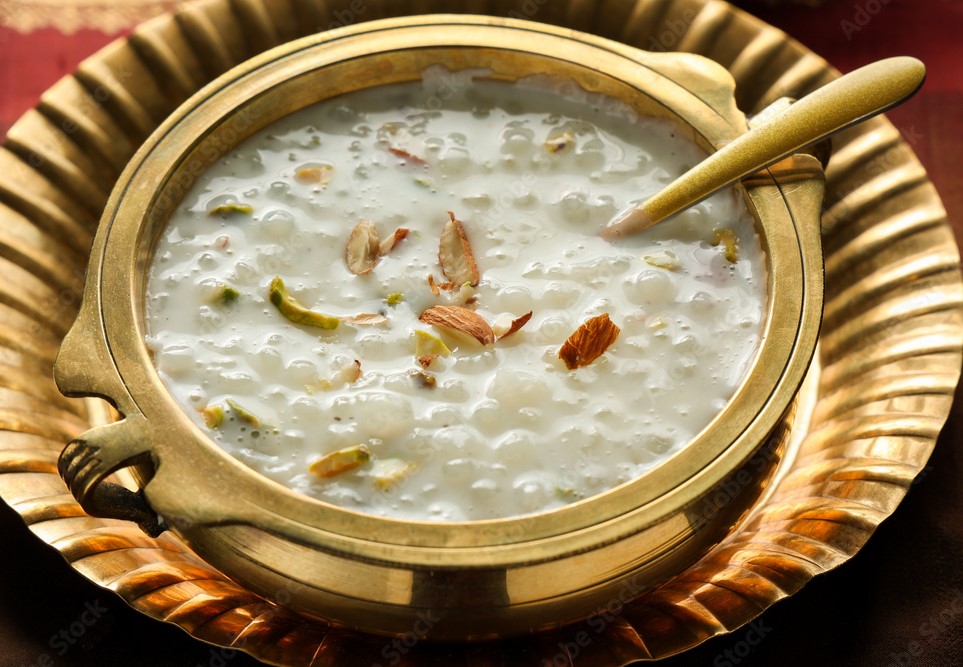
Rice kheer, also known as rice pudding, is a popular and beloved dessert in many South Asian and Middle Eastern cuisines. It is a creamy and aromatic dish made from basic ingredients like rice, milk, sugar, and flavorings.
Kheer is the recipe for rice and milk. Small-size flavour-rich rice grains are cooked in milk till they become soft and smooth. Meanwhile, the presence of dry fruits makes it better in taste and cardamom gives it a more flavoury touch. Moreover, adding sugar makes a sweet pudding dessert with a mouth-watering taste.
Read the full article about the Rice kheer recipe.
Sabudana Khichdi
Sabudana khichdi is a Maharashtrian dish made by soaking tapioca pearls overnight, then sautéing them with roasted peanuts, cumin, green chilies, and curry leaves in ghee until translucent and fluffy. It’s a popular vrat (fasting) recipe, ready in under 20 minutes of cooking once the sabudana has properly soaked.
Read the full article about the Sabudana Khichdi Recipe.
Kuttu Ka Dosa
Kuttu or Buckwheat is one of the most preferred ingredients for preparing the delicious fast recipes during Navratri. While Kuttu Puris are one of the most common options, you would find Kuttu Dosa to be a great option as a variation of Kuttu recipes. This Kuttu recipe of dosa is prepared with Kuttu ka atta along with the filling of potato filling.
The dish is best served with mint and coconut chutney. The best part with this dish is that it can be prepared with the easy to find ingredients.

Singhare ke Atte ka Samosa
The Singhare ke Atte ke Samosa or Water Chestnut flour samosa should be the most favourite among the Navratri revellers. The recipe is prepared with the water chestnut flour and Sendha Namak. If you are on diet, these should be the best choice as they are low in calories when compared to the regular samosas.
Singhare or Buckwheat is a rich source of iron and can be the right one to choose if you want to prevent anaemia. It can also keep your heart healthy. You can serve the delicious and nutritious samosas with coriander chutney.

Aloo ki Kadhi
If you are looking for the best and tasty recipe for Kadhi for your Navratri vrit, Aloo Kadhi should be the right choice. Easy and light, it can be easily prepared with potatoes, chillies and singhare ka atta. It can be the best option for lunch during the Navratri Utsav.
Potatoes have long been considered to be the unhealthy food. However, this Aloo kadhi recipe would make you rethink about preferences. Not only during Navratri, you can also use it during kity parties and other events that you organise.

Low Fat Makhana Kheer
Makhane ki Kheer is an Indian dessert made of foxnuts, dry fruits, milk, and jaggery. The low fat recipe can be one of the excellent options for those among you who may be looking for indulging in heartfelt revelry without the need to worry about the weighing scale.
The kheer is made with the milk and spices such as nutmeg and saffron. The sweet smell of the milk and the aroma of the spices should make anyone drool over it. If you so wish, you can replace the sugar with jaggery for the health conscious among you.
Read the full article about the Makhane ki Kheer.
Sabudana Vada Recipe
Sabudana vada is a Maharashtrian fasting snack made from soaked tapioca pearls (sabudana), mashed potato, roasted peanuts, and green chilli, shaped into patties and deep-fried until crisp. Soak the sabudana for 4-6 hours until each pearl softens but stays separate. Mix, shape, fry hot. Crunchy shell, soft chewy centre — that’s the whole point of the dish.
Read the full article about the Sabudana Vada Recipe.
Vrat wale Chawal Ka Dhokla
We know the fasting season and festivals like Navratri can be quite boring with no spices and delicacies. But, then you have the special fasting delicacies like Vratwale Chawal Ka Dhokla. This is the fermented dhokla with the Samwat rice. For the uninitiated, this is the special rice used during the fasting season.
The Dhokla is tempered with the whole red chillies along with cumin, ghee and curry leaves. You would indeed want to relish it like never before.

Vrat wale Paneer Rolls
Wondering how you can have a delicious paneer during the fasting season of Navratri? You can definitely relish this special paneer even during the fasting days. The dish is prepared with grated paneer, potatoes, sendha namak and spices. You no longer need to be really ‘fasting’ during the fasting season anymore.
How about adding some coriander chutney or mint chutney along? It can also be the best choice for a light, yet fulfilling dish during the Navaratri.

Kuttu Ki Puri Recipe
Kuttu Ki Puri is a deep-fried Indian bread made from buckwheat flour (kuttu ka atta), mashed boiled potato, and rock salt. You roll it between plastic sheets because the dough won’t hold together the way wheat dough does. It’s the backbone of most Navratri fasting thalis, served hot with aloo sabzi, curd, or pumpkin sabzi. Eat it fresh. It doesn’t store well.
Read the full article about the Kuttu Ki Puri Recipe.
Frequently Asked Question :-
The best way to fast is to avoid full and solid meals. From that context, you can have light food such as Poha. You can also eat cereal-based dishes such as Pongal or Khichdi.
Some of the recipes that can be eaten during the Navratri include Sabudana Kheer, Malai Kofta, Vrat Ke Aloo, Singhare ke atte ke Halwa or Samosa, and other special vrat-specific dishes.
The right way to break fast during the Navratri is to take a bowl of curd at the end of the fast duration. Curd offers nutrients and probiotics much needed for making your appetite stronger.

This is really interesting, You’re a very skilled blogger. I’ve joined your feed and look forward to seeking more of your magnificent post. Also, I’ve shared your site in my social networks!
Thank You.