
The final soul food is rabdi recipe or rabri, which has a history of serving Indian royal kitchens for centuries. A rabdi is made of milk that has been cooked slowly and reduced to a tiny fraction of its original volume. Then left to solidify in creamy layers (malai).
An ideal rabdi is characterised by its texture: neither a smooth pudding. But a mixture of discrete, chewing malai flakes in a thickened milk. Mixed with the flavour of cardamom and sweetened. Although a lot of them love a malai kulfi recipe, as it gives a frozen, creamy taste.
About Rabdi
A Rabdi is an Indian milk-based traditional dessert. In which milk is boiled over low fire for an extended period of time. The result of boiling the milk is that a layer of cream lies at the top. This is occasionally forced to the sides of the vessel.
When the milk is left to dry down to approximately one-third of its original amount. The cream layers collected are added back in so that they make a thick, textured dessert.
It is a part and parcel of Indian feastal meals, especially on Diwali, Holi and weddings. Rabdi is a slow reduction of liquid milk, as opposed to a kalakand recipe. This uses milk curdled to create a grainy, cake-like fudge.
The limonene saffron (kesar) is added to the final meal. As well as the ground cardamom, a plentiful amount of almonds and pistachios were served as a royal dish.
The Reason Why Rabdi is the King of Indian Milk Sweets
The rabdi has a highly esteemed position in the Indian confectionery. Because it is the art of patience in cooking. No one can make a great “Lachha Rabdi” in a hurry; a lot of care has to be given to it. And it must be simmered over time before it develops its characteristic caramelised taste.
It is an extremely flexible dessert which may be consumed directly or refrigerated. It is a popular substitute in most locations in place of a shrikhand recipe. Since it is prepared nearly entirely of solids of the milk, it is extremely abundant in calcium and proteins.
Recipe Card
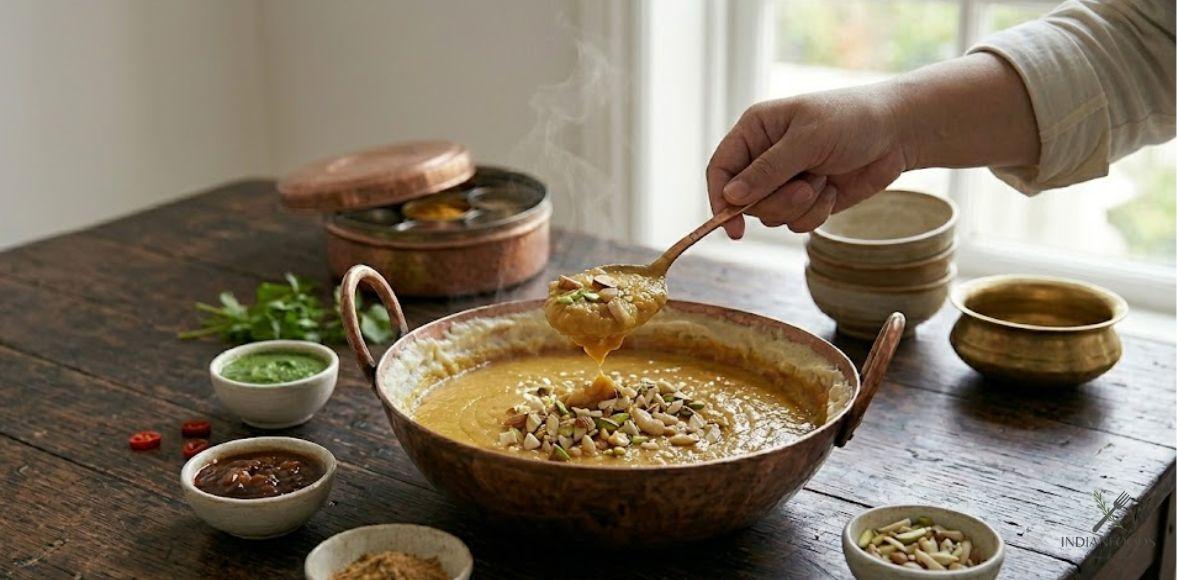
Rabdi Recipe
Ingredients
Main Ingredients
- 500 ml Full-fat Milk it is better to use Buffalo milk which has more malai
- 3-4 tbsp Sugar adjust to taste
- 8-10 strands of Saffron wet in 1 tbsp warm milk
Spices and Flavourings
- 1/2 tsp Cardamom powder freshly ground
- 1 tbsp Almonds slivered
- 1 tbsp Pistachios slivered
- ½ tsp Rose water optional
Instructions
- Add the full-fat milk to a wide and heavy-bottomed kadai or pan. Heat the milk on medium heat and stir at intervals to prevent scalding the bottom.
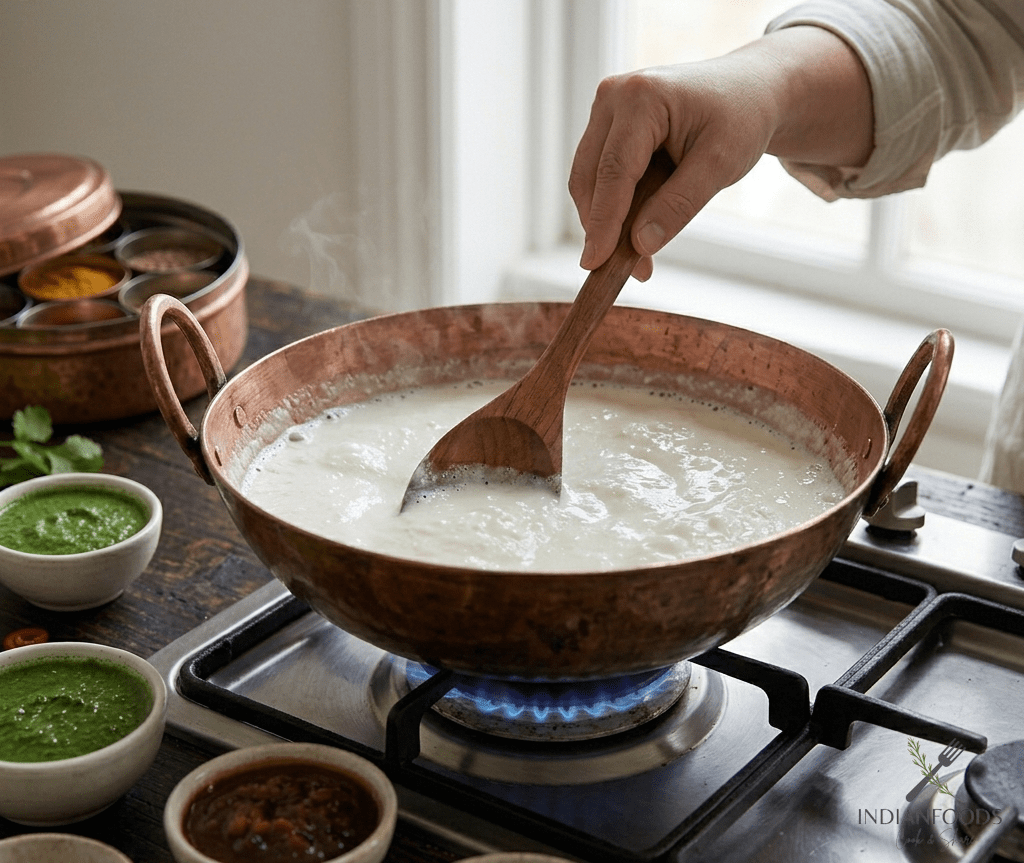
- When the milk begins to boil, turn the flame to a low level. A layer of cream (malai) forms on the surface, and a spatula is used to push it towards the sides of the pan to attach it to the rim.
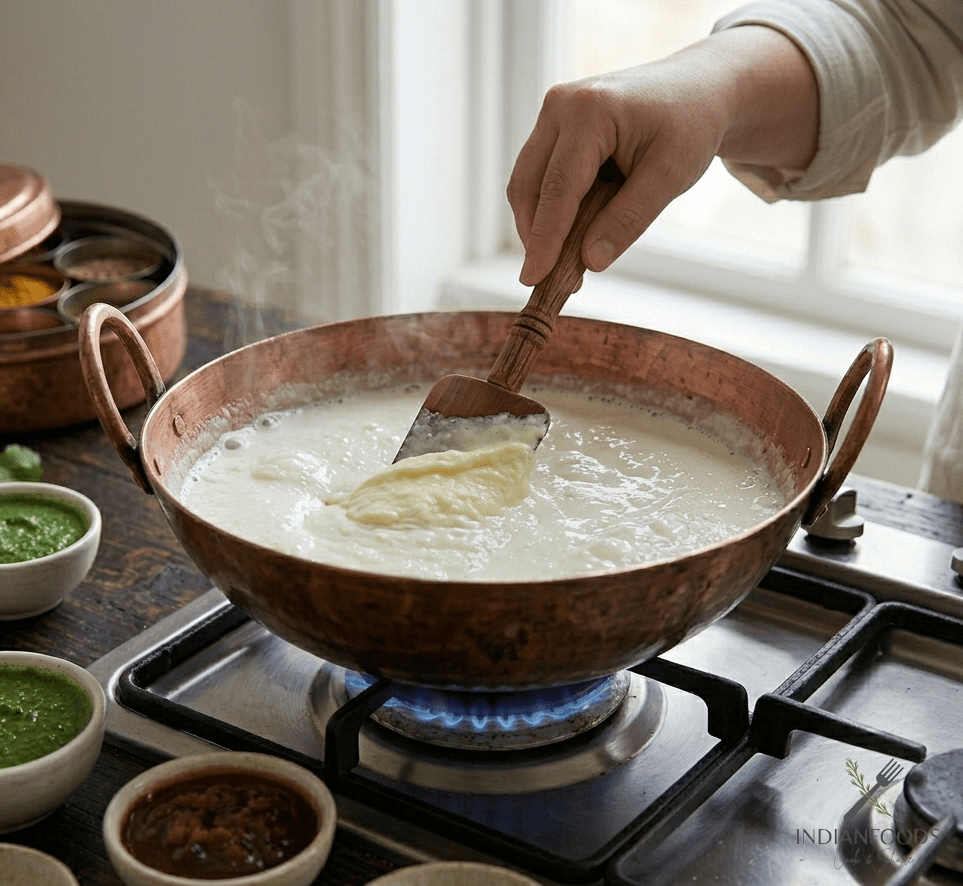
- Repeat the procedure of boiling and pushing the layers of the cream to the sides. Stir the middle of the milk periodically to make sure that it does not get stuck on the bottom.
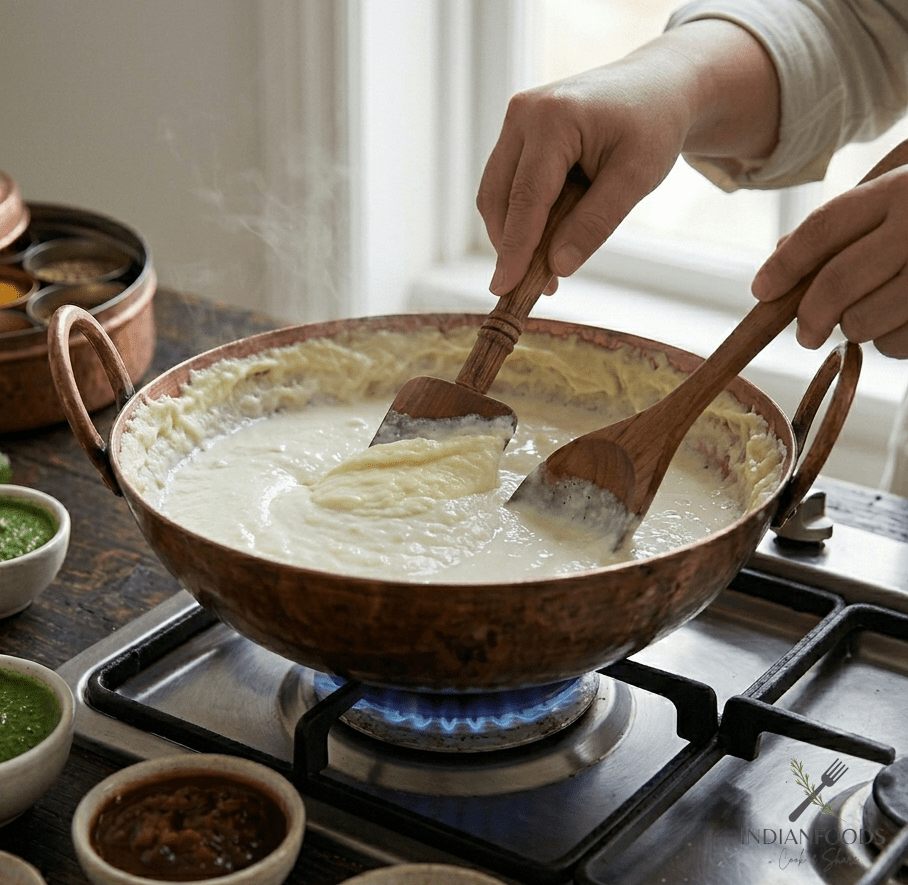
- Continue simmering until the milk has been boiled down about one-third of its initial amount and the liquid thickens and loses its original dark yellow or pale cream color.
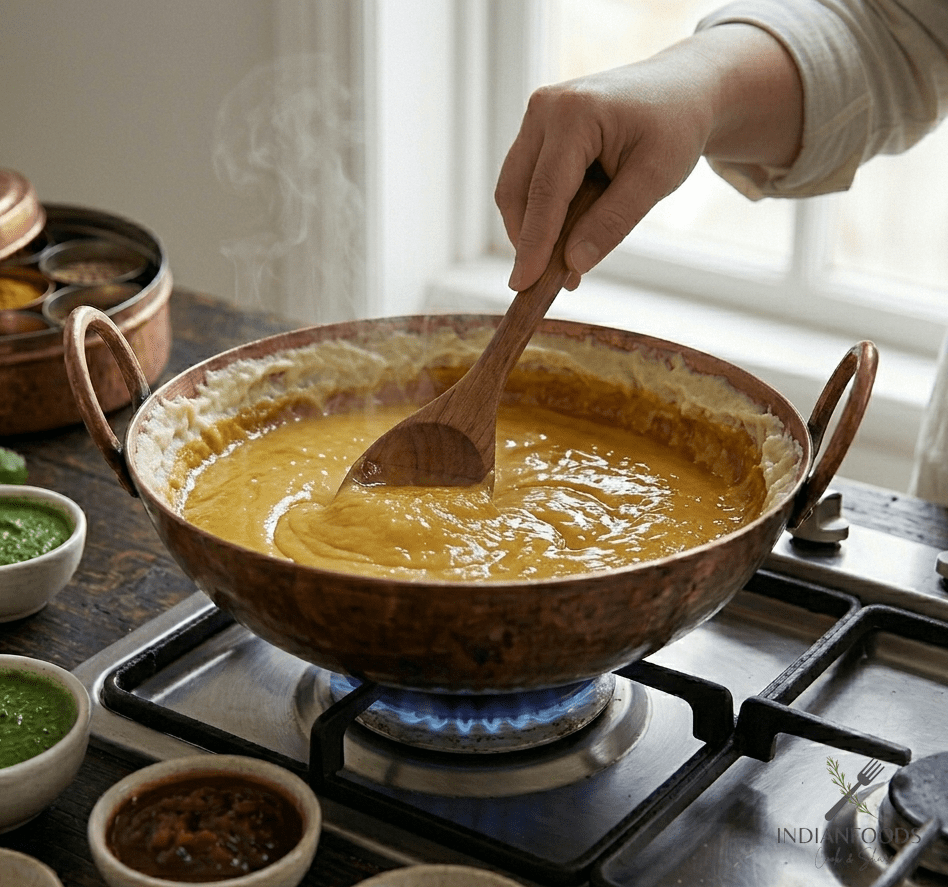
- Combine the sugar and the milk infused with saffron. Stir thoroughly between 2-3 minutes until the sugar dissolves completely.
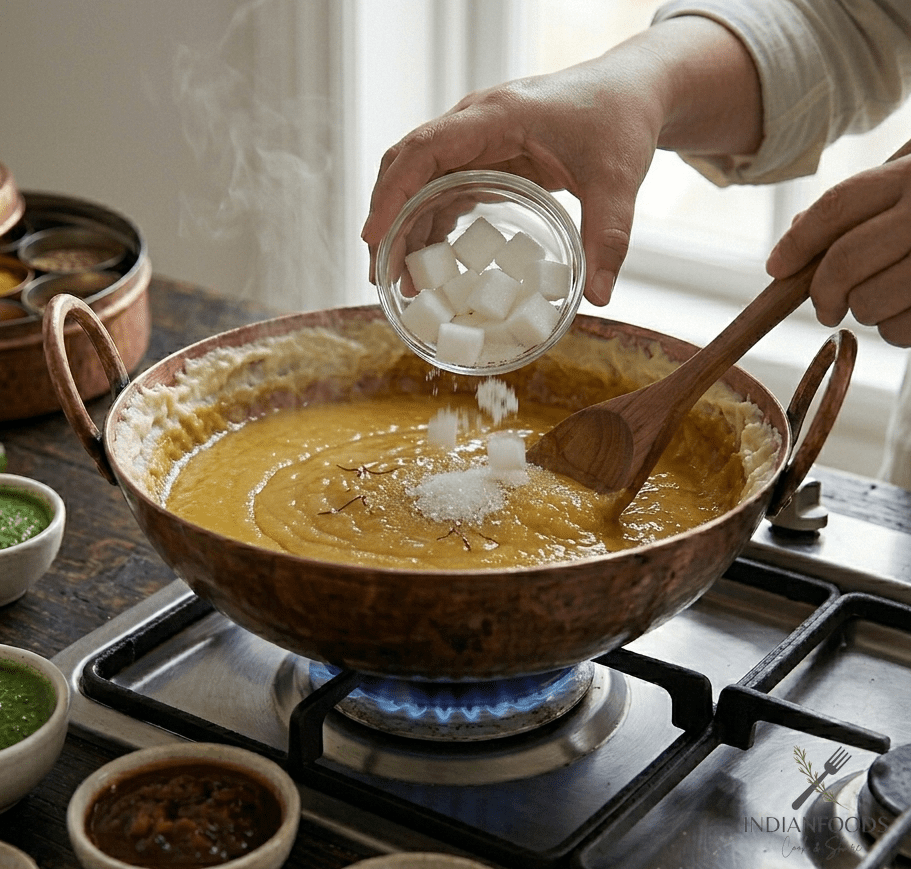
- You can now remove all the layers of cream you have scraped off using the spatula on the sides of the pan to the thick milk again. These are the lachhas or the flakes that make rabdi its flavor.
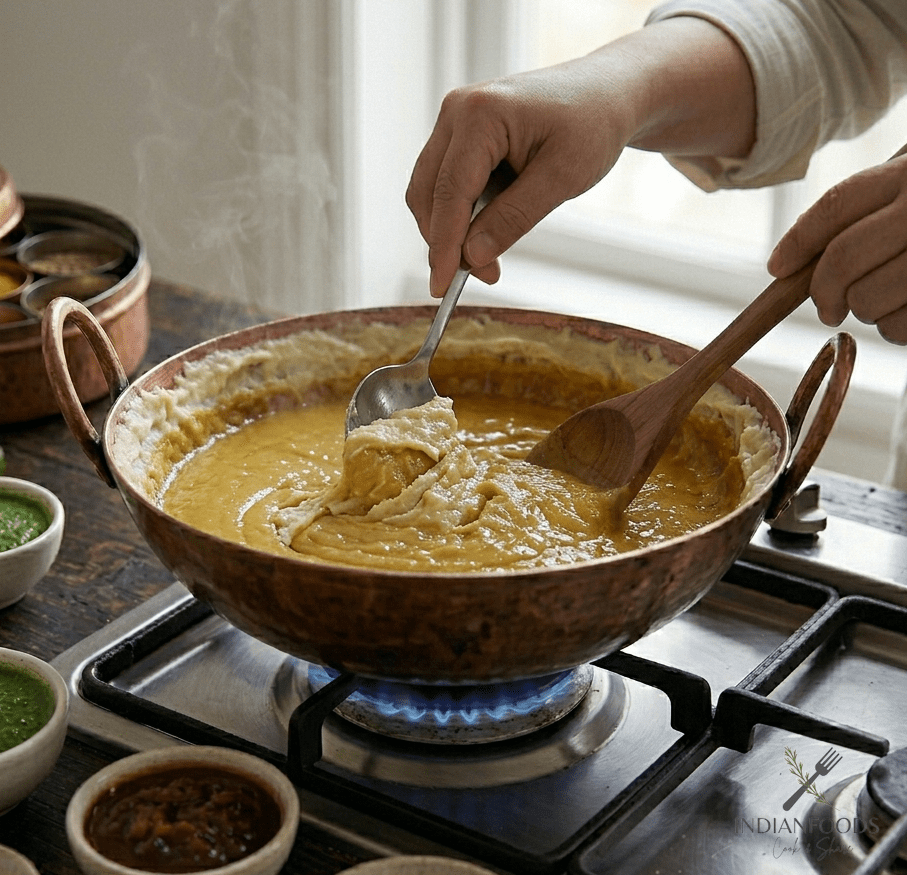
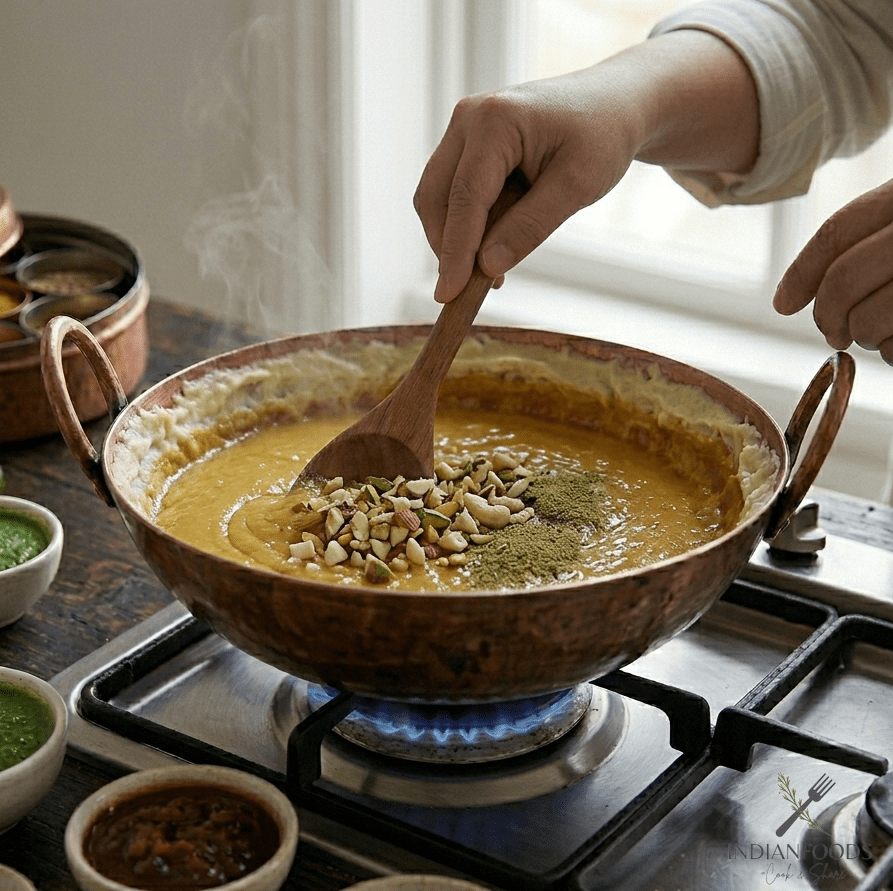
- Add 1/2 of the chopped nuts and cardamom powder. Stir it lightly and turn off the heat. The cooling of the rabdi will also increase in thickness. Serve warm or chilled.
Notes
- Use a wide, heavy-bottomed pan to increase surface area for faster cream formation and to prevent the milk from burning.
- Buffalo milk is highly recommended for this recipe as its high fat content produces much thicker and more abundant malai layers.
- Avoid stirring the milk too vigorously; gentle movements are necessary to allow the cream to settle on the surface undisturbed.
The Perfect Rabdi Tips
- A wide-mouthed pan or kadai will allow the surface area to be more prominent thus allowing the cream layers to form quicker and the milk to reduce more effectively.
- Whole milk, not toned or skimmed milk, is necessary because it is the fat that forms the thick malai flakes.
- By maintaining the flame at low intensity during the reduction process the milk does not burn and the cream layers do not dissolve into the liquid.
- Do not over sweeten the rabdi because the natural sugars in the milk get concentrated as it subsides.
Types of Rabdi Variations
- Angoori Rabdi: This is a variation of rasgulla in grape-size that is soaked in the rabdi and served during festivals.
- Fruit Rabdi: When the rabdi is thoroughly frozen add chopped mangoes or custard apple to give it a cool taste just like the chilled feel of a bengali mishti doi recipe.
- Gulab Jamun with Rabdi: A customary dish, the hot gulab jamuns are dipped in a bowl of ice cream and cold rabdi.
- Frozen Rabdi: Put mixture in moulds to solidify giving it a similar texture as a normal malai kulfi recipe.
Uses of Rabdi
- Present it as a dessert on its own in small earthen bowls (matkas) and don a rustic look.
- It makes a worthy Indian dessert pair when used as a thick and creamy sauce over Malpua or Jalebi.
- Serve it on top of kulfi to create a popular street dish in the North of India called Rabdi Kulfi.
- Quick Shahi Tukda Toast, spread on cake and toast slices.
Storage Tips
- Rabdi made fresh may last 3-4 days in the refrigerator in an airtight container.
- Its being a dairy-based dessert makes it inadvisable to keep it at room temperature longer than a few hours, in hot weather in particular.
- Rabdi can be frozen for up to one month, but the malai flakes are likely to change a little in texture when thawed.
Health Perspective
- Rabdi contains a good source of calcium and phosphorus, which is important to maintain the strength and health of bones.
- It contains high levels of milk proteins and healthy fats as it is prepared using reduced milk content.
- Preparing it at home will enable you to keep the amount of sugar under control or replace it with jaggery to have a more natural one.
- It is a nutrient-dense food, which is why kids and people who require high-calorie boosts in their systems will find it to be an excellent treat.
Mistakes to Avoid
- A thin-bottomed pan will cause the milk to burn along the bottom, giving the whole lot a smoky, bitter flavour.
- Each vigorous stirring will force the cream layers to the bottom so that instead of a lachha rabdi, the final product is a smooth liquid.
- Sugar also interferes with the formation of the thick cream layers and can result in thinning of the milk.
- When milk is left too long it tends to overflow or be stuck to the bottom of the pan.
Why Homemade Rabdi is Better
Homemade rabdi is much better as it is made of 100 per cent pure milk. Commercial stores tend to add cornflour, bread crumbs, or arrowroot powder to get the milk to thicken faster. This destroys the original grainy texture that would exist in a good kalakand recipe.
Back home, you receive the true flavour of caramelised milk solids and fresh cardamom, and no artificial additives or preservatives, so that you serve the family a rich and healthy dessert.
Conclusion
The Rabdi Recipe is a masterpiece to the art of slow cooking. It transforms an ordinary bottle of milk into a multi-stratified and exquisite masterpiece which is the core of Indian confectionery. It can be accompanied by other sweets or be taken alone, but rabdi does not tire you.
Using this conventional technique, you can transport the flavour of India of yore into your kitchen. Make a big batch today, cool properly and enjoy the sumptuous, fine tastes of home-cooked rabdi!
Related Recipes
FAQs
Surely, condensed milk can be added to whole milk to make it faster, but it will not create that same texture, and you will not get the traditional lachha cream layers.
Lightly browned is fine, as the sugars in milk (lactose) have caramelized during prolonged cooking and in fact, this contributes to the taste.
Milk may curdle when it is no longer fresh or when an acidic substance is added. Never use part-fat milk.
The trick here is to place it in a large pan and blow softly on its surface or leave the fan running at a lower level to ensure the cream solidifies quicker than pushing it at the sides.
Yes, but don’t add jaggery until the heat is off and the milk is cooled a bit so as not to curdle.