
Coconut laddu recipe, or nariyal laddu, is the ultimate answer to a person who wishes to have a delicious Indian traditional sweet. These mushy, melt-in-the-mouth balls are prepared using succulent grated coconut and sweetened condensed milk or sugar. It may be an urgent celebration needed during the Ganesh Chaturthi and Diwali.
An ideal coconut laddu can be characterised by its texture. It should have a moist, juicy interior and a solid, round exterior. Most individuals are fond of a besan ke laddu with a roasted, nutty profile. The coconut laddu is a much lighter and fresher alternative that takes much less time to cook.
You will discover in this guide to the book how to get the right bind. How to keep the coconut from browning and how to coat these tempting treats to a professional, halwai-style finish.
What is Coconut Laddu
A coconut laddu is a well-known Indian confectionery in which coconut is the main ingredient. Two are the standard methods of sugar syrup that are string-consistent, and the new “instant” method that consists of condensed milk.
It is a main dish in Indian puja offerings. In many cases, it is eaten as prasad due to the concept of the sacrament of the coconut in Indian rituals. Coconut laddus are easy to prepare, unlike a rasgulla recipe; it entails complicated milk curdling and syrup boiling recipes.
Recipe Card
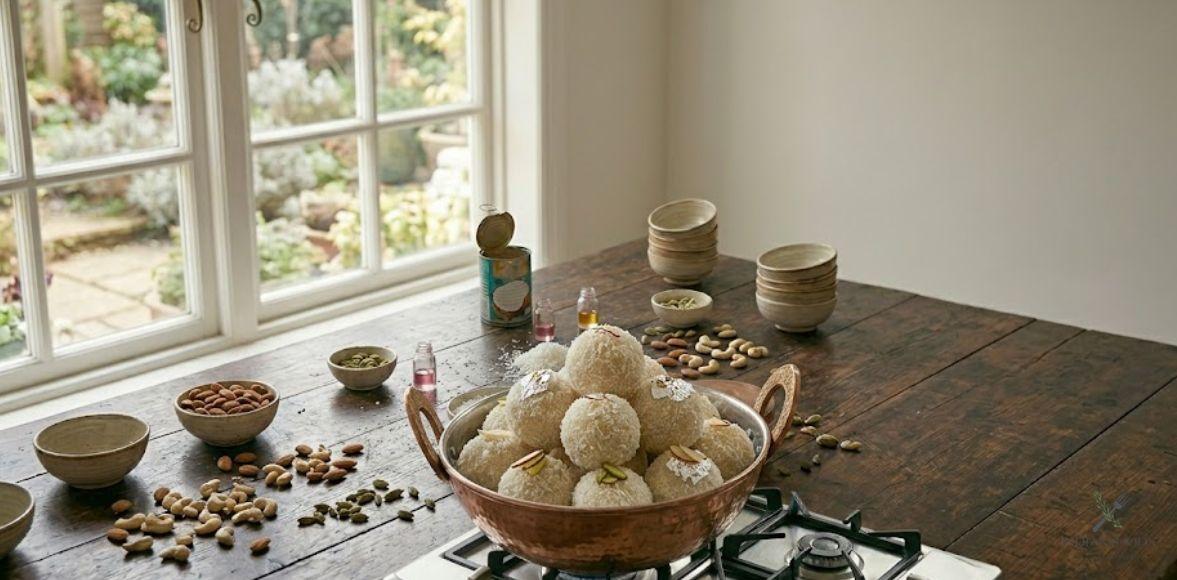
Coconut Laddu Recipe
Ingredients
Main Ingredients
- 2 cups of Desiccated coconut fine type
- 1 cup Condensed milk sweetened
- 1 tbsp Ghee clarified butter
- 2 tbsp Desiccated coconut to be used in coating
Spices and FlavoringsFlavourings
- ½ tsp Cardamom powder
- 1 tsp Rose water optional
- 4-5 strands Saffron soaked in teaspoonful warm milk, optional
Instructions
- Take a non-stick pan with a heavy bottom, and keep it warm on a low flame and add one teaspoon of ghee. Add 2 cups of desiccated coconuts and saute lightly over 2-3 minutes. Make sure that the coconut does not turn brown; it is just that you need to break the natural oils and smell of the coconuts.
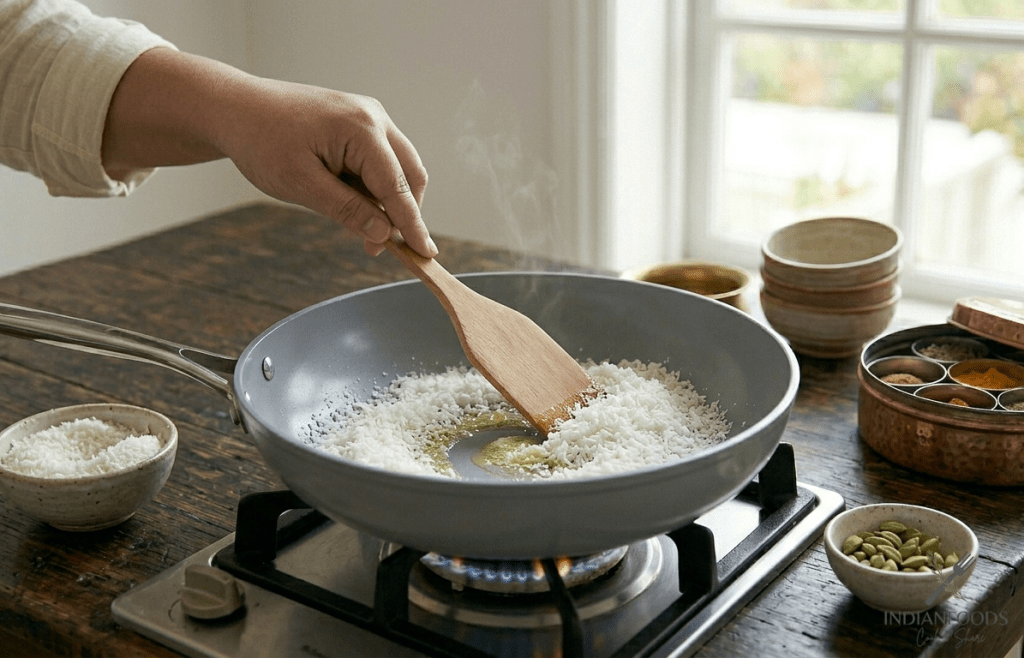
- Take out 2 to 3 tablespoons of the desiccated coconut mixture and keep it aside. Then add the sweetened condensed milk. Keep on stirring to prevent the mixture from sticking to the bottom of the pan.
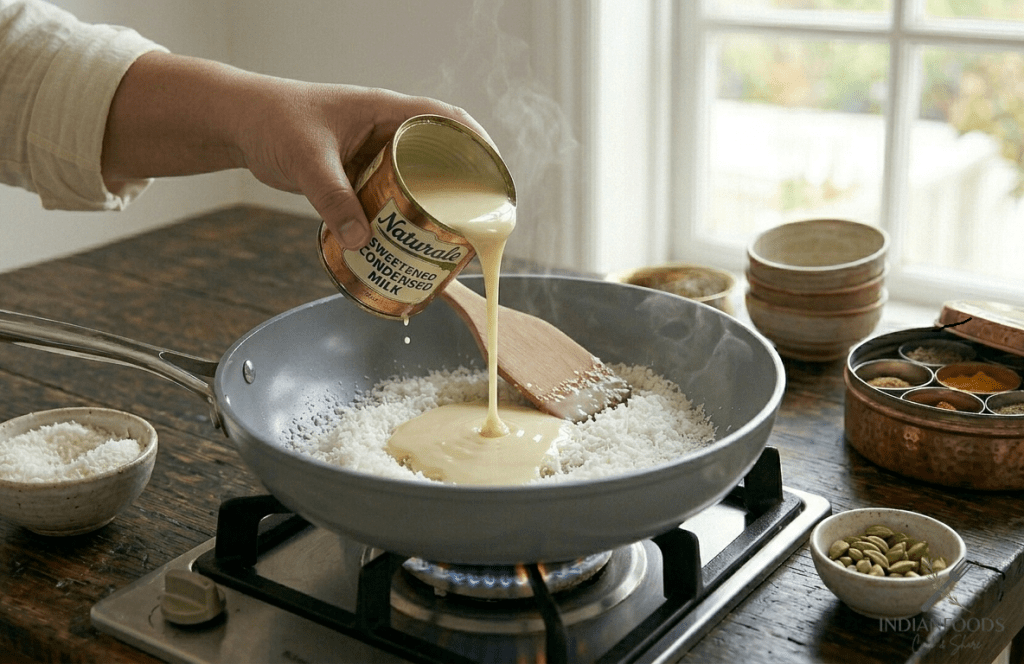
- Continue cooking the mixture on low heat. With the condensed milk being absorbed by the coconut, it will begin to thicken, creating a mass that will leave the sides of the pan behind.
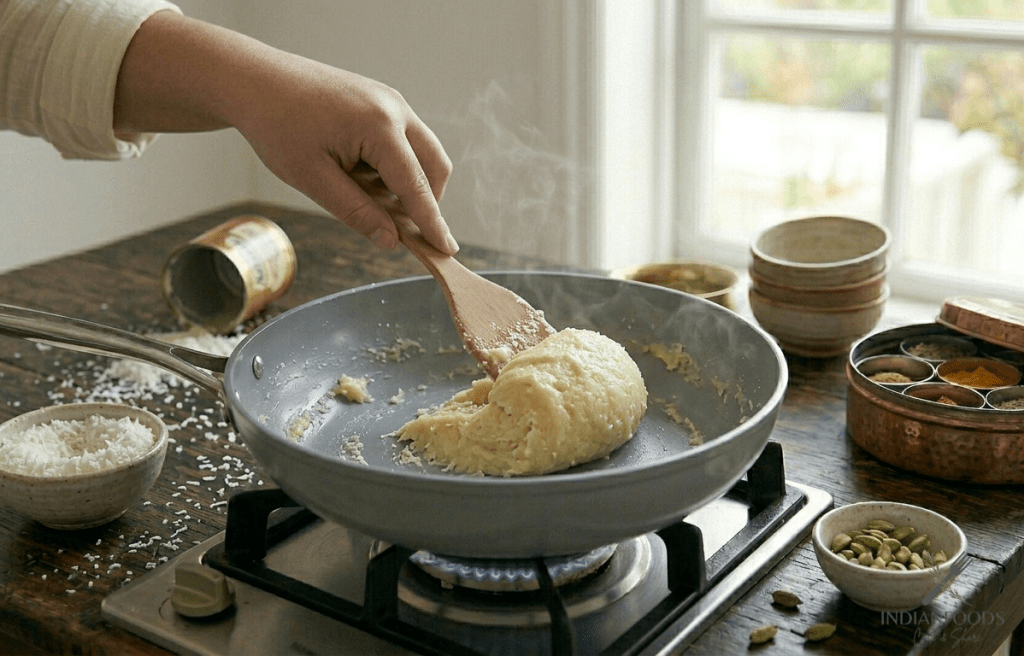
- Cardamom powder and rose water (optional) are added at this point. At this point, assume you are using saffron milk to give it a golden hue. Now, add it and stir thoroughly.
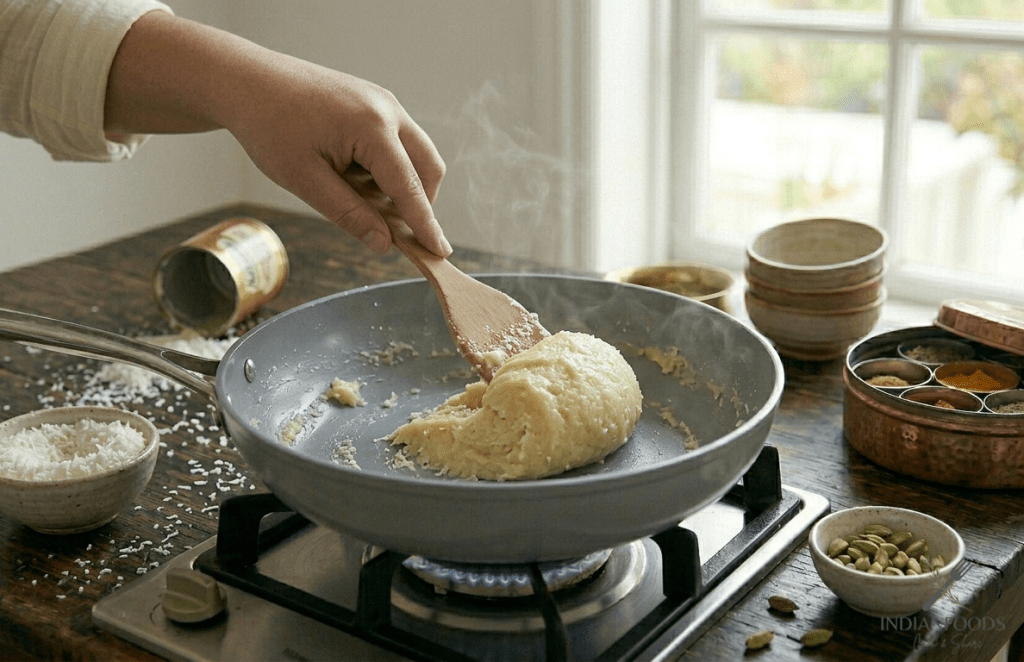
- As soon as the mixture is thick and it sustains its shape, take it out of the heat and place it on a plate. Allow it to cool for a few minutes till it is not too hot to feel with your palms.
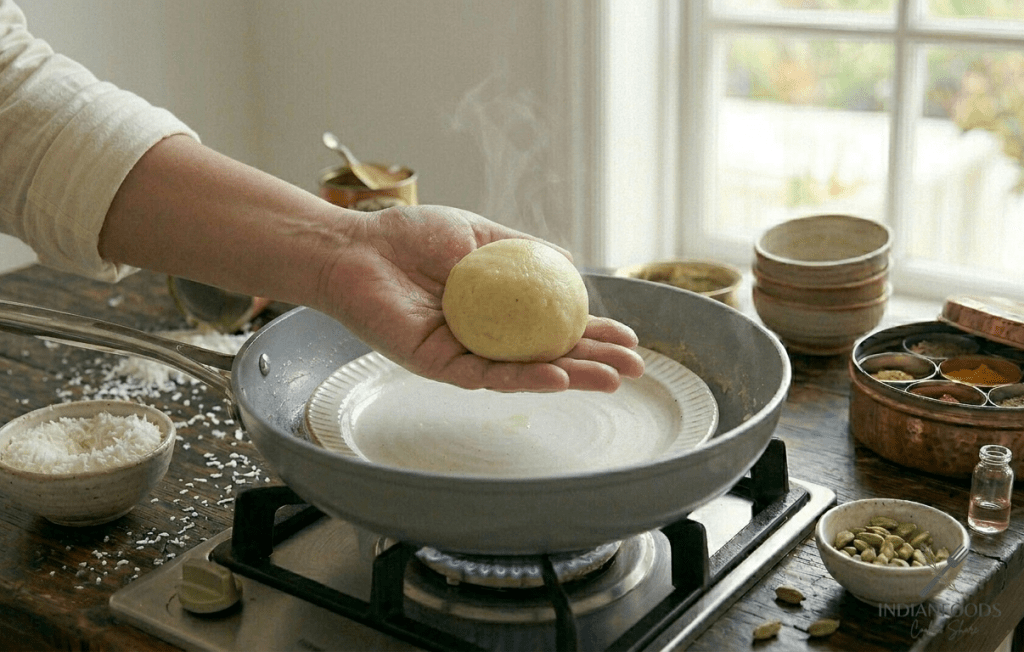
- Wipe your palms with some ghee. Take the portion of the mixture and roll it between your palms to create a ball that is round, smooth and small.
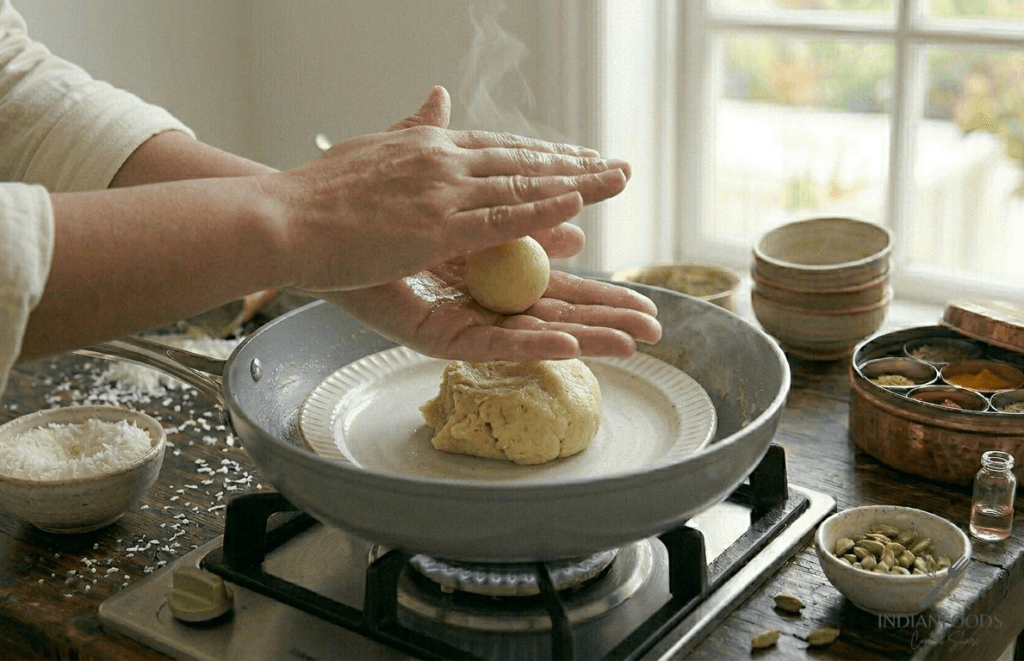
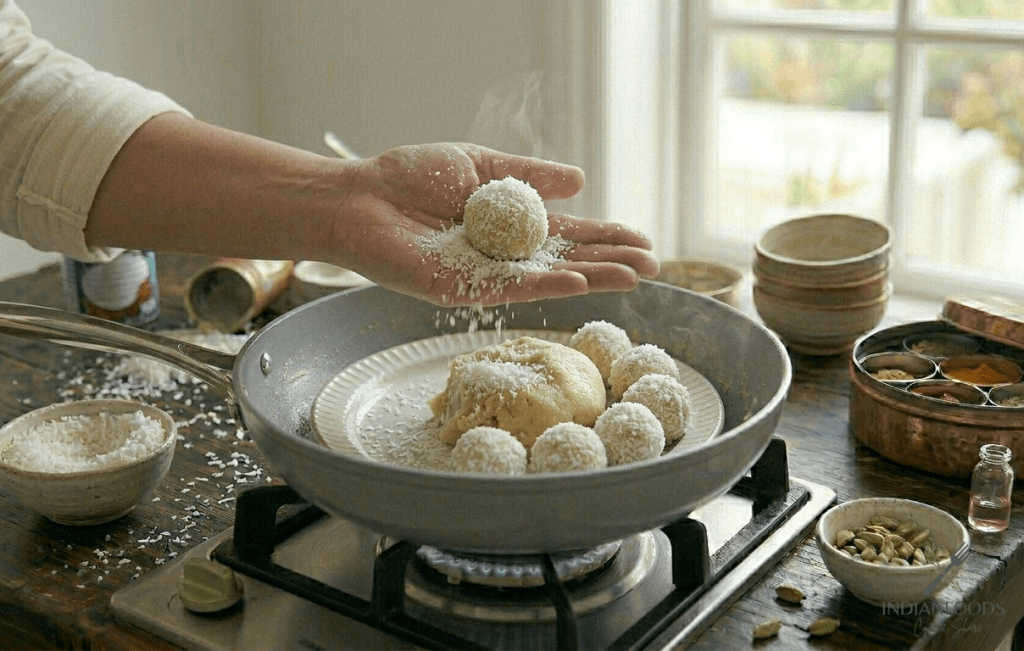
- This is the step of rolling the prepared laddu in the dry desiccated coconut that you had put aside earlier until it is completely covered. Repeat with the remaining mixture and allow them to dry after 30 minutes, then they may be served.
Notes
- Use a low heat setting throughout the entire cooking process to ensure the coconut remains white and does not develop a burnt or toasted flavor.
- If using fresh coconut, ensure you grate only the white part and avoid the brown skin to maintain the clean appearance and soft texture.
- Roll the laddus while the mixture is still slightly warm; once it cools completely, it becomes harder to achieve a perfectly smooth and round shape.
The Perfect Coconut Laddu Tips
- Always cook on a low flame because coconut has a high oil content and can burn or turn brown very quickly, which ruins the snowy white look of the laddu.
- Use fine desiccated coconut rather than large flakes for the best binding and a smoother mouthfeel.
- If the mixture feels too dry to bind, add a tablespoon of milk; if it is too sticky, add a little more desiccated coconut and cook for another minute.
- Sautéing the coconut in ghee for just a minute before adding the sweetener enhances the shelf life and adds a rich, nutty depth to the flavor.
Types of Coconut Laddu Variations
- Stuffed Coconut Laddu: Place a small piece of gulkand (rose petal jam) or a single nut in the center while rolling for a surprise gourmet filling.
- Chocolate Coconut Laddu: Mix in two tablespoons of cocoa powder with the condensed milk to create a fusion treat that kids will love.
- Kesar Coconut Laddu: Add saffron-infused milk to the mixture to give the laddus a beautiful yellow hue and a royal aroma.
- Healthier Version: Use jaggery or dates as a sweetener instead of condensed milk for a rustic version similar to a til ke laddu.
Uses of Coconut Laddu
- Serve them as an instant dessert for festivals like Raksha Bandhan, Janmashtami, or Diwali.
- Use them as a quick energy booster or a sweet treat in a child’s school tiffin box.
- Pack them into beautiful decorative boxes to give as a healthy, homemade gift to friends and family.
- Serve them as a light dessert after a heavy Indian meal to cleanse the palate with tropical freshness.
Storage Tips
- Coconut laddus made with condensed milk should be stored in an airtight container in the refrigerator to keep them fresh for up to a week.
- If you are using fresh coconut instead of desiccated, the shelf life is shorter, and they should be consumed within 2–3 days.
- You can keep them at room temperature for a day if the weather is cool, but refrigeration is always recommended to maintain the texture of the milk solids.
Health Perspective
- Coconut is rich in medium-chain triglycerides (MCTs), which are healthy fats that provide quick energy to the body.
- It is a high-fiber ingredient that can aid in digestion when consumed in moderation.
- By using condensed milk, you get a good source of calcium, although the sugar content makes this a treat for special occasions.
- This recipe is naturally gluten-free, making it a safe sweet option for those with gluten sensitivities or Celiac disease.
Mistakes to Avoid
- Cooking on high heat will cause the coconut to toast too much, resulting in a brown laddu with a burnt aftertaste.
- Adding too much condensed milk will make the mixture very sticky and difficult to shape into rounds.
- Forgetting to coat the laddus in dry coconut will result in a tacky exterior that sticks to the fingers.
- Overcrowding the pan significantly lowers the oil temperature during frying, which is a rule for snacks, but for laddus, ensure you work with manageable batch sizes to keep the heat consistent.
Why Homemade Coconut Laddus are Better
Homemade coconut laddus are significantly better. Because you can ensure the freshness of the coconut. Many commercial versions use old desiccated coconut that has lost its moisture and oil, leading to a “sandy” texture.
At home, you can use premium condensed milk and fresh cardamom, avoiding the artificial essences and excessive preservatives found in store-bought sweets. The result is a much juicier, more aromatic, and cleaner-tasting sweet.
Conclusion
Coconut laddu recipe is the ultimate proof that you don’t need hours in the kitchen to create a spectacular Indian sweet. It is a dish that balances simplicity with luxury, providing a burst of tropical flavor in every bite. Whether you are a beginner or an experienced cook, these laddus are a guaranteed success.
Try this easy recipe for your next celebration. Roll them up, coat them in snow-white coconut, and enjoy the effortless charm of these homemade delights!
Related Recipes
FAQs
Yes, but you must sauté the fresh grated coconut for a bit longer to remove the excess moisture before adding the sweetener.
This happens if the mixture is too wet. Put it back on the heat for a few minutes until it thickens more, or add a bit more desiccated coconut.
Yes, you can use a thick sugar syrup (one-string consistency) or jaggery, but the texture will be less creamy and more traditional.
Avoid sautéing the coconut for too long and do not use saffron or any colored flavorings to maintain the pristine white look.
Absolutely! Finely chopped cashews, almonds, or raisins can be mixed into the dough before rolling for added crunch.