
Phirni, or firni, is a typical Indian dish that epitomises Mughlai style. A phirni is a luscious, creamy rice-based pudding cooked in a slow burner and composed of full-fat milk and aromatic spices.
Phirni is unique for its finely grainy texture and preferred mode of presentation in clay pots (shikoras). Unlike a traditional rice kheer, in which whole grains are used. It is a popular dish in Iftar parties, weddings, and festive dinners.
The consistency of a phirni is considered to be the hallmark of a perfect phirni. It must be thick to be solid yet soft to dissolve in the mouth. Many people take a makhane ki kheer as it is served with crunchy puffed lotus seeds.
Here, in this all-encompassing guide, you will know how to properly soak and grind rice. The trick of avoiding the formation of lumps in the milk. And how to attain the traditional set kind of consistency that makes this pudding so familiar.
About Phirni
A Phirni is a North Indian milk pudding. In which basmati rice is swollen, dried and then ground into a rough meal and then cooked in reduced milk. It has become a festive Indian dish. Which is served on ice and garnished with edible silver leaf (vark) and dry fruits.
Phirni does not require any sewai recipe. Where a silky texture is achieved by adding fine vermicelli strands to the dish. Instead of depending on the gradual thickening of milk by adding rice starch to it. The last dish is normally seasoned with rose water or kewra. Copious pinches of saffron, which provide it with a royal golden colour and a divine fragrance.
Why Phirni is a Perfect Dessert of the Festival
Phirni is a special dish in festive meals as it is not only posh but extremely light to the mouth. Its traditional serving in unglazed clay bowls keeps the dessert cool. This recipe is also easier to digest than desserts made with heavy flours, as it is prepared with ground rice.
It is also an Indian delicacy, an ingredient of any traditional Indian meal. A highlight of the meal was just the simple pleasure of smashing into a perfectly set, saffron-coloured layer of phirni.
Recipe Card
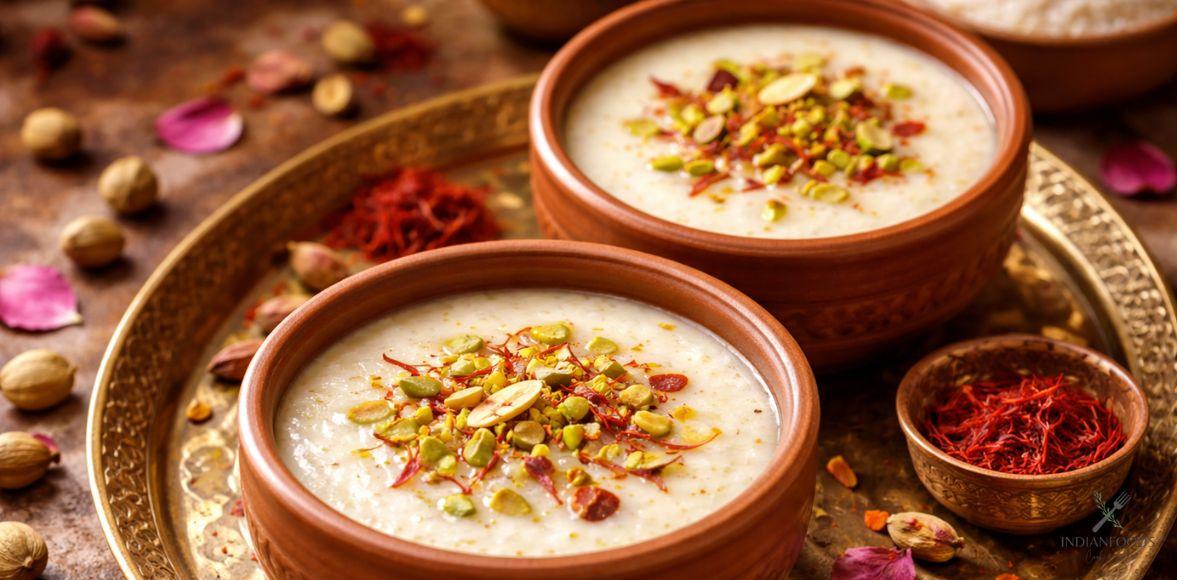
Phirni Recipe
Ingredients
Main Ingredients
- 1 liter Full-fat Milk
- 1/4 cup Basmati rice previously soaked in 30 minutes
- ½ cup Sugar adjust to taste
- 10-12 strands of Saffron wet in 2 tbsp warm milk
Spices and Flavourings
- 1/2 tsp Cardamom powder freshly painted powder
- 1 tsp Rose water or Kewra water
- 1 tbsp Pistachios slivered
- 1 tbsp Almonds slivered
Instructions
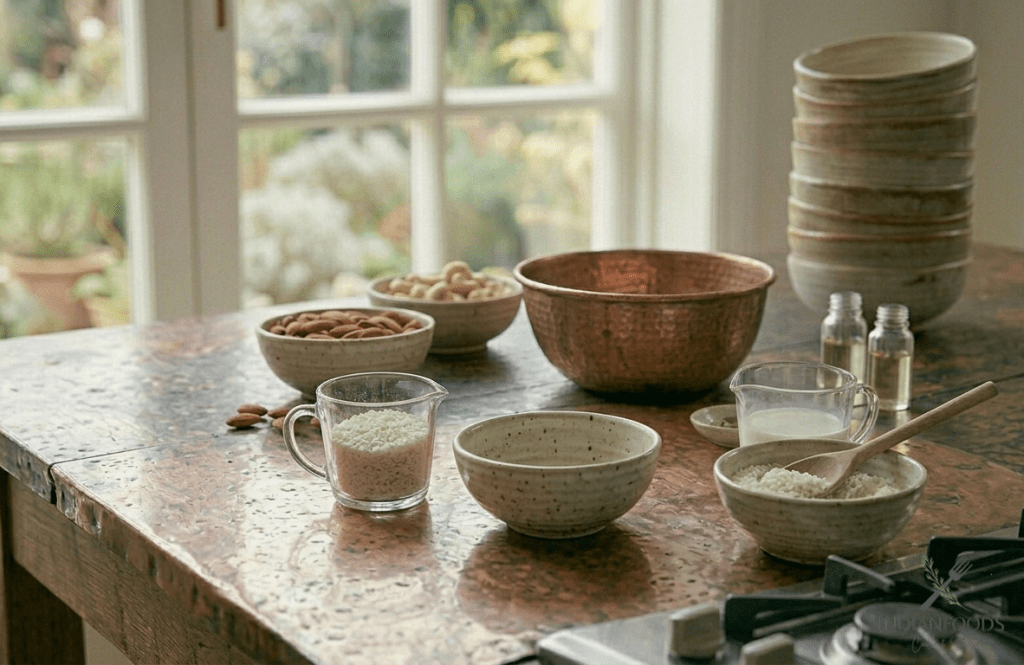
- Rinse the basmati rice under a lot of water and soak it in water for 30 minutes. Water should then be drained, and rice spread on a clean cloth to dry in 10-15 minutes.
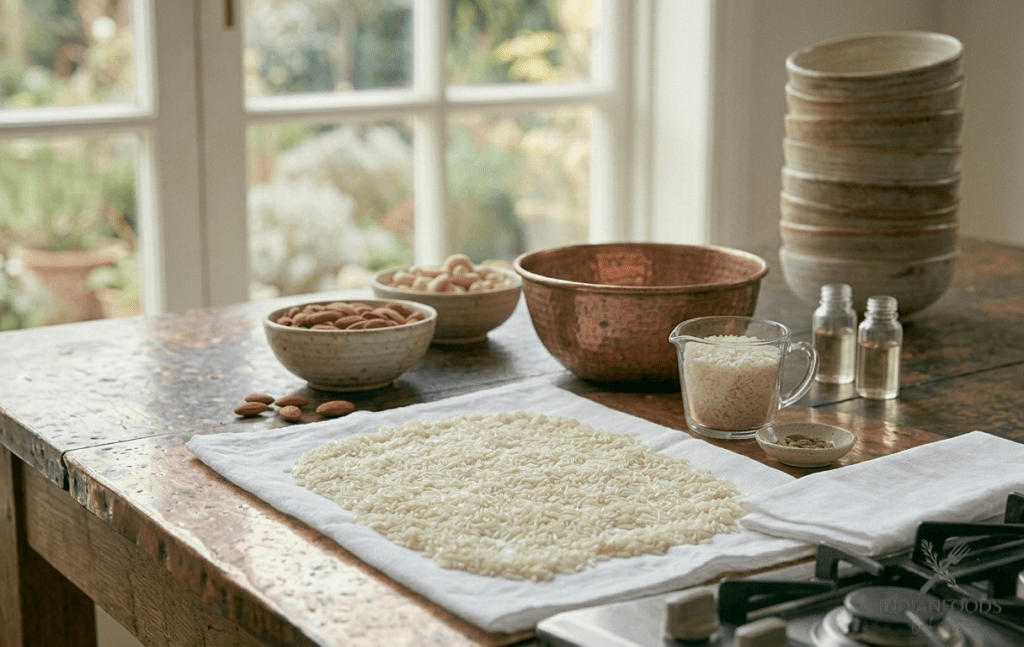
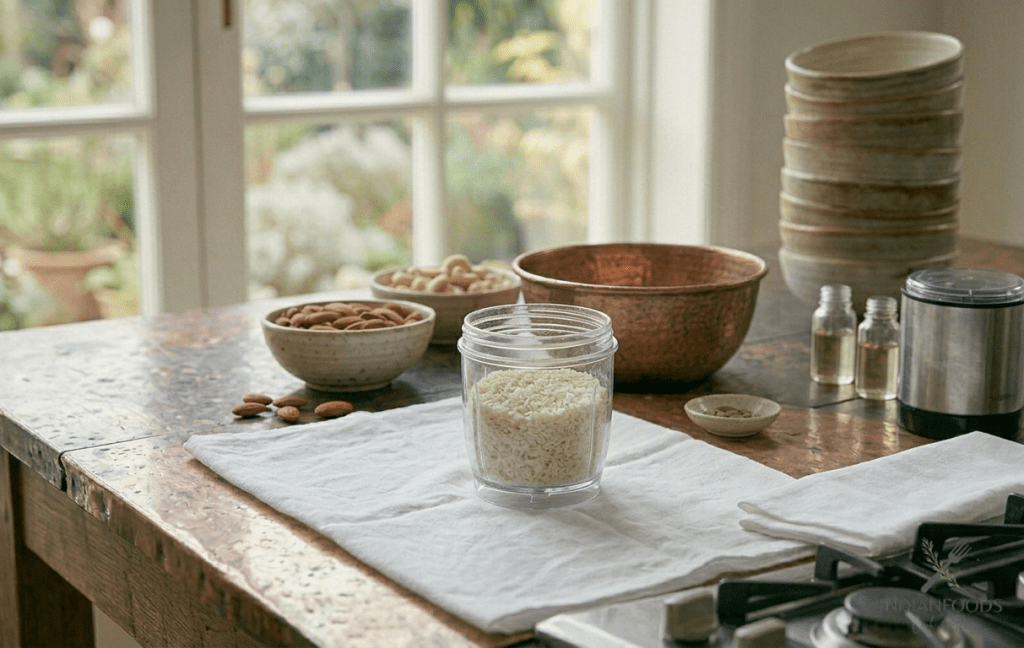
- The rice, after being slightly dry, is then ground in a mixer to a coarse consistency, like semolina (rava). There should not be grains of phirni crushed to a fine powder; the roughness is necessary.
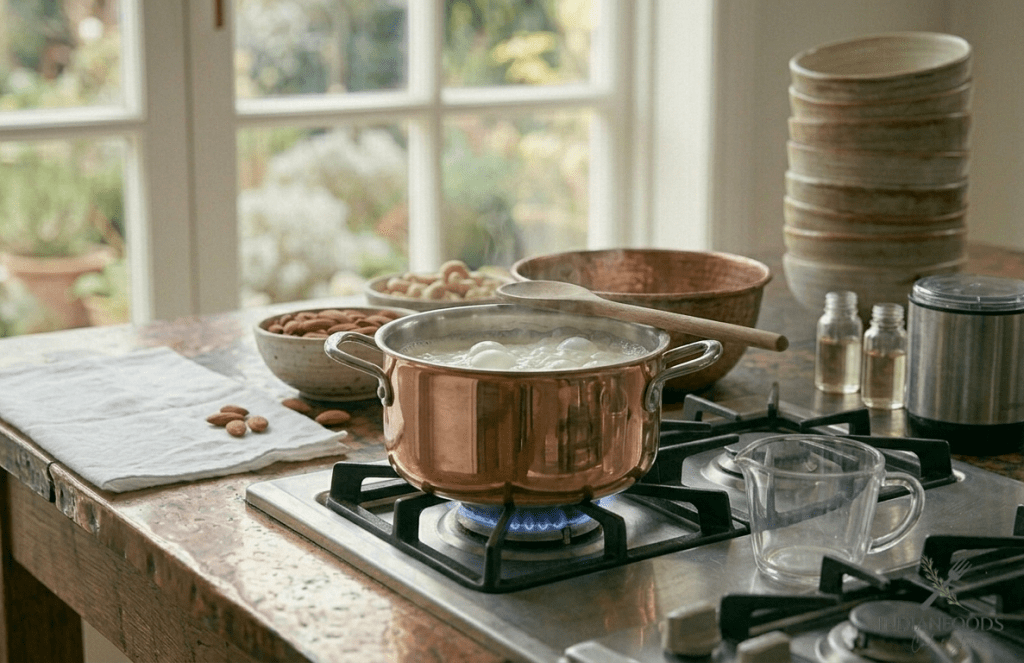
- Add the full-fat milk into a heavy-bottomed pan and boil it over medium heat. Reduce the fire to a simmer and leave it to simmer for 5-8 minutes until it subsides.
- Warm 1/2 cup of the warm milk and combine it with the ground rice in a small bowl, creating a smooth slurry. This is what should be done so that lumps are not formed by adding rice to the hot milk.
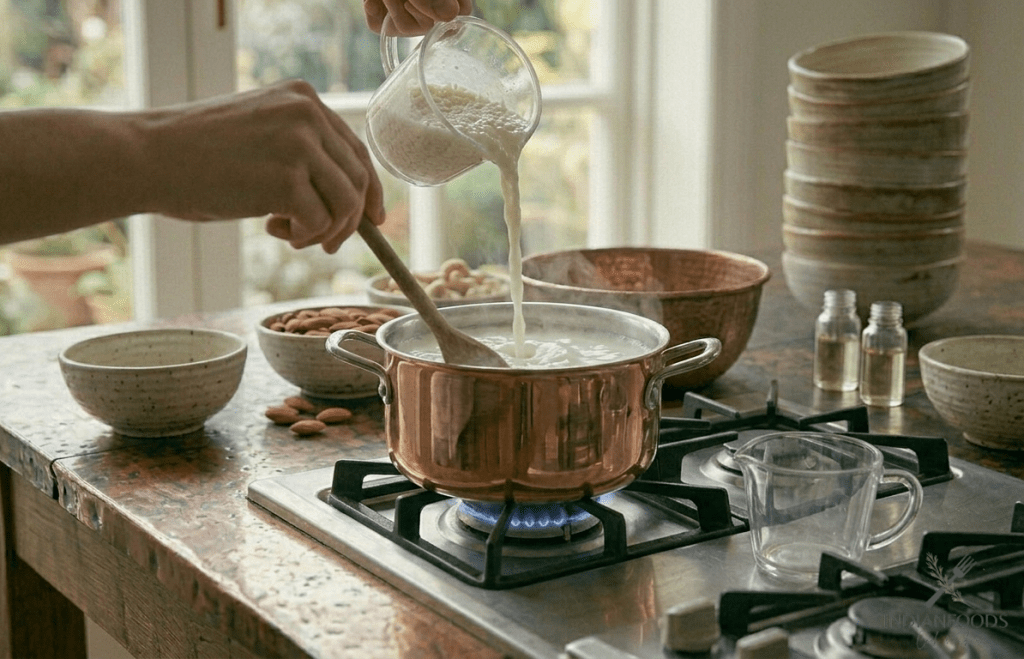
- Add the slurry of rice-milk to the boiling milk gradually, stirring all the time. Cook on low, whisking or stirring a lot to make sure that rice does not stick to the bottom or make clumps.
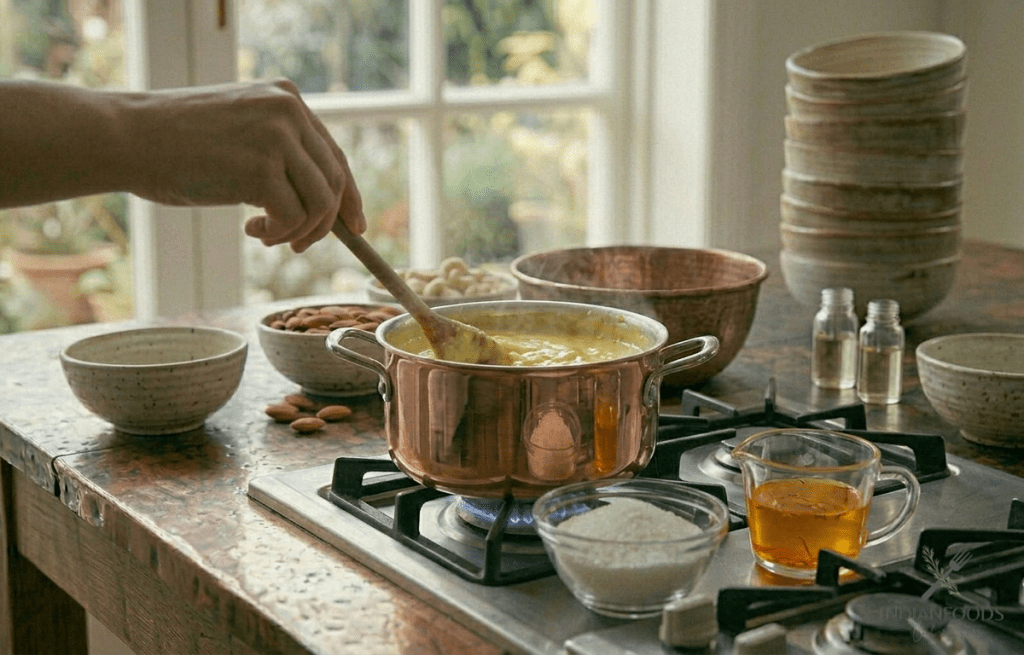
- When the mixture becomes thick and the rice is cooked completely (approximately 15-20 minutes), add the sugar and the milk flavoured with saffron. Stir thoroughly till the sugar is dissolved, and the pudding assumes a gorgeous yellow hue.
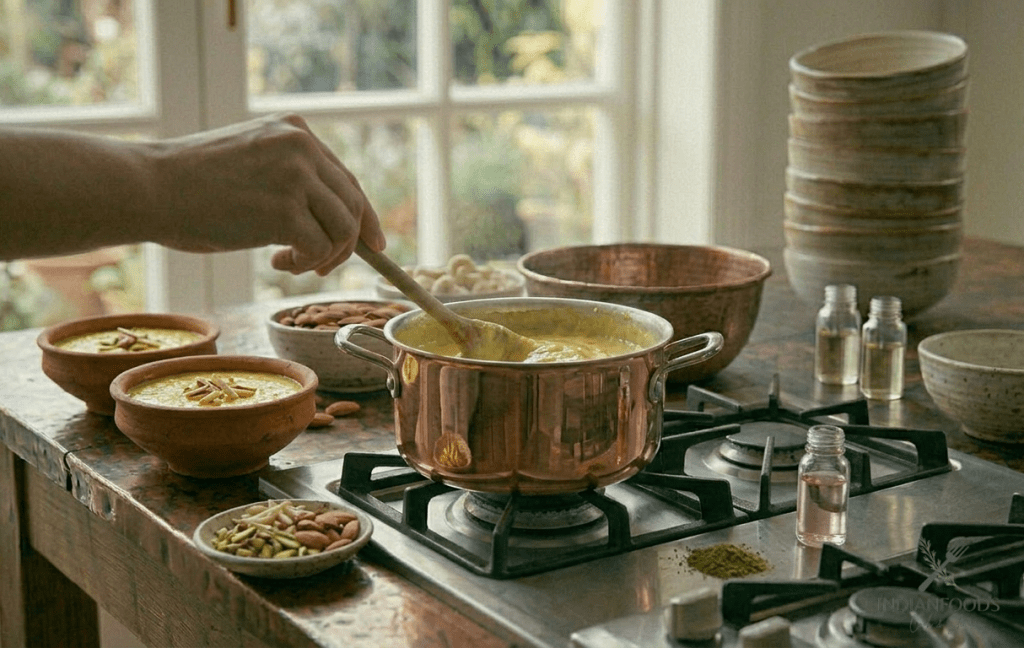
- Put in the cardamom powder and rose water. Stir it thoroughly and switch off the heat. The hot phirni may be poured into ramekins or clay bowls. Slivered nuts can be used to garnish it, allow it to cool to room temperature, and then refrigerate it at least 3-4 hours before serving.
Notes
- Grind the rice only to a coarse, semolina-like texture to ensure the phirni has its signature traditional grainy mouthfeel.
- Constantly whisk the milk after adding the rice to prevent the starch from clumping or burning at the bottom of the pan.
- Chilling the phirni in unglazed clay pots is highly recommended as the clay absorbs moisture, helping the pudding achieve a thicker, creamier set.
The Perfect Phirni Tips
- The trick to the grainy feel of phirni, which is characteristic of high-quality rice, is coarsely grinding the rice.
- To prevent the pudding consisting of lumps in the main pot, it is always advisable to add the ground rice to the main pot after adding a little milk.
- Full-fat buffalo milk gives the base a better and creamier texture. that solidifies better than toned milk.
- The application of water in soaking the clay bowls before filling them also helps in ensuring that the dry clay does not absorb excess moisture of the dessert.
Types of Phirni Variations
- Mango Phirni: Add fresh mango pulp when the phirni is cooled down seasonally and the fruit twist is as popular as a traditional kheer recipe.
- Badam Phirni: Add soaked and peeled almonds paste to the milk and the finely ground rice to give it a nutty and rich taste.
- Apple Phirni: Peel and slightly sauté fresh apples prior to adding them to the cooked phirni to have a different texture.
- Low Sugar Phirni: You may replace sugar with stevia or use a little bit of jaggery like a gur ki kheer, but this will make it a light brown colour.
Uses of Phirni
- Use it as a cold dessert to finish a hot meal of Biryani or Nihari to create some coolness.
- Serve it as a celebration gift during Eid or Diwali, and serve it in decorated clay pots to make it look authentic.
- Prepare small jars with individual portions to add to a picnic or a potlatch in a very convenient and elegant manner.
- Use it as a light afternoon snack among the traditional savory snacks to the guest.
Storage Tips
- Phirni should be refrigerated and it is recommended that it should be serves in 2-3 days.
- Cover the bowls with plastic wraps or foils to ensure that the pudding does not absorb the other refrigerator odors and to ensure that a thick layer is not developed.
- Freezing phirni is not advisable since the rice and milk emulsion can be disturbed giving a watery and unattractive texture to this food when thawed.
Health Perspective
- Basmati rice is an excellent source of energy giving carbohydrates; hence it is a good snack.
- Milk is a major protein and calcium food supplement, which helps in maintaining bones and muscles.
- Saffron and cardamom contain antioxidants and aids in digestion when added into the meal after a heavy meal.
- Preparation at home means that you can control the amount of sugar in it or make it a light version with natural sugar substitutes such as honey.
Mistakes to Avoid
- Turning the rice into a fine flour will give the rice a pasty gluey feel instead of the grainy feel that is intended.
- The technique of stirring the milk every few seconds when the rice is added will result in the bottom being burned and the whole lot tasting bad.
- Prematurely adding the sugar may reduce the rate at which the rice grains will cook.
- Crowding the pan will substantially reduce the oil temperature which is a tip in fried snacks, though it is not a tip in phirni, in which case it is critical that the pan is wide enough to permit even evaporation and thickening.
The Reason why Homemade Phirni is Superior
The phirni made at home is much better since you can have a guarantee concerning the quality of rice and milk used. Commercial preparation of the same frequently incorporates rice flour. Artificial thickeners to save time, which do not have the complex texture of hand-ground basmati.
At its slow-cooking pace, the rice aroma is able to penetrate completely into the milk, and the authentic saffron usage gives it a specific flavour and colour which cannot be reproduced by food dye.
Conclusion
Phirni recipe is a beautiful illustration of how the simple properties, such as rice and milk. It can be turned into a royal delicacy. It is a dessert that respects tradition, yet it is an excellent and refreshing end to a meal. Just because you are putting it in clay shops or the new glassware, its creamy, cardamom-scented flavour is always popular amongst the crowd.
Batches of phirni are easy to make, though they require a bit of planning and organization to achieve the desired result. Chill, and serve with your favorite nuts, and savor the old-fashioned flavor of this traditional Indian pudding!
Related Recipes
FAQs
You can, but the texture will be very smooth and custard-like, no longer having the traditional grainy feel of the original phirni.
This normally occurs when rice was not cooked with enough milk or when it was not full-fat milk. Make sure that it becomes thick on the stove and then cool.
No, it is possible to use glass bowls or ramekins, but clay pots are beneficial to the phirni set, as they absorb surplus moisture.
It requires at least 3-4 hours but it is best chilled overnight to provide the best flavor and firmest set.
Yes, but without the jaggery the phirni does not become curdled so it is added when the milk and mixture are slightly cooled.