
First rain of Sawan hit last week and my mother-in-law was already in the kitchen before I’d even had my coffee. That’s just how it goes in our house. The moment the sky turns that grey-green colour, someone starts soaking sabudana, and the whole month kind of rearranges itself around what we can and can’t eat.
I’m not going to pretend I loved Sawan cooking when I first married into a family that takes it seriously. No onion, no garlic, no regular rice on Mondays — my first reaction, honestly, was “so what am I supposed to make that isn’t boring.” Turns out I was wrong. Some of these dishes are things I now crave even outside the fasting days. Below are the five that show up most often at our place, written the way I actually cook them, mistakes and all.
Okay, But What Do You Even Cook
If you’re new to this — Sawan food leans on a specific set of ingredients: sabudana (those little tapioca pearls), kuttu ka atta, singhare ka atta, samak rice, boiled potatoes, peanuts, and makhana. That’s more or less it. No wheat flour, no regular rice, none of the usual onion-garlic base most Indian cooking starts with.
Sounds like a lot to give up. In practice it isn’t, mostly because these ingredients are forgiving and the food ends up gentler on your stomach anyway, which helps in this humidity when nobody’s digestion is really working at full speed. Here’s what we make.
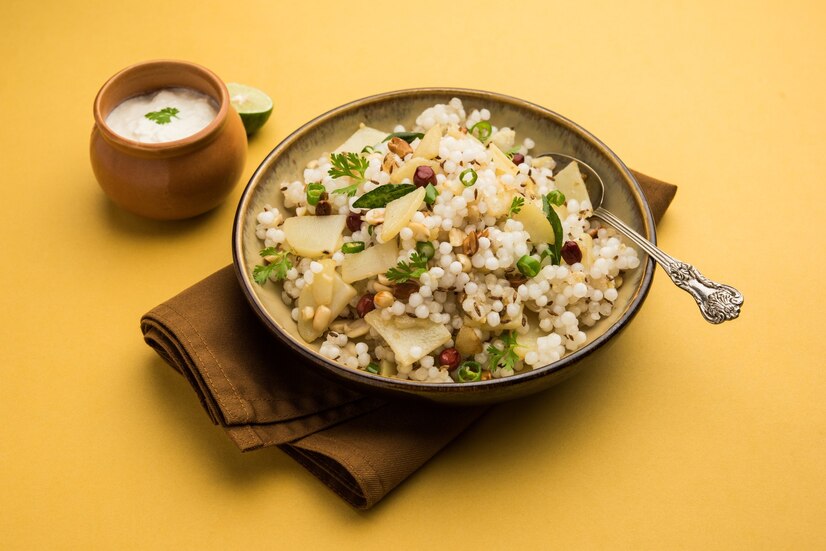
1. Sabudana Khichdi (the one everybody messes up at least once)
Everyone has a sabudana khichdi disaster story. Mine involved a giant sticky lump that looked more like glue than food, because I’d soaked the pearls in way too much water. Lesson learned — just enough water to sit level with the sabudana, no more, and let it soak overnight.
What you’ll need:
- 1 cup sabudana, soaked overnight
- 2 medium potatoes, boiled and cubed
- 3-4 tbsp roasted peanuts, coarsely crushed
- 1-2 green chillies, chopped
- A few curry leaves
- 1 tsp cumin seeds
- Rock salt (sendha namak), to taste
- Ghee for tempering
- Coriander and a squeeze of lemon, right at the end
How I make it:
Ghee goes in first, then the cumin seeds till they crackle, then curry leaves and green chilli. Drop in the boiled potato cubes and let them sit a minute so they get a bit of colour on the edges — don’t stir too fast here. Now add the soaked sabudana and crushed peanuts, a good pinch of rock salt, and turn the heat down low. This is the part people rush and regret. Stir gently, patiently, until the pearls go from white to translucent. Lemon and coriander go in right before you switch off the flame, not before — otherwise the citrus just cooks off.
2. Kuttu ki Puri with Dahi Aloo
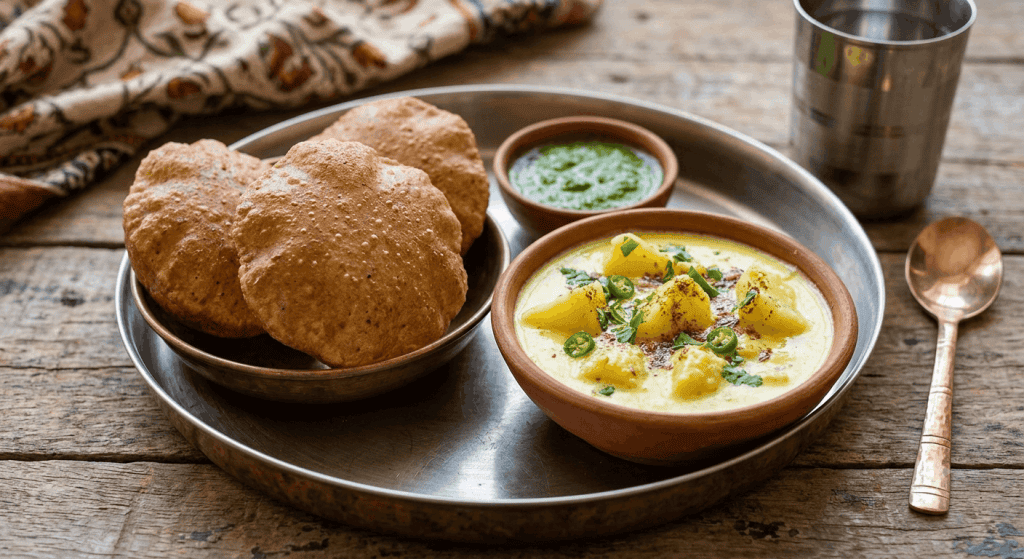
This is our Sunday thing, not a weekday one — it takes a bit more effort and honestly tastes better when you’re not rushing it. Kuttu (buckwheat) flour has this nutty, slightly earthy flavour, and it needs help holding together since there’s no gluten in it, which is why mashed potato goes straight into the dough instead of just water.
Dough:
- 1 cup kuttu ka atta
- 1 boiled potato, mashed
- Rock salt to taste
- Water, just enough to knead
Mix it into a dough that’s soft but not sticky — takes a bit of practice to get the feel right. Roll into small discs (smaller than usual puris, they tear easily) and fry in hot oil till golden.
Dahi aloo to go with it:
Boil and cube your potatoes. Whisk the curd well so there are no lumps, add a pinch of roasted cumin powder, chopped green chilli, and rock salt, then add the potatoes and warm it all through on a low flame — never let it come to a hard boil or the curd will split on you. It should taste mild, a little sour, cooling against the hot fried puris.
3. Singhare ka Halwa
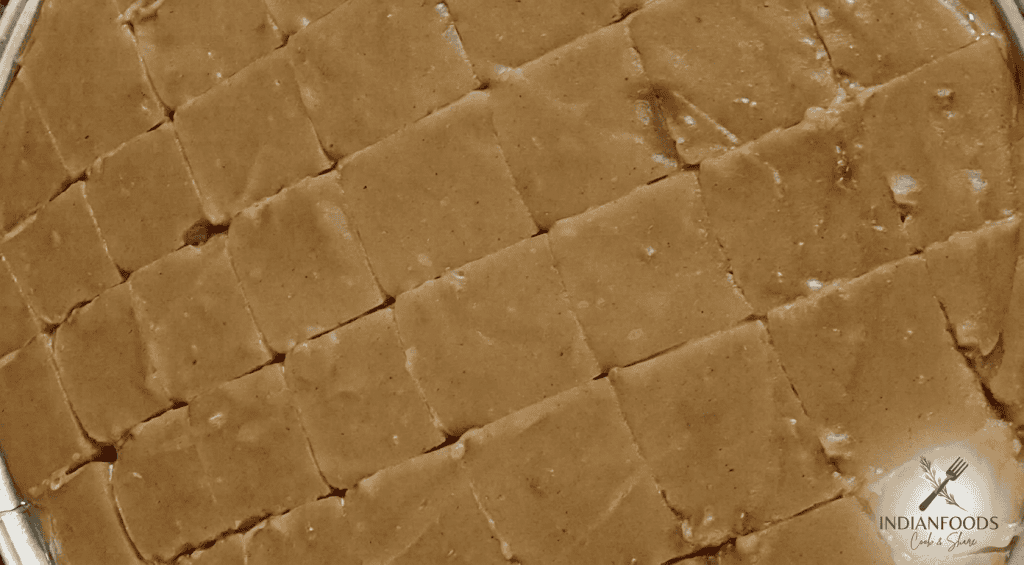
Fastest dessert in this whole list, maybe twenty minutes start to finish, but you can’t walk away from the stove even once.
You’ll need:
- 1 cup singhare ka atta (water chestnut flour)
- 3-4 tbsp ghee
- 1.5 cups milk, warm
- 4-5 tbsp sugar (or jaggery, if you prefer that flavour)
- A pinch of cardamom powder
- Almonds and pistachios, chopped
Roast the flour in ghee on a low flame. You’re waiting for it to turn a light golden shade and start smelling toasted, almost nutty — this is the step that decides whether the halwa tastes raw or right, so don’t multitask here. Once it hits that stage, pour in the warm milk slowly, stirring the whole time so it doesn’t clump. Add sugar and cardamom, keep stirring, and you’ll notice the ghee start separating at the edges when it’s ready. Top with the chopped nuts and serve it while it’s still warm — it firms up too much once it cools.
4. Samak Rice Pulao
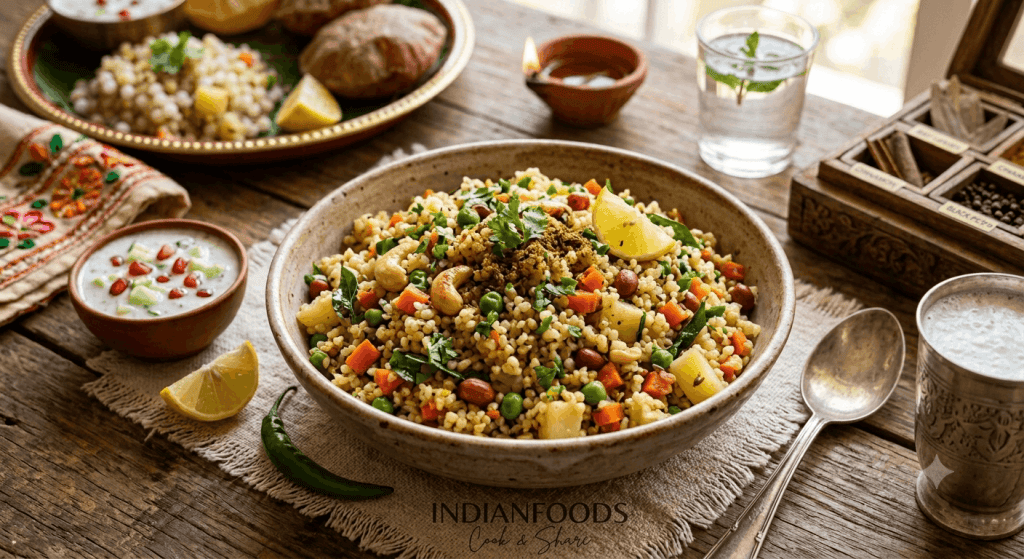
Samak (also called sama chawal, or barnyard millet if you want to get technical) is what we swap in for regular rice, and honestly, it cooks faster than most rice, so it’s become our go-to for a lazy dinner.
What goes in:
- 1 cup samak rice, rinsed and soaked 15 minutes
- 1 tbsp ghee
- 1 tsp cumin seeds
- 1 boiled potato, cubed
- A handful of peanuts
- Rock salt, coriander for garnish.
Heat the ghee, let the cumin crackle, throw in the peanuts and potato cubes together. Drain the samak and add it in along with 1.5 cups water and salt. Cover it and let it sit on low heat for 8-10 minutes — resist opening the lid every two minutes to check, it needs that steam. Comes out fluffy, light, good for lunch or dinner, and it travels well if you’re eating it away from home.
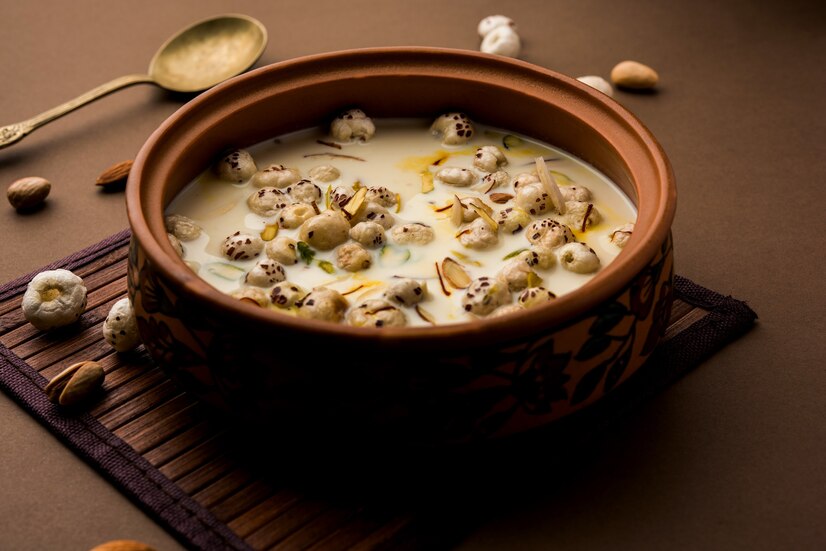
5. Makhana Kheer
This is the dish my kids actually look forward to on fasting days, which tells you something.
Ingredients:
- 1.5 cups makhana, roasted lightly in ghee
- 3 cups full-fat milk
- 4-5 tbsp sugar
- A pinch of saffron
- Cardamom powder, chopped nuts
Let the milk simmer on low till it thickens up a bit, then drop in the roasted makhana. Give it 10-12 minutes to soak up the milk, stirring now and then so it doesn’t catch at the bottom of the pan (it will if you forget about it, ask me how I know). Add sugar, saffron, and cardamom, cook another five minutes. You want the makhana soft, but not falling apart — there should still be a bit of bite left in it.
What I’d Tell Someone Cooking This For the First Time
Taste as you go, especially with rock salt — it’s saltier in some ways and milder in others, so measuring by habit like you would with regular table salt doesn’t really work. If you’re making anything with kuttu or singhare flour, expect the dough to need a bit more binding than usual; mashed potato or slightly extra water fixes most problems. And don’t skimp on ghee this month — with no onion or garlic to build flavour on, ghee is quietly doing most of that work.
None of this is really about giving things up, when you get down to it. It’s more about slowing the kitchen down for a few weeks and cooking with fewer, simpler things. Fasting or not, if the monsoon has you wanting something different, I’d start with the sabudana khichdi — it’s the easiest to get right and the most forgiving if you mess it up the first time.
Happy Sawan, and good luck with the khichdi.