
Fried modak recipe is a very tasty recipe to prepare a new kind of modak. That will give a totally new twist to the traditional modaks that are usually prepared during the festive season of Ganesh Chaturthi.
Unlike the rice flour dumplings, these modaks have a crispy golden brown crust that conceals an aromatic filling. Whether it is a family get-together or a holiday treat that one is planning to make, the crispy modaks will make one feel right at home!
The ideal fried modak should have a very flaky, bubble-free outer layer. An inner layer of coconut that should be juicy, but not make the pastry soggy. Many home cooks are into making a classic Coconut laddu recipe. Because of the ease of making, the chewiness and how quickly it cooks.
Or how they make a cooling Shrikhand recipe for beating the spring heat. The fried version returns a very solid, structured sweet that keeps its shape for days on end. If you make it at home, you can control the oil temperature. Be sure there will be no oiliness in the fried modak, since it will use pure ingredients.
You will discover the exact amount of fat to flour. That will make the pastry dough crisp, the secret to sealing the pleats. So they don’t pop open in the oil. And how to keep the oil temperature just right to get a beautiful, even golden colour.
What is Fried Modak Recipe
The key point to a fried modak recipe is making the wheat pastry dough and the classic modak filling. The outer shell is usually made from either whole wheat flour or all-purpose flour. Rubbed with hot clarified butter (ghee) and tied together with a little water to make a tight, firm dough. It has a slow-cooked filling of freshly grated coconut, sweet jaggery, poppy seeds and a good pinch of sweet-smelling green cardamom.
The most popular festive sweet of the western and southern parts of India. It is known for its crunchiness and convenience. Similar to the rich Kalakand recipe, where we enjoy reducing milk solids into a granular mass. It is deep-fried, and the high temperature ensures quick cooking of the outer layers of the wheat dough. While keeping the inner part moist. The delicious taste of a juicy coconut together with that of a rich pastry dough forms a delectable treat during the festive season.
Why Fried Modak is a Festive Favorite
Fried modak has a significant place in festive cooking due to its excellent durability and strength. After frying, there is very little moisture on it. So it can be easily packaged, transported, and stored without easy loss of structure and spoilage.
It is also an ideal heavy dessert to be served with a glass of Doodh badam sharbat recipe. To welcome visitors to your house during the holiday seasons with many celebratory menus. The recipe also has a great deal of flexibility. If you prefer to hand-pleat, the outer casing will be formed by that method.
Or if you’re making larger quantities, you can use a standard mold to make it more quickly. It is such a simple pleasure to slide a beautifully pleated dumpling into hot ghee. And see it slowly turn a deep, rich golden brown. It means that the baking has gone well, and that’s a classic.
Recipe Card
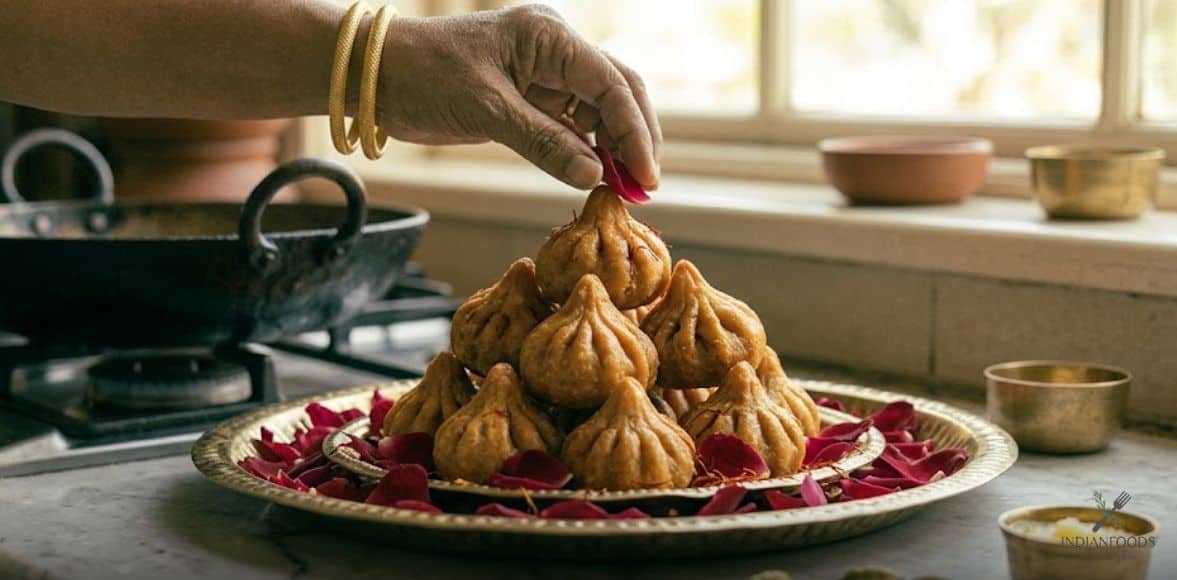
Fried Modak Recipe
Ingredients
For the Crispy Pastry Shell
- 1 Cup of All-purpose flour maida or whole wheat flour
- 2 tbsp Hot clarified butter ghee
- A pinch of salt
- Warm water as required to knead a tough dough
For the Coconut Jaggery Filling:
- 1.5 Cups Freshly grated coconut
- 1 Cup Grated jaggery
- 1 tsp Poppy seeds
- ½ tsp Green cardamom powder
- Use chopped nuts cashews and almonds to garnish
- Oil or ghee to deep fry in
Instructions
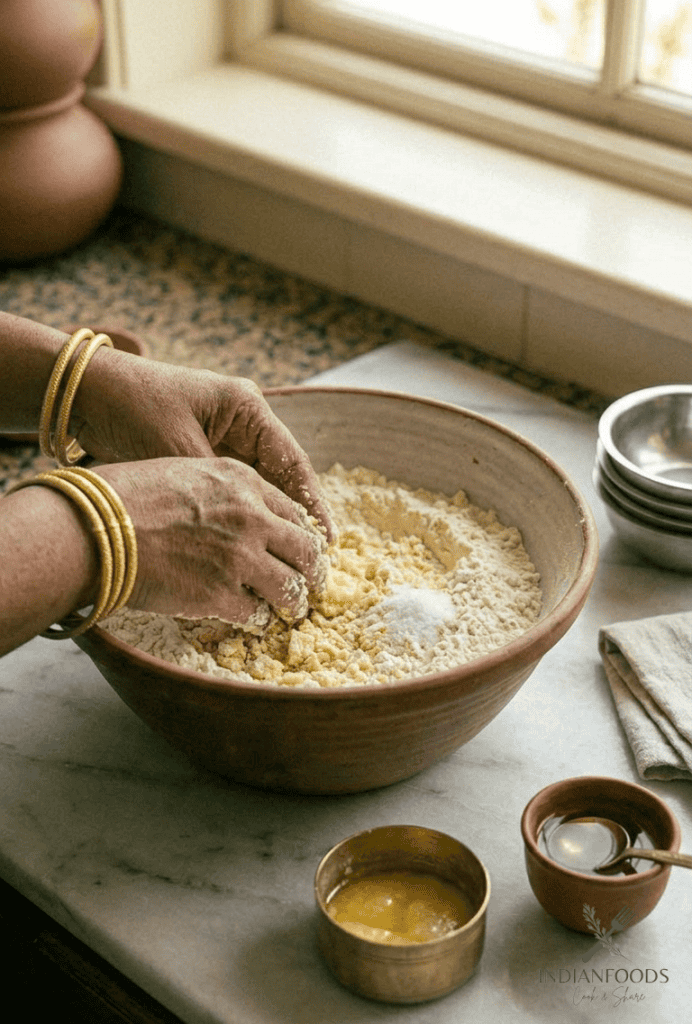
- Mix flour with salt in a large bowl and add hot clarified butter into it while mixing it with your fingers till you get crumbs. Add water slowly into it while kneading it with your hands till you get an extremely stiff dough. Cover it and keep it in the refrigerator for 20 minutes.
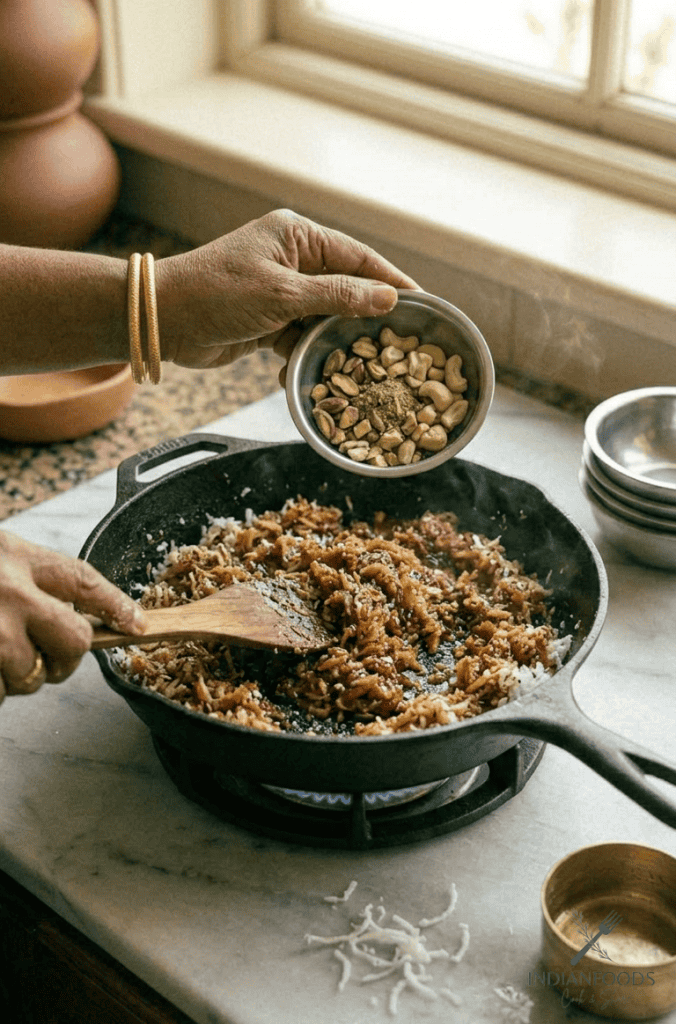
- Roast the poppy seeds in a pan for one minute on low flame. Now add coconut and jaggery and roast it for 5-7 minutes while stirring so that jaggery is completely mixed into it, and now add nuts and cardamom and roast for two more minutes.
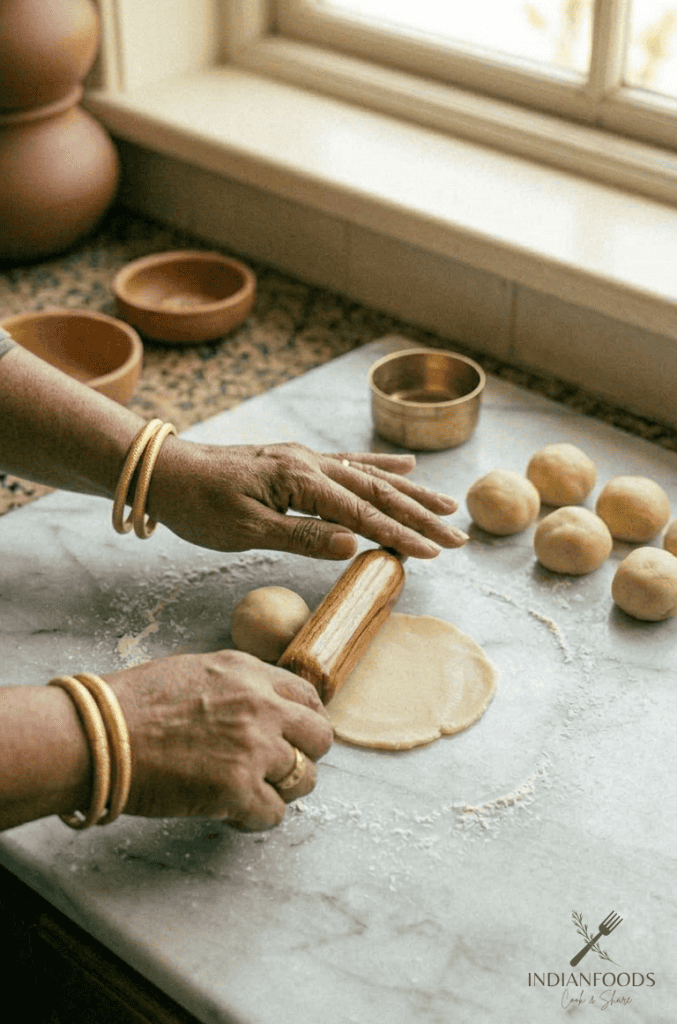
- Take the rested pastry dough and break it into small balls, about the size of cherries, and then roll each ball out into a thin, even circle, 3 inches in diameter, with slightly thinner dough around the edges than at the centre point.
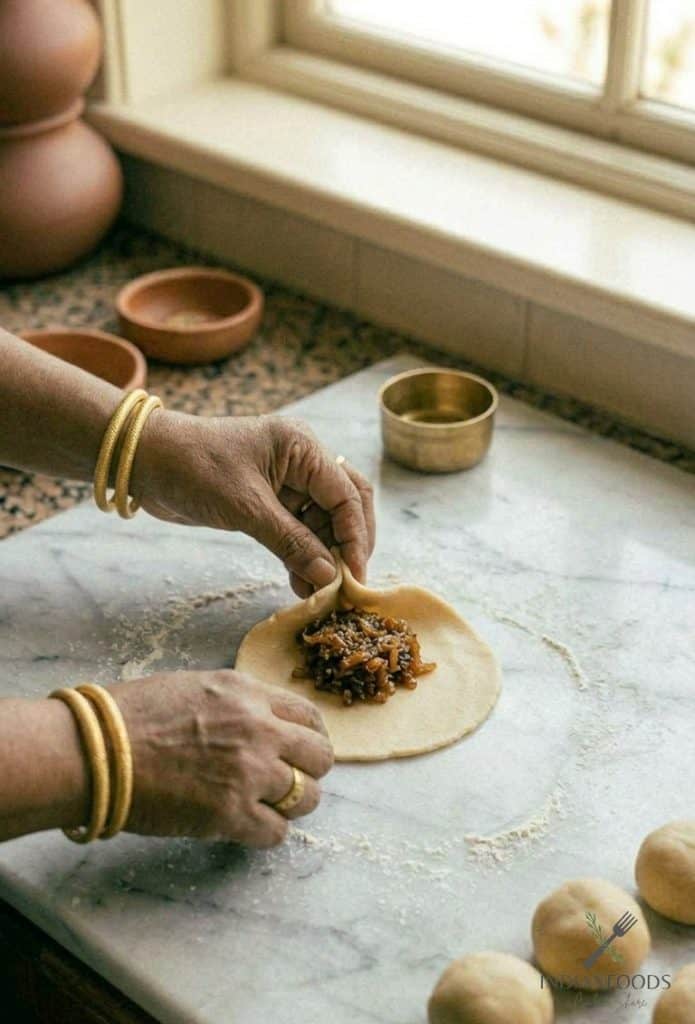
- Place a small portion of the cooled coconut filling directly in the middle of the dough disc, fold the edges of the dough circle at regular intervals to create neat pleats, gather together all the pleats at the centre above and press them firmly to form a secure sharp tip.
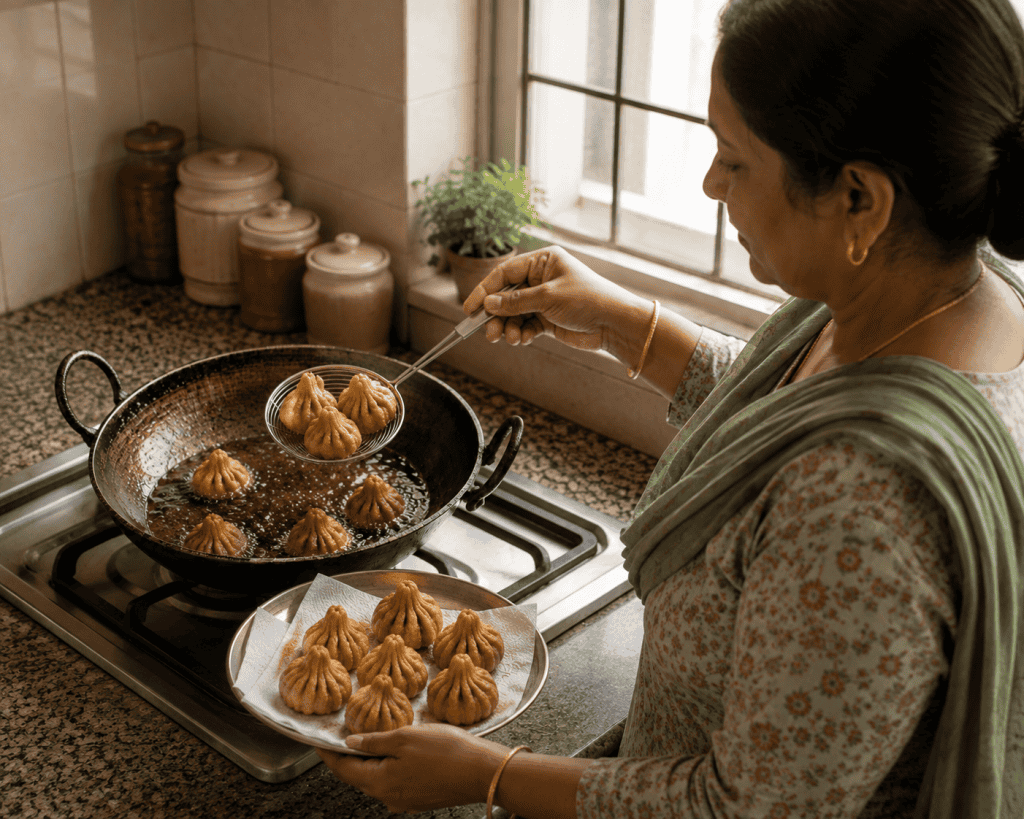
- In a deep-frying pan, heat sufficient oil/ghee on medium-low flame, slide 4-5 pleated modaks in the frying fat and fry them slowly on both sides, stirring occasionally, till the outer face is rich and even in golden colour and it is crispy, drain on paper towels.
Notes
- Knead a stiff dough using flour, salt, hot ghee, and warm water; rest for 20 minutes.
- Cook coconut and jaggery on low heat until sticky; add cardamom and cool.
- Roll small dough circles, add filling, pleat the edges, and seal the top tightly.
- Deep-fry on medium-low heat until the modaks are golden brown and crispy.
Fried Modak vs. Steamed Modak – Which One to Choose
When preparing the list of desserts for your holidays. You have to consider the texture and duration of use. As this may play an important role in making one choice over another.
The Texture: The fried modak will offer a crispy pastry, whereas the steamed one has to have soft, melting and delicate skin, which is created using rice flour.
Fried: The base of the dough is wheat flour or general-purpose flour. It can tolerate heat while frying or being steamed. The base of the dough is gelatinised rice flour that is boiled in water.
Longer Shelf Life: The other benefit offered by fried modaks is that they can be stored for 3-4 days. But steamed modaks cannot be stored beyond 24 hours as they retain moisture.
Frying Ease: Steamed modaks involve exactitude in handling as the rice dough tends to tear whereas the wheat dough used for frying is so elastic that it is easier for the novice to pleat and shape.
Tips to Make Fried Modak Perfect
- The dough must always be very stiff. Otherwise, it will soak up too much oil when frying, and the modaks will be greasy and soft.
- The trick to getting a flaky, melt-in-the-mouth pastry shell is to rub the hot ghee into the dry flour thoroughly before adding water. This is called the pastry shell incorporating “moyen”.
- Modak should be cooked on medium-low heat as cooking on high will cause the surface to bubble and will render the inside layers of the modak raw and chewy.
- Apply a small drop of water to the inside edges of the pleats before you make a tuck to the top to create a completely airtight seal that will not open in hot oil.
Variations of Fried Modak
- Mava Fried Modak: To make your modak super indulgent. Fill the wheat flour dough case. With a sweet and tasty filling made from milk solids or khoya, chopped nuts and saffron.
- Chocolate Fried Modak: Simply add cocoa powder and chocolate chips in the coconut and jaggery mixture and mix well to prepare a yummy and trendy filling much loved by kids.
- Dry Fruits Fried Modak: Instead of adding coconut, use the mixture of dry fruits like dates, figs, raisins, almonds, cashew nuts, fried in a little ghee to create the filling.
For preparing a healthy modak, coat the modaks with melted ghee and bake them in a pre-heated oven at 180°C for 15-18 minutes until they turn golden brown.
Tips on Avoiding Mistakes
- The dough should not be made thick because a thick dough would give you a chewy, heavy crust which will take a long to cook.
- Over cooking the coconut filling results in its drying and becoming crispy. The addition of sugar in the coconut filling would make it hard inside the modak due to its crystallization after being fried in oil.
- If the pieces are fried at the same time, the temperature of the oil will fall a lot, causing the pastry shells to soak up the oil through the heat drop.
- If a small opening is left at the top tip, the hot oil will penetrate the cavity, liquefying the jaggery inside and bringing about the leakage of the filling from the pan.
Why Homemade Fried Modak is Better
Fried homemade modak is definitely better – you don’t have to worry about the poor quality of oils. Chemical preservatives are used in the commercial sweet shops during the festival peaks. Frying oils are usually fried over and over again in commercial outlets, and this compromises the pleasant aroma of the sweet fries and causes the oil to have a heavy and greasy taste.
Making them fresh in your own kitchen means you can fry them using pure ghee or fresh oil, add organic jaggery and allow time to seal each pleat, which will result in a crisp, clean tasting and healthy treat for your family and friends.
Conclusion
The fried modak recipe is a great idea to add a wonderful crunch and long shelf life to the usual festive sweet making. When you control a firm wheat dough and maintain a low and steady frying temperature, you can easily get professional and halwai wheat frying without any hassles. Be sure to follow these directions carefully for the perfect, golden look. Use them hot or keep them up for a sweet and crunchy snack during the holidays!
Related Recipes
FAQs
Yes, absolutely. Whole wheat flour will work beautifully and give a denser, nuttier and slightly crunchier shell while Maida bread is lighter, flakier and halwai style.
Be sure to pinch and seal the point at the top of the paper. If necessary, lightly wet the edges with water before pulling the corners into pleats so as to create a tight, waterproof seal.
Fried modaks can be kept fresh for 3-5 days if kept in a properly sealed, totally dry container under room temperature conditions.
The reason why you have observed formation of big bubbles in your modaks is that your oil/ ghee must have been too hot when you put your modaks into it. Take oil out of heat and allow it to cool down a little bit before putting your modaks into it.
Yes, you can use dessicated coconut for filling, however, while cooking jaggery with dessicated coconut, put in a couple tablespoons of water/milk in order to keep the filling juicy.