
During festive seasons, particularly Ganesh Chaturthi, Mava modak has become a luxurious and time-saving option. It is rich in milk and indulgent in taste. This version does not need the proper moisture balance of steamed rice flour dumplings, nor a steaming setup.
The velvety richness of evaporated milk solids is used to make a melt-in-your-mouth treat. From the hurried moments of festival preparations to adding a touch of elegance and sophistication to your guests’ enjoyment. Making these instant delights brings the true taste of a top-notch Indian sweet into your own kitchen.
A good mava modak should be smooth and shiny, with a fudgy, rich taste but not sticky. Many of the Coconut laddu recipes are popular for quick weekend get-togethers. Or a Shrikhand recipe to serve with festive puris is a delight to make in the kitchen.
But a royal touch is added to the plate with a well-made modak. However, homemade mava modak is a much purer and more aromatic version. It is prepared at home with good-quality ingredients like pure saffron and mava. Whereas the commercial version uses thick artificial fillers, producing a less aromatic taste.
In this all-inclusive guide, you’ll learn how to make the traditional khoya with milk powder. How to get a smooth dough with sharp mould lines. How to make the sweets crisp and keep them crisp for the whole festival.
About Mava Modak Recipe
Mava modak recipe is basically a concentrated dairy solid. It is flavoured and sweetened to make a dough-like base for confectionery. Traditionally, mava or khoya is prepared by boiling full-cream milk continuously for hours.
The milk is reduced to a solid form containing milk proteins. This is the instant version, where the milk powder, sweetened condensed milk, and a little pure clarified butter (ghee) are combined over low heat.
It is one of the favourite dishes served in festive platters. It’s a beautiful presentation of rich milk flavour. Like a traditional Kalakand recipe, it celebrates the grainy and juicy texture of reduced milk.
This recipe is a low-temperature effort that binds dairy fats and sugars together. The crushed nuts and cardamom bring aroma to the basic milk base. It takes a perfect shape when pressed in traditional modak moulds.
Why Mava Modak is a Festive Favourite
The mava modak is a special item added to the festive kitchen as an utmost luxury with little effort. The time required to cook the sweets is less than 10 minutes on the stove. It is a very efficient choice.
Also very adaptable, the recipe can be filled with a secret filling of nuts and jaggery. Or kept solid, accenting the pure, milky taste of the mava. For millions, the instant of removing a smooth, golden-hued modak from the mould and watching the clean, crisp pleats come alive is a quintessential experience of the festive kitchen.
Recipe Card
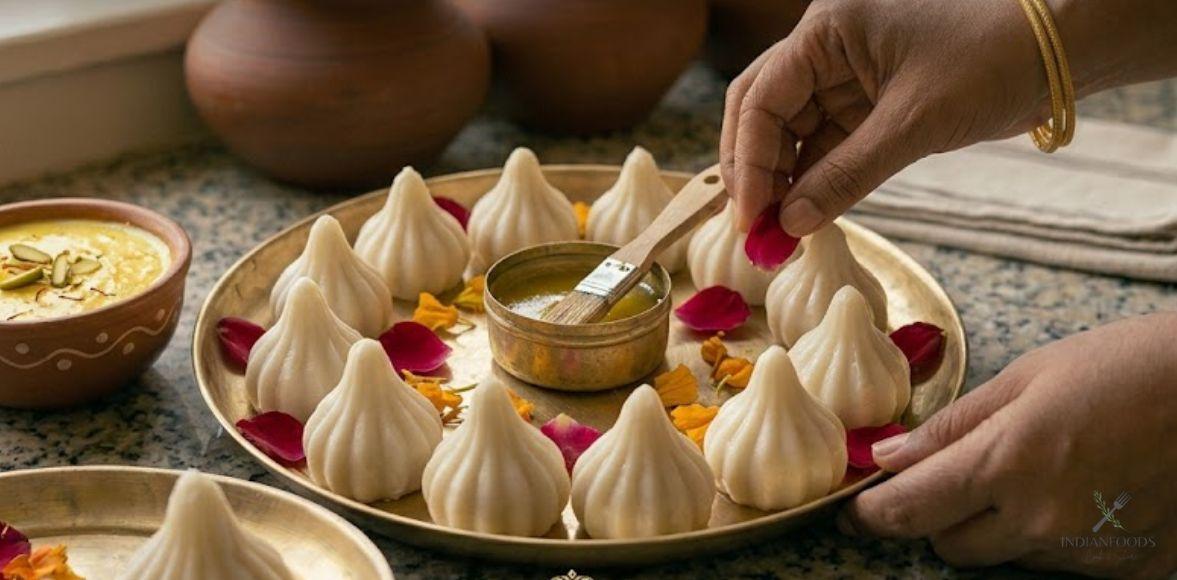
Mava Modak Recipe
Ingredients
Ingredients
- 1.5 Cups Dairy whitener powder/milk powder
- ½ Cup Sweetened condensed milk
- 2 tbsp Clarified butter ghee
- ¼ Cup Whole milk at room temperature
For the Flavourings and Garnish
- 10-12 strands of Saffron kesar soaked in 1 tbsp warm milk
- ½ tsp You can add the powder form of green cardamom
- 1 tbsp Finely chopped pistachio for garnish
Instructions
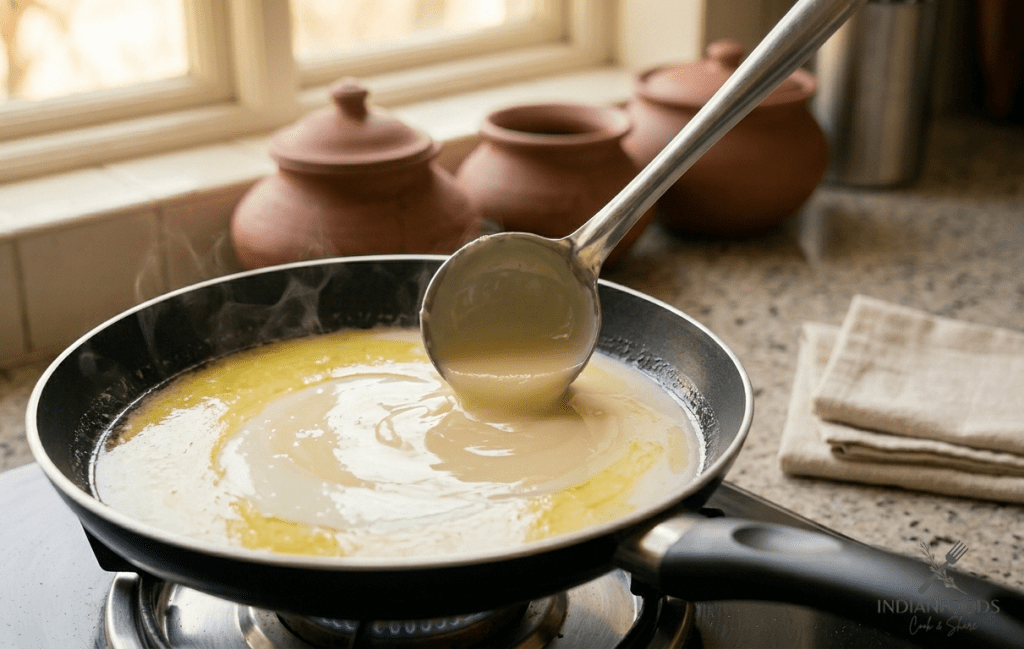
- In a non-stick pan over low heat, warm the ghee till it melts, add the whole milk and sweetened condensed milk to the melted ghee and stir continuously till the liquids are thoroughly combined and warm.
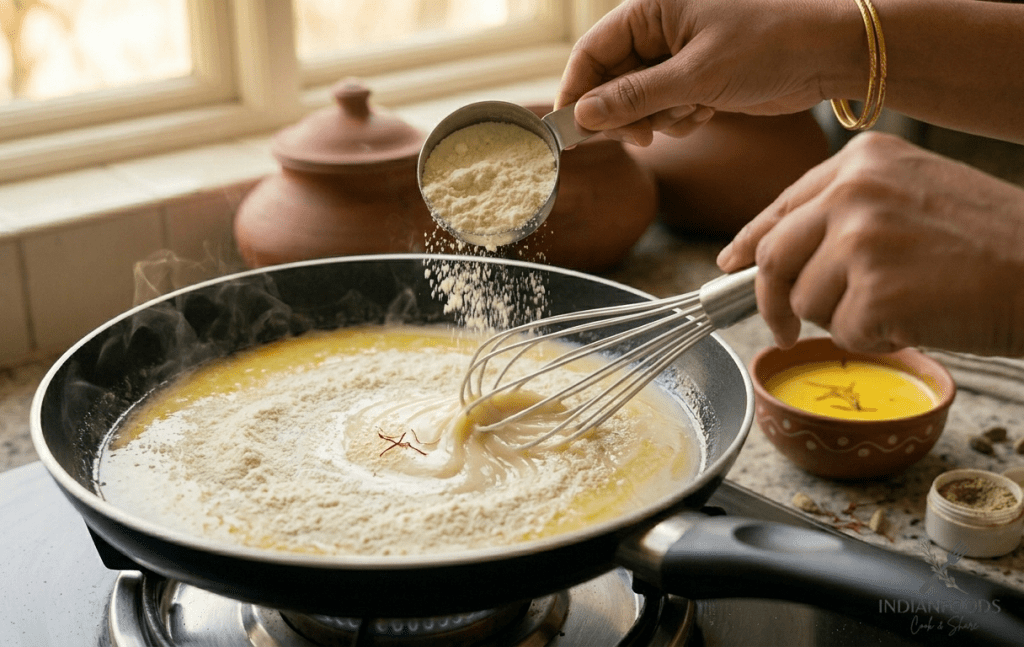
- Add the milk powder slowly, whisking continuously, to the pan, and then add the saffron-infused milk and cardamom powder to it.
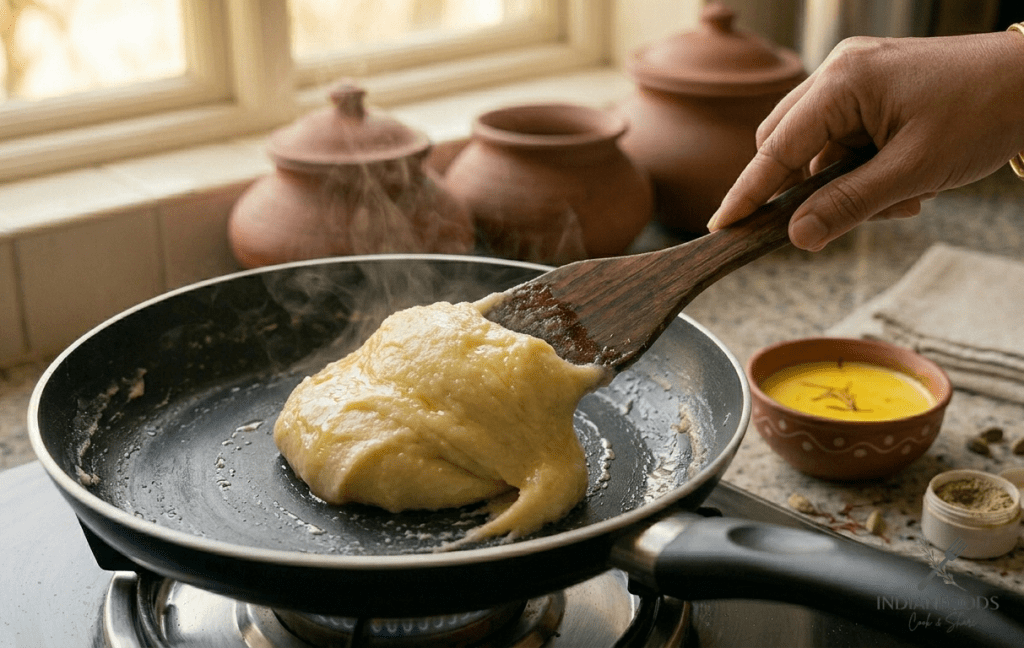
- Cook on low heat, stirring continuously without a break for 4-5 minutes until the mixture becomes thick and no longer sticky and until it begins to roll away from the edges of the pan and into a solid dough.
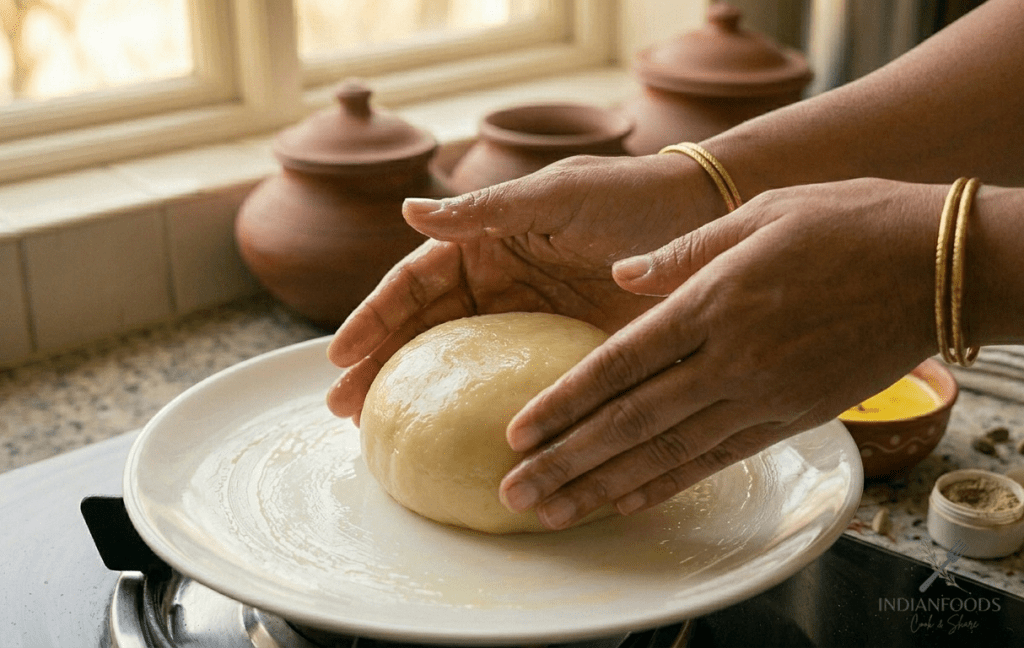
- Transfer warm mava dough onto a plate, allow to cool 5 mins until manageable, knead mava gently with grease-brushed palms for 1 min until a smooth, shiny dough ball.
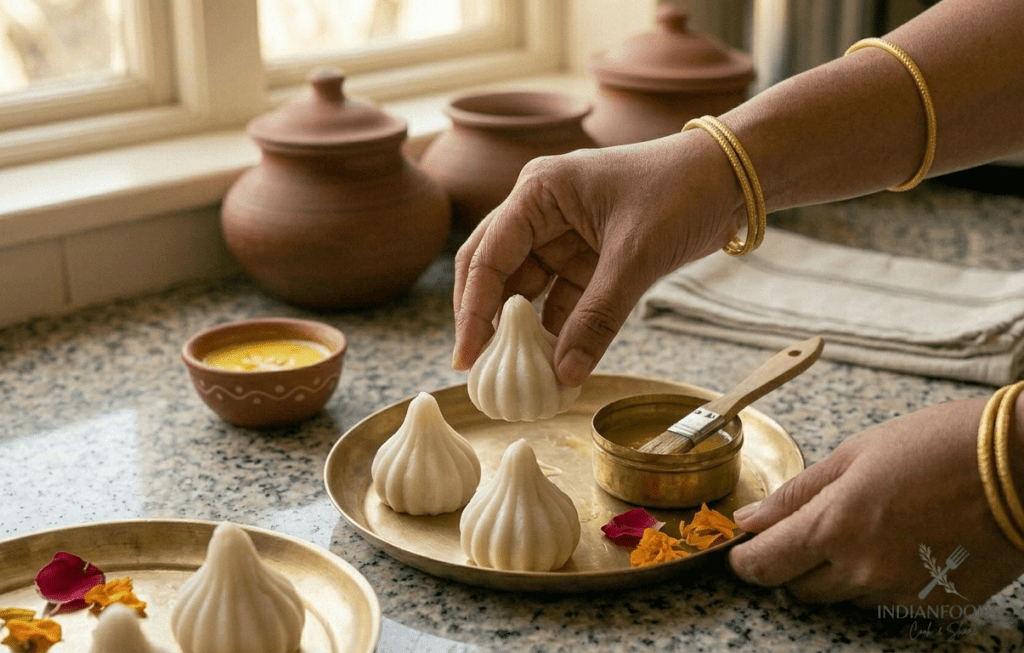
- Apply a speckle of ghee to the bottom of the modak mould, clamp the modak tightly, stuff the warm mava dough into the modak shape through the bottom of the modak mould, press well to get the modak sides to hold, and carefully open the modak mould to remove the modak.
Notes
- Use the lowest setting on the stove while cooking to prevent milk powder from burning or curdling.
- Handle the dairy dough quickly while it is still warm to the touch, or it will set and won’t give sharp mould impressions.
- Place containers of completed sweets at room temperature for an hour while the sweets are drying; do not stack the sweets to prevent the tips from flattening.
The Perfect Mava Modak Tips
- Cook it always on the lowest heat setting; milk powder is very high in sugar and can burn or become rubbery in no time at all at high temperatures.
- Make the modaks while the mava is still warm; once the dough has cooled completely, it will be hard and crumbly, and will not form clean pleats in the mould.
- To avoid dark, burnt flakes on your white sweets, use a heavy kadhai or a non-stick pan for cooking the sweets.
- If the dough is too dry or begins to crack during shaping, add a teaspoon of warm milk to the dough to soften it.
Types of Recipe Variations
- Chocolate Mava Modak: Add two tablespoons of good-quality cocoa powder to the milk powder before cooking, making it rich and dark, which is very popular among children.
- Kesar Pista Modak: Add more saffron to give the modak a golden colour; before pressing the dough in, line the inside of the modak mould with slivered pistachios.
- Dry Fruit Stuffed Modak: Make a small hollow in the middle of the mava ball when inside the mould and stuff it with crushed cashew, raisins and almonds.
- Rose Mava Modak: To give the sweets a beautiful pink colour and distinct floral aroma, omit saffron and add 1 tablespoon of organic rose syrup to the condensed milk.
Mistakes to Avoid
- If you cook the mava mixture too long on the stove, it will be completely absorbed by the candy, and your fudgy sweets will become chewy, dry and unpleasantly soft.
- If the milk powder is added to the hot liquid in a single lump, without stirring it in, it will form dense, dry aggregates that are going to spoil the smooth mouth feel of the dessert.
- If the cold condensed milk is taken straight from the fridge, the texture of the dough can become greasy and separated due to uneven melting of the ghee.
- If the mould is not greased between each of the mouldings, the modak will get torn at the moulding during unmoulding due to the fragile mava tips sticking to the metal or plastic lines.
The Reasons why Homemade Mava Modak is Better
Homemade mava modak is much better. It ensures complete purity and freshness during high-demand periods of festivals. Commercial sweet shops add a significant quantity of refined flour or starch to the commercial khoya to reduce production costs. It is reducing the actual milky taste of the sweet.
Making these at home means you can use high-quality milk powder, pure ghee and organic cardamom powder, and you’ll get a rich and velvety treat you can feel good about giving to your family and deities.
Conclusion
This mava modak recipe is a great example of how traditional flavour can be beautifully captured in modern “shortcuts”. With the right temperature, plus some milk powder and condensed milk. You can make a royal dessert that looks and tastes like it took hours of backbreaking work.
Follow the simple steps and cooling suggestions below to learn how to create some instant sweets this festive season. Serve them fresh, share them with others and enjoy the holidays sweetly!
Related Recipes
FAQs
Yes, absolutely. To use khoya that has been dried, break the dried khoya into a pan, warm on a low heat for 2-3 minutes, add powdered sugar to taste and cook until it balls up in the pan, then form the khoya.
As this recipe offers low milk and little moisture, the modaks will remain fresh for 2 days at room temperature and in the refrigerator for 1 week.
The sugar and moisture to bind the ingredients into the recipe are supplied by the sweetened condensed milk. In order to go sugar-free, you would have to use unsweetened evaporated milk paste mixed with a heat-stable sugar substitute.
This will require a 1-2 minute longer cooking time. Return to low heat and stir until the mixture is sticky, but not gloppy and will roll off your hands.
No, when there’s no mold, one can make smooth balls of the warm dough, gently pinch the top section between the fingers, creating a pointed cone shape, and then use a toothpick to score the sides with vertical lines like pleats.