
Vrat ki kadhi is what a fasting cook makes when they want something warm and familiar without breaking any rules. Besan is out, so water chestnut flour steps in, and sour curd carries most of the flavour. This recipe covers the swaps, the method, and the small habits that separate a silky kadhi from a watery one.
What is Vrat ki Kadhi and How is it Different From Regular Kadhi?
Vrat ki kadhi is a curd-based gravy thickened with fasting-friendly flour instead of besan. Regular Punjabi or Gujarati kadhi always starts with besan whisked into curd, then simmered down into a smooth, pourable gravy. Besan is a lentil flour. Most vrat traditions avoid grains, lentils, and pulses. So besan is off the table, literally, on fasting days.
The workaround is singhare ka atta (water chestnut flour), or in some homes kuttu ka atta (buckwheat flour). Both count as fasting-permitted “fruits” and pseudo-grains under Indian fasting customs. The spicing shifts too — no turmeric, no mustard seeds, no hing, and definitely no regular salt, only sendha namak. Cumin, green chilli, ginger, and curry leaves where a family allows them still make it into the pot, along with a ghee tempering.
What this means in the bowl: the kadhi comes out paler than the golden regular version, since there’s no turmeric doing the colouring, and it tastes a little nuttier from the water chestnut flour. The sourness comes almost entirely from well-fermented curd. Nothing added.
Recipe Card
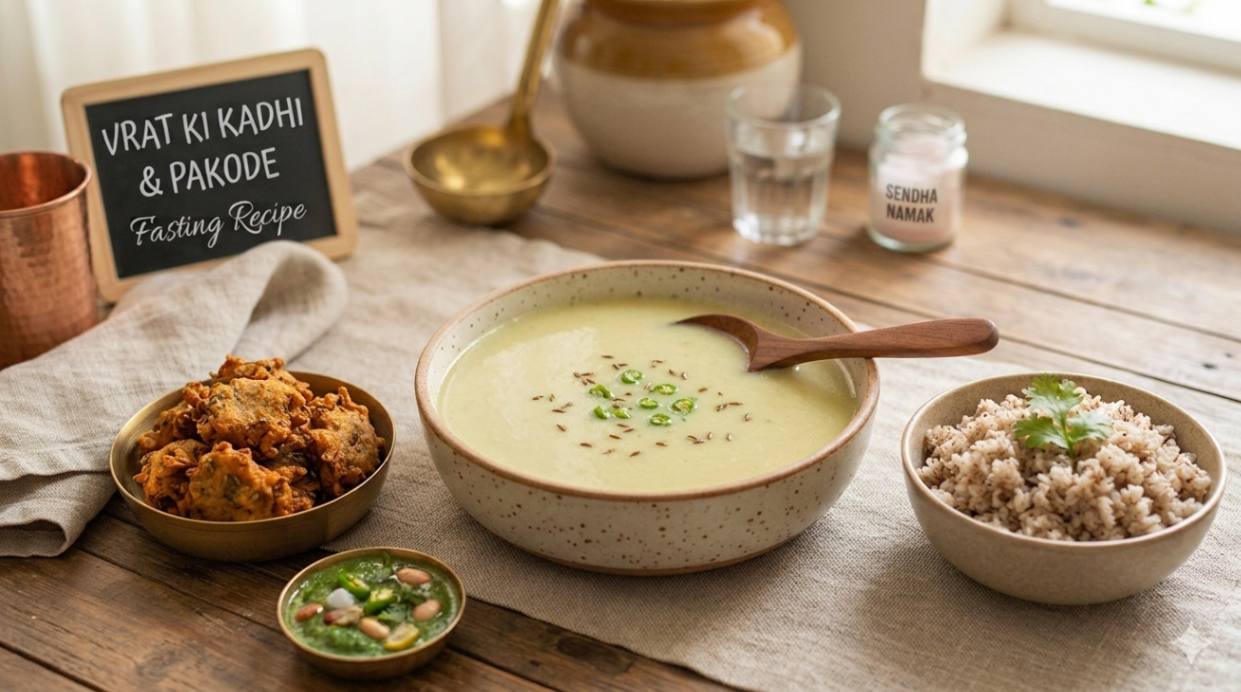
Vrat Ki Kadhi Recipe
Ingredients
Vrat Ki Kadhi Recipe
- 1½ cup Sour curd Whisked smooth
- 2–3 tbsp Singhare ka atta Or kuttu ka atta
- 2–2½ cups Water Adjust consistency
- 1-2 tbsp Sendha namak To taste
- 1–1½ tbsp Ghee For tempering
- 1 tsp Cumin seeds Jeera
- 1–2 tbsp Green chillies Slit
- ½ inch Ginger Grated or chopped
- 1 tbsp Black pepper Optional
- 1-2 tbsp Coriander leaves For garnish
Instructions
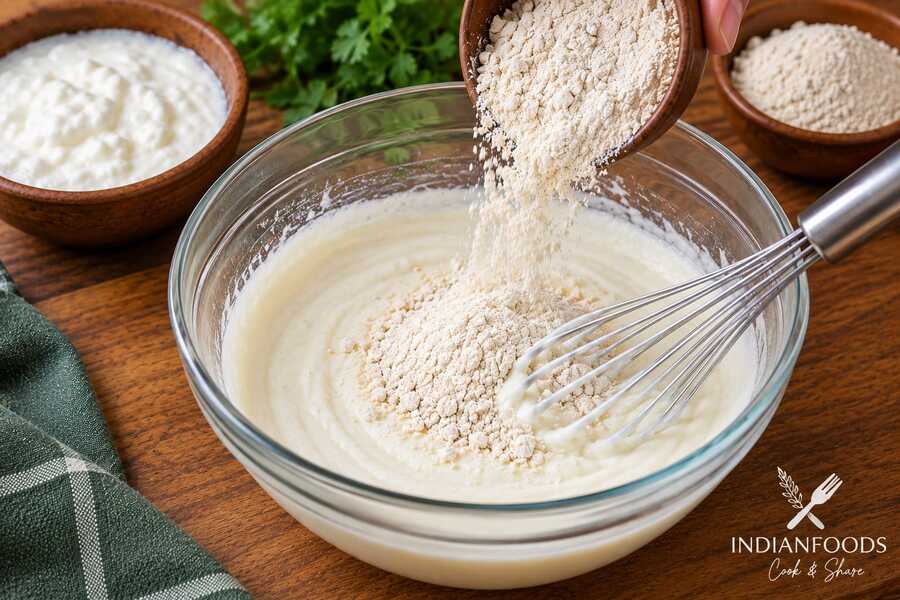
- Add sour curd to a large bowl and whisk it until completely smooth and lump-free. Gradually add singhare ka atta while whisking continuously, making sure the flour is fully incorporated into the curd.
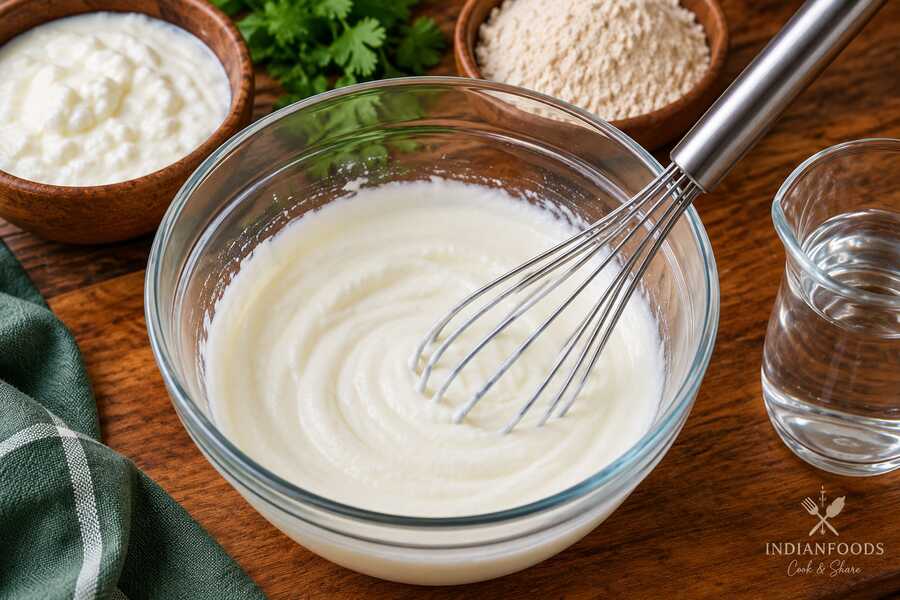
- Slowly pour in the water while continuing to whisk. Mix everything well until you have a smooth, lump-free mixture with no flour settled at the bottom.
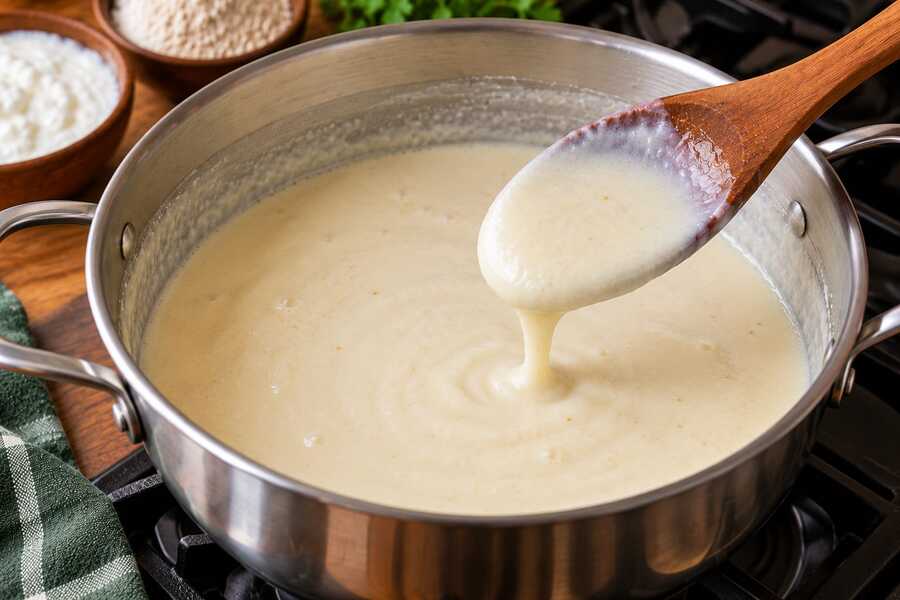
- Transfer the mixture to a heavy-bottomed pan and cook over low heat. Stir constantly for the first 5–7 minutes to prevent the curd from splitting or sticking to the bottom.
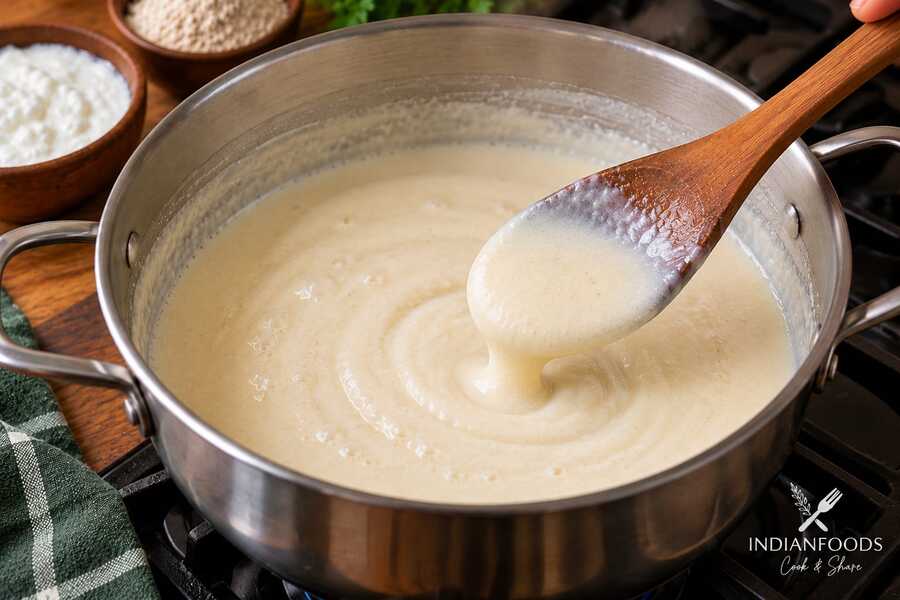
- Continue cooking on low heat for another 8–10 minutes, stirring occasionally. The kadhi should become slightly thick and lightly coat the back of a spoon while still remaining pourable.
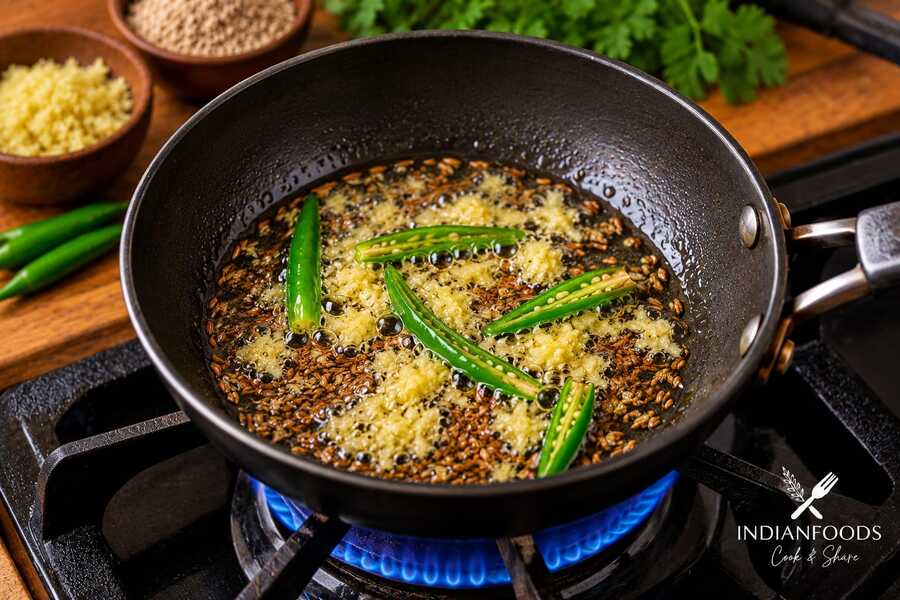
- Heat ghee in a small pan and add cumin seeds. Let them sizzle, then add slit green chillies and grated ginger. Cook for a few seconds until aromatic.
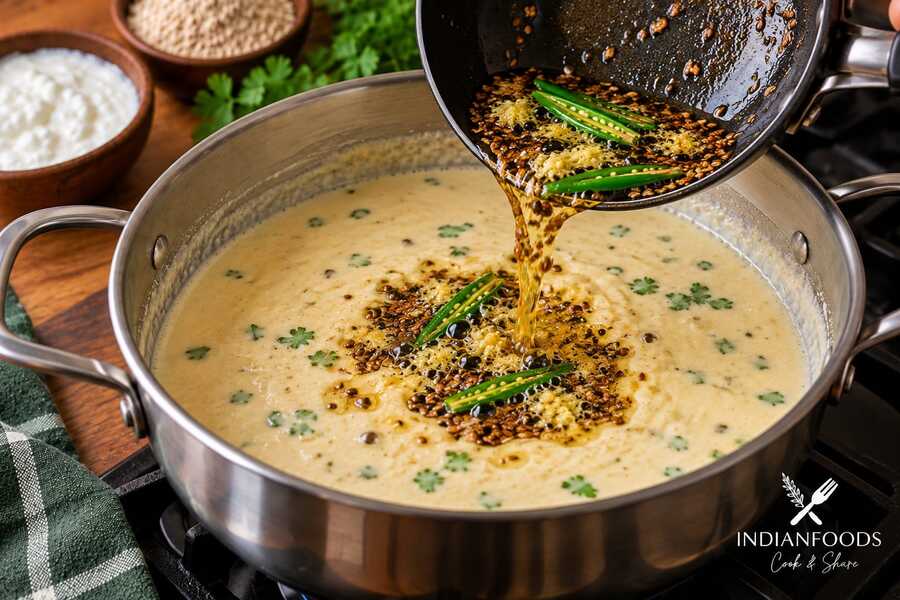
- Carefully pour the prepared tempering into the simmering kadhi. Add sendha namak and optional black pepper, then let it simmer for another 2–3 minutes.
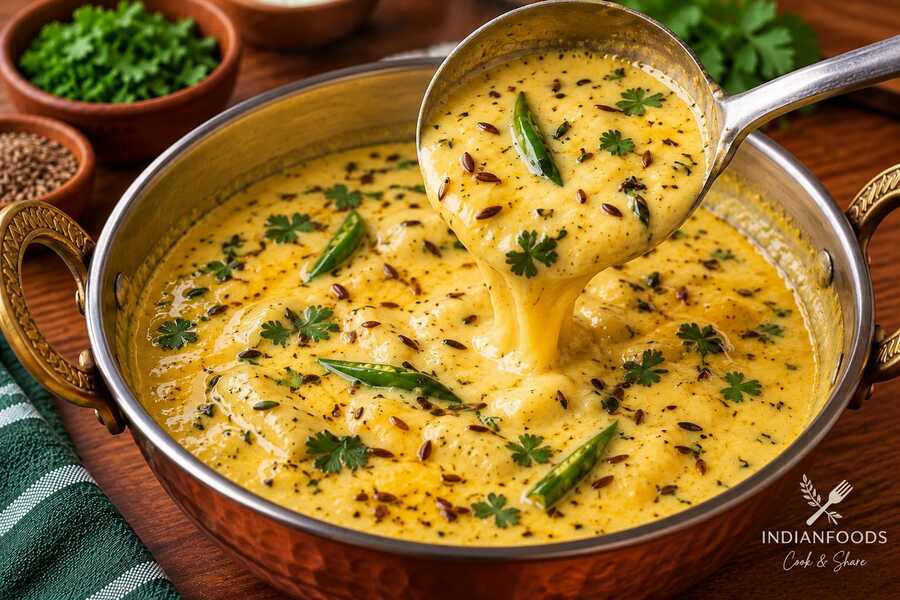
- Turn off the heat, garnish with fresh coriander, and serve the vrat ki kadhi hot with sama ke chawal, kuttu ki puri, or sabudana khichdi.
Notes
Optional additions
- Fresh coriander leaves for garnish
- A few curry leaves, if your family’s fasting rules permit them
- Boiled arbi (colocasia) or sama rice dumplings, added to make it a heartier one-pot meal.
- Vrat cooking rewards a short ingredient list, and most households keep it that way on purpose.
- If your curd isn’t sour enough, resist the urge to fix it with lemon. Lemon curdles the kadhi in a different, uglier way, and it isn’t traditional here anyway.
- Just leave the curd out at room temperature for a few hours before you start cooking. It’ll sour up on its own.
What ingredients do you need to make vrat ki kadhi for navratri fast?
Sour curd, singhare ka atta, water, sendha namak, and a ghee tempering with cumin and green chilli — that’s the whole list. Here’s how it breaks down by role.
| Stage | Time | What to watch for |
|---|---|---|
| Whisking curd, flour, and water | 3–4 min | No lumps left before it goes on the stove |
| Initial simmer on low heat | 5–7 min | Stir constantly to prevent splitting or catching |
| Slow simmer to thicken | 8–10 min | Kadhi should coat the back of a spoon lightly |
| Tempering and final simmer | 2–3 min | Add tempering off direct high heat to avoid splattering |
What Can You Eat With Vrat Ki Kadhi During Fasting?
Serve it with sama ke chawal, kuttu ki puri, or sabudana khichdi. It’s a thin, curd-based gravy, not a sabzi, so it needs something to soak into — same logic as regular kadhi and rice.
Sama ke chawal, steamed plain, is the go-to pairing in most North Indian homes during Navratri. The mild, faintly nutty rice picks up the kadhi’s tang without fighting it. Kuttu ki puri, deep-fried in ghee, is heavier and works better for an evening meal after a long day of fasting. Some families plate it with a dry potato sabzi too — aloo jeera or vrat wale aloo — so there’s both a gravy and something dry on the thali.
On lighter fasting days, when only fruits and one modest meal are allowed, a small bowl of vrat ki kadhi eaten on its own, almost like a soup, works fine too. Whatever you put next to it, keep the rest of the plate fasting-appropriate. That means no regular salt, no onion or garlic, no grains sneaking in through the side dishes.
Can you substitute singhare ka atta curry with something else?
Yes — kuttu ka atta is the go-to substitute for singhare ka atta. They don’t behave identically, so it helps to know the difference before you swap.
Singhare ka atta gives a lighter, faintly sweet undertone and a smoother finish, since water chestnut flour is ground quite fine. Kuttu ka atta brings a stronger, earthier, nuttier flavour, and it can leave the kadhi looking a touch heavier or greyish. If you’re using kuttu, cut the quantity slightly — start with 2 tablespoons instead of 3 — because it thickens harder and faster than singhare ka atta does.
A few regions reach for rajgira atta (amaranth flour) instead, though that’s more common in puris and rotis during vrat than in kadhi specifically. Whichever one you pick, dissolve it fully in the curd-water mixture before it touches heat. All three flours clump badly if they hit hot liquid directly.
What are the Most Common Mistakes When Making Vrat Ki Kadhi?
- Using fresh, mild curd instead of sour curd. The tang has to come from the curd itself, since there’s no lemon or tamarind backup here. If your curd is fresh, let it sit out for 4 to 6 hours before cooking with it.
- Adding the flour directly to hot liquid. Fastest route to permanent lumps. Whisk the flour into the curd first, then add water gradually.
- Boiling the kadhi on high heat. High heat splits the curd and separates the fat out, leaving you with a grainy, curdled look instead of a smooth gravy.
- Skipping the constant stirring in the first few minutes. This is when the kadhi is most fragile. Step away even briefly and you risk a scorched bottom or a split texture.
- Making it too thick on the stove. It keeps thickening as it cools, so it should look a little thinner than you want while it’s still simmering.
- Using table salt instead of sendha namak. Defeats the whole point of a vrat dish. Double-check the salt in your hand is actually rock salt, not iodised table salt.
| Cooking for Navratri or another vrat this week? Indian Foods has a full collection of tested fasting recipes — from sabudana khichdi to kuttu puri — so you can plan a complete vrat thali without last-minute guesswork. → Subscribe for weekly recipes at https://indianfoods.co.in |
Frequently Asked Questions
No. Curd carries both the tang and the base liquid, and there isn’t a traditional dairy-free version of this dish within standard vrat cooking.
They’re closely related. Sama ki kadhi sometimes just means the same kadhi served alongside sama rice — the kadhi itself is still made with singhare or kuttu ka atta, not sama flour.
Usually too little flour relative to the liquid, or not enough simmering time. Cook it a few extra minutes on low heat, and it’ll thicken further as it cools anyway.
Yes, some cooks blend small amounts of both to balance texture and flavour. But using just one flour is more traditional, and simpler if you’re new to this.
A fasting-friendly oil like peanut oil works in a pinch, though ghee is strongly preferred in most vrat kitchens for both flavour and tradition.
Some families toss in boiled arbi (colocasia) or pumpkin to bulk it up. It varies by region and household, so check what your family typically does before you improvise.