
Sabudana vada is the crisp, golden fritter you’ll find outside Maharashtrian homes and at roadside stalls through Navratri and other fasting days. Plenty of people make it year-round too, purely as a teatime snack, fasting or not. Get the soaking stage right and everything after that is genuinely easy. Here’s what actually makes the difference between a vada that crisps up beautifully and one that falls apart in the oil.
KEY TAKEAWAYS
- Under-soaking sabudana is the number one reason vadas turn gluey or fall apart in oil.
- A dry, crumbly mixture — not a wet dough — is what gives vada its crisp bite.
- Roasted, coarsely crushed peanuts hold the patty together and add the classic nutty crunch.
- Sendha namak (rock salt) is traditional because this is a Navratri and vrat (fasting) recipe.
- Oil temperature matters more than frying time. Too cool, and the vada drinks oil and disintegrates.
- Leftover mixture keeps well chilled, but shaped raw vada should be fried fresh, not stored.
What is sabudana vada and where does it come from?
Sabudana vada is a shallow or deep-fried patty made from soaked tapioca pearls, mashed potato, and roasted peanuts, seasoned with green chilli, cumin, and rock salt. It comes out of Maharashtra, tied closely to upvas or vrat — the fasting observed during Navratri, Ekadashi, and other religious occasions when grains and ordinary table salt are off the table.
Sabudana itself is not a grain. It’s starch pulled from the tapioca pearl fritters (cassava) root and shaped into small white pearls. That’s exactly why it fits fasting rules — no grain involved. Paired with potato and peanuts, it becomes a genuinely filling, energy-dense snack, the kind that can carry someone through a full day without regular meals.
You’ll find sabudana vada sold on Mumbai and Pune street corners, at hill-station tea stalls in Mahabaleshwar and Panchgani, and fried fresh in home kitchens across Maharashtra, Gujarat, and parts of Madhya Pradesh. Usually it lands on the plate hot, with a spoon of fresh yogurt and green chutney on the side. Outside fasting season, people still make it constantly. It’s naturally gluten-free, filling, and works fine for anyone skipping onion and garlic — reason enough on its own.
How do you soak sabudana correctly for vada?
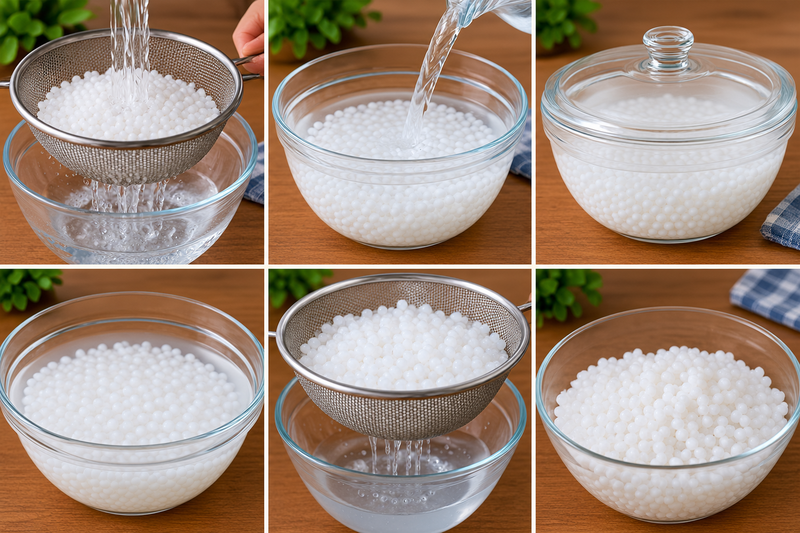
Soak sabudana in just enough water to barely cover the pearls, for 4-6 hours or overnight, until each pearl softens but stays separate and non-sticky. This one step decides everything. Get it wrong and the rest of the recipe doesn’t matter.
Rinse the sabudana two or three times before soaking — this washes off the surface starch that causes clumping later. Then add water level with the top of the pearls, not drowning them. Too much water and you get a wet, porridge-like mass that never crisps, no matter how hot your oil is. Cover it and leave at room temperature.
Pearl size and brand change the timing. Large, thick pearls, common across Maharashtra, can need a full 5-6 hours or an overnight soak. Smaller, thinner ones might be ready in 3-4. The test is simple: press a soaked pearl between two fingers. It should flatten easily, no hard white centre left. If it’s still opaque and firm in the middle, give it more time. Don’t rush this.
Short on time? Soak in slightly warm — not hot — water. Shaves off about an hour. But a slow, room-temperature soak still gives the most even texture across the whole batch.
What ingredients do you need for sabudana vada?
The ingredient list is short and every item earns its place. Worth understanding what each one actually does before you start swapping things out.
Core ingredients
Soaked sabudana, boiled and mashed potato, and roasted peanuts, roughly a 2:1:1 ratio by volume. Potato binds everything and softens the bite. Peanuts — crushed coarsely, never powdered — bring crunch, protein, and that unmistakable nutty flavour people associate with this dish. Use starchy potatoes, the aloo tikki kind, boiled until fully soft but not waterlogged.
Spices and flavourings
Green chilli, cumin seeds, fresh coriander, and sendha namak do the flavouring work. For fasting versions, skip iodised salt, onion, garlic, and turmeric — all traditionally avoided during vrat. A squeeze of lime at the end lifts the whole mix considerably. Don’t skip it.
Optional add-ins
Some cooks fold in grated ginger, curry leaves, or a pinch of sugar. A tablespoon of roasted rajgira (amaranth) flour or arrowroot powder helps bind a looser mixture without bringing in grain flour, keeping it fasting-appropriate.
How to make sabudana vada step by step?
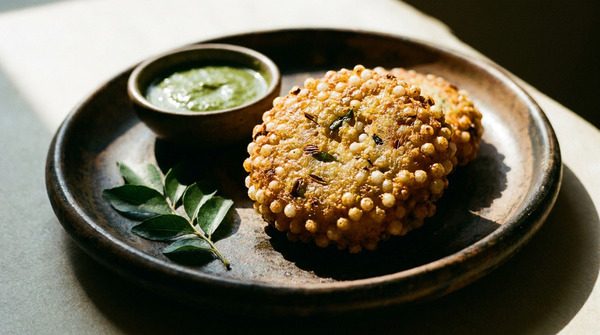
Sabudana Vada Recipe
Ingredients
Sabudana Vada Recipe
- 1 cup Sabudana (tapioca pearls) Soaked 4–6 hours
- 2 medium Potatoes Boiled and mashed
- ½ cup Peanuts Roasted and coarsely crushed
- 2 pieces Green chillies Finely chopped
- 1 tsp Cumin seeds For flavour
- 2 tbsp Fresh coriander Chopped
- 2 tbsp Sendha namak (rock salt) For fasting
- 2 tbsp Lime juice Optional
- 2 tbsp Oil For deep frying
Instructions
- Soak Sabudana.Rinse sabudana 2–3 times and soak in enough water to cover for 4–6 hours. Drain well.
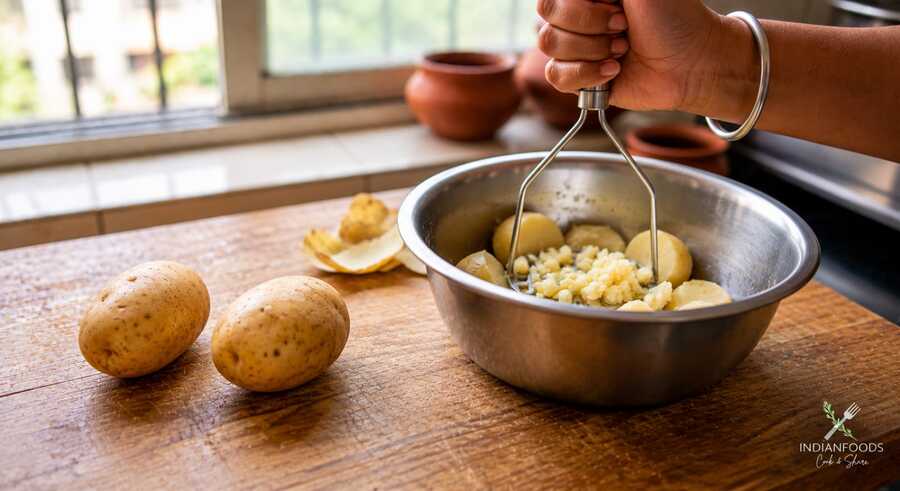
- Boil potatoes until soft, cool, peel, and mash.
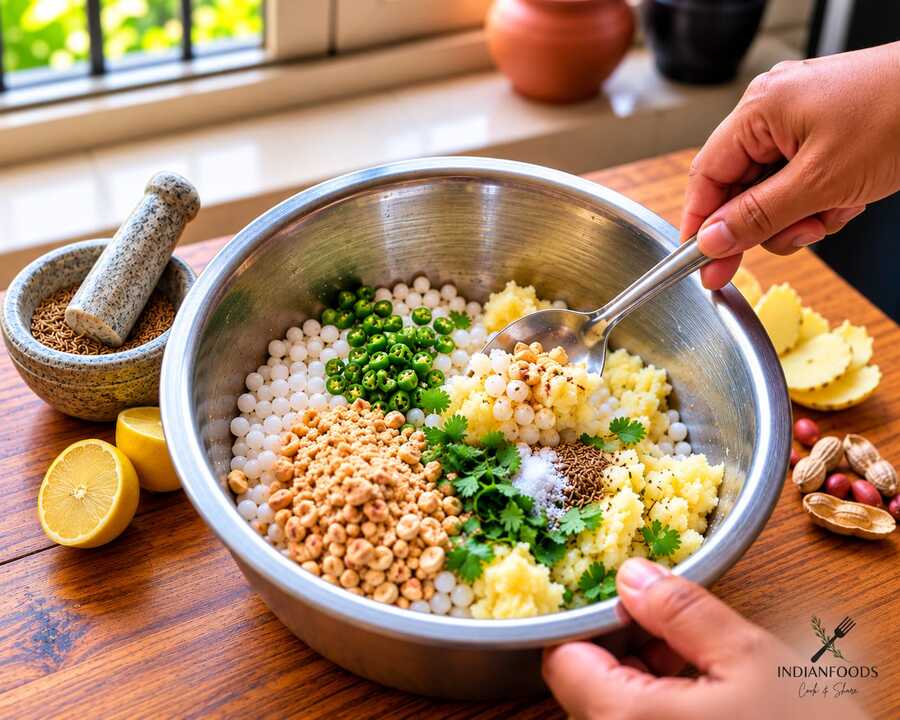
- Prepare Mixture. Mix sabudana, mashed potatoes, crushed roasted peanuts, green chillies, cumin seeds, coriander, sendha namak, and lime juice.
- Shape Vadas. Grease your palms and shape the mixture into 8–10 flat patties.
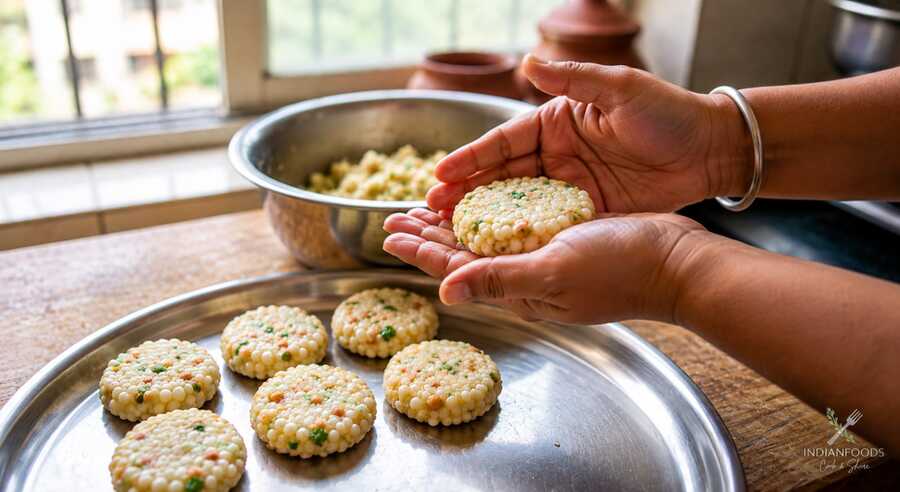
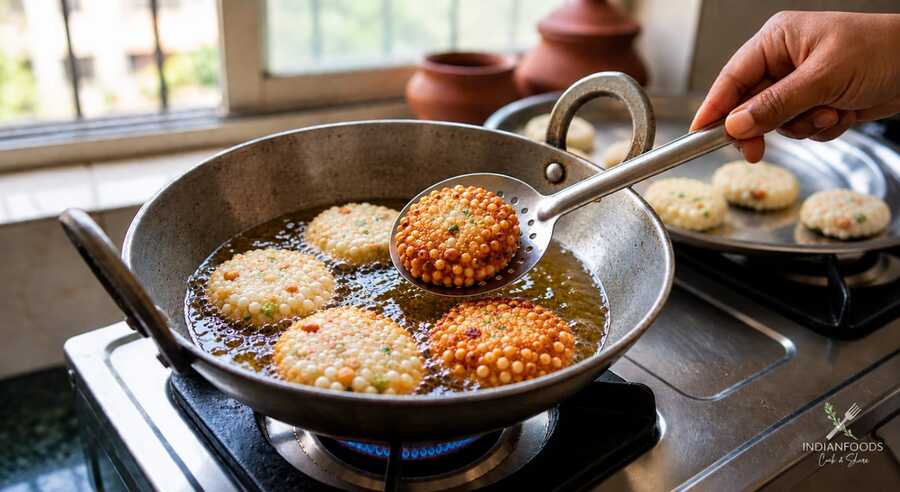
- Heat oil over medium-high heat and deep- fry the patties in batches for 3–4 minutes, turning once, until golden and crispy.
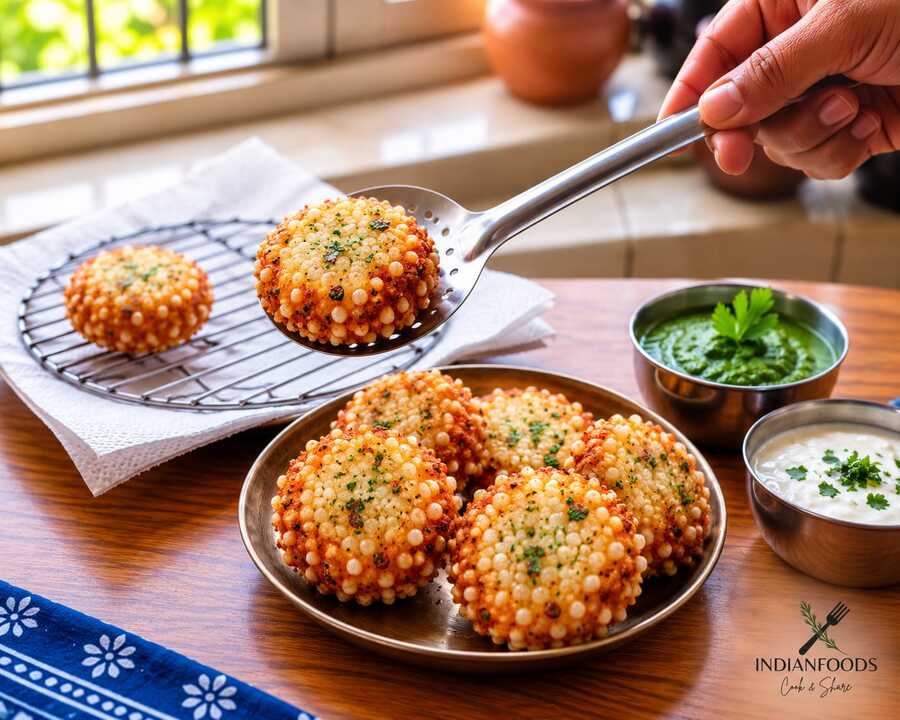
- Drain on a paper towel and serve hot with green chutney and fresh curd.
Notes
- Once mixed, wet your palms with a little water or oil and flatten a handful into a disc about 2 inches wide, half an inch thick.
- Thinner patties crisp fast but dry out. Too thick, and the centre stays soft and starchy — nobody wants that.
- Slide patties gently into oil at a steady medium-high. Drop in a small piece of mixture first; it should sizzle and rise within a couple of seconds without browning instantly.
- Fry in small batches. Crowd the pan and the oil temperature drops, which is where things start going wrong.
Making sabudana vada for the first time this Navratri? Indian Foods has a full library of tested vrat and fasting recipes — from sabudana khichdi to farali dhokla — with step-by-step photos so you know exactly what the mixture should look like before it hits the oil. → Subscribe for weekly recipes at https://indianfoods.co.in
Why do sabudana vadas fall apart while frying?
Vadas break apart mainly for three reasons: under-soaked sabudana, too much moisture in the mix, or oil that isn’t hot enough. Each causes a slightly different failure, so figure out which one you’re actually dealing with before you blame the recipe.
If the pearls at the centre still look opaque and hard after frying, the sabudana wasn’t soaked long enough. The starch never fully softened, so it never bound properly. Go back and soak longer next time, testing individual pearls before draining.
If the mixture feels sticky when you try to shape it, there’s excess water clinging to the sabudana. Always drain it in a fine sieve for a few minutes, and pat it dry with a clean kitchen towel if it still looks damp. A wet mix soaks up more oil too, so you end up greasy instead of crisp.
If patties crumble the second they hit the oil, the oil’s too cool. The outside doesn’t seal fast enough to hold the shape. Test with a small piece of mixture first — it should sizzle and float up within a second or two, not just sit there.
What are common mistakes when making sabudana vada?
- Soaking with too much water. Turns sabudana into a soft, sticky mass instead of separate, tender pearls. No amount of draining fixes this — you’ll have to start the soak over with less water.
- Skipping the rinse before soaking. Unrinsed sabudana carries surface starch that makes the whole batch gummier and more prone to clumping.
- Using watery mashed potato. Boiled potato that hasn’t been drained and cooled properly adds extra moisture, and that’s one of the main reasons vadas turn soggy instead of crisp.
- Grinding peanuts too fine. Smooth peanut powder loses the textural contrast. You want coarse, crushed pieces you can actually see and feel when you bite in.
- Overcrowding the frying pan. Too many patties at once drops the oil temperature sharply, so the vadas absorb oil instead of sealing and crisping quickly.
- Frying on very high heat to save time. Browns the outside before the centre cooks through. You’ll end up with a burnt shell wrapped around a raw, starchy middle.
What do you serve with sabudana vada?
Sabudana vada is one of the navratri vrat recipes, is traditionally served hot with plain dahi (yogurt) and a fresh coriander-mint chutney, both of which cut through the richness of the fried patty. On fasting days, the chutney is usually made without garlic — just green chilli, coriander, mint, lime juice, and rock salt.
Outside vrat, it also works well with a sweeter tamarind-date chutney, or even plain tomato ketchup if kids are involved. A cup of masala chai on the side turns it into a proper teatime spread. On a fasting-day thali, sabudana vada usually sits next to sabudana khichdi, a bowl of curd, and roasted makhana or a fruit bowl — all drawing from the same pantry of rock salt, potato, and peanuts.
Can you make sabudana vada ahead of time or store it?
You can prepare the mixture up to a day ahead and refrigerate it, but shape and fry vadas fresh rather than storing them cooked. The mixture holds fine covered in the fridge for about 24 hours. Just let it come back closer to room temperature before shaping — cold potato stiffens the mix and makes it harder to bind.
Fried vada loses its crispness within a couple of hours as it cools, and microwaving leftovers makes them soft and slightly rubbery rather than crisp again. If you have to reheat, use an oven or air fryer at around 180°C (350°F) for 6-8 minutes. It brings back real crunch, which a microwave simply can’t.
Freezing shaped, uncooked patties works well — lay them on a tray until firm, then bag them up. Fry directly from frozen, adding a couple of extra minutes. Genuinely useful if you’re cooking for a big Navratri gathering and want fresh vada across several days without soaking sabudana every single time.
Fasting Recipes
Frequently Asked Questions
Yes, sabudana vada is naturally gluten-free since it’s made from tapioca pearls, potato, and peanuts, with no wheat flour involved in the traditional recipe.
Sogginess usually comes from excess moisture in the mixture — either under-drained soaked sabudana or watery mashed potato — combined with oil that isn’t hot enough to seal the outside quickly.
You can, using a little roasted rajgira flour or extra crushed peanuts as a binder instead, though the texture will be denser and less soft inside without potato’s moisture and starch.
Roasted and coarsely crushed cashews or roasted chana (gram) can stand in for peanuts, giving a similar crunch and nutty base flavour, though the exact taste will differ slightly.
Vada firms up as it cools because the starch in sabudana sets; this is normal, but if it turns tough or dense rather than just less crisp, the sabudana was likely under-soaked before frying.
Yes — using sendha namak instead of table salt and skipping onion, garlic, and turmeric keeps it within standard vrat guidelines followed during Navratri and similar fasting days.