
Sabudana kheer shows up at every Navratri thali and every vrat table I’ve ever sat at. There’s a reason. It’s quick, it’s forgiving, and it’s genuinely good — not a sad “fasting substitute” you eat because you have no other option. I’ve made batches of this on busy fasting evenings where I had maybe twenty minutes before everyone came home hungry, and it still turned out right. This recipe covers the soaking, the simmering, and the handful of small details that separate a glossy, pearly kheer from a gluey, claggy one.
KEY TAKEAWAYS
- Soak sabudana for 15-20 minutes in just enough water, not hours — over-soaking makes it mushy and sticky instead of pearly.
- Use full-fat milk and keep the flame low so the kheer thickens gently without the milk catching at the bottom.
- Sabudana turns glossy and translucent when fully cooked — this is your visual doneness cue, not a timer.
- Add sugar only after the pearls are cooked since sugar added too early can keep sabudana from softening properly.
- The kheer thickens a lot as it cools, so stop cooking when it’s slightly thinner than the texture you want.
- This is a genuine vrat and Navratri fasting dish when made without regular table salt substitutes or forbidden grains.
What is Sabudana Kheer Made of?
Sabudana kheer is made of soaked tapioca pearls (sabudana), milk, sugar, and flavourings like cardamom, saffron, and chopped nuts. It’s a milk pudding, close in spirit to rice kheer, but it swaps in sabudana because rice and most grains are off-limits during vrat fasting.
Most Indian kitchens work off a rough ratio of 2-3 tablespoons of sabudana per cup of milk. You can nudge this up or down depending on how thick you like things. Full-fat cow’s milk is the traditional choice — its natural creaminess helps the kheer set to a rich, spoon-coating texture without needing cream or condensed milk, though plenty of quicker versions use both.
Here’s what that looks like in a real kitchen: for a family of four, soak about half a cup of sabudana, simmer it in 4 cups of milk, and sweeten with sugar to taste, usually around half a cup, adjusted once you’ve tasted it. Some households stir in a spoon of khoya or milk powder near the end for extra body. This matters more during festivals, when kheer gets made in large batches and has to sit around for hours without turning watery or separating.
How do I Make Sabudana Kheer Step by Step?
You make sabudana kheer by soaking the pearls, boiling milk, simmering the soaked sabudana in the milk until translucent, then sweetening and flavouring it. Once the sabudana’s soaked, the actual cooking takes under half an hour.
Soaking the Sabudana
Rinse half a cup of sabudana under running water two or three times, until the water runs mostly clear. This washes off the surface starch that would otherwise turn your kheer gummy. Soak it in just enough water to cover the pearls — about half an inch above the sabudana line. Leave it 15-20 minutes. Smaller pearls need less time. Larger ones can take closer to 25 minutes. You’ll know it’s ready when you can flatten a pearl between your fingers without feeling a hard, uncooked centre.
Cooking in Milk
Bring 4 cups of full-fat milk to a gentle boil in a heavy-bottomed pan, stirring now and then so it doesn’t catch. Drain the soaked sabudana completely — don’t tip in the soaking water — and add it to the simmering milk. Lower the heat. Let it cook gently, stirring every couple of minutes, for 12-15 minutes, until the pearls turn glossy and translucent with no white, opaque centres left.
Sweetening and Flavouring
Once the sabudana’s fully cooked, stir in sugar, crushed cardamom, and a few saffron strands if you’re using them. Simmer another 3-4 minutes so the sugar fully dissolves into the milk. Finish with chopped almonds, cashews, pistachios, and raisins if you like them.
Recipe Card
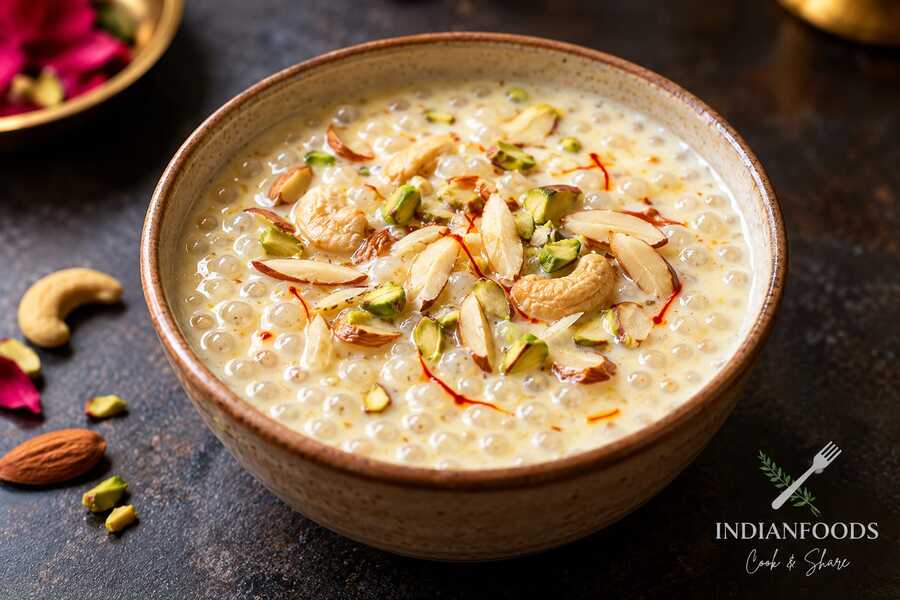
Sabudana Kheer Recipe
Ingredients
sabudana Kheer Recipe
- ½ cup Sabudana Rinsed and soaked
- 4 cups Full-fat milk For a creamy texture
- ½ cup Sugar Adjust to taste
- ½ tsp Cardamom powder For flavour
- 2 tbsp Almonds Chopped
- 2 tbsp Cashews Chopped
- 1 tbsp Raisins Optional
- 1 tbsp Saffron Optional
Instructions
- Rinse and Soak Sabudana: Rinse the sabudana two or three times under running water to remove excess starch. Soak in just enough water to cover the pearls for 15–20 minutes, then drain well.
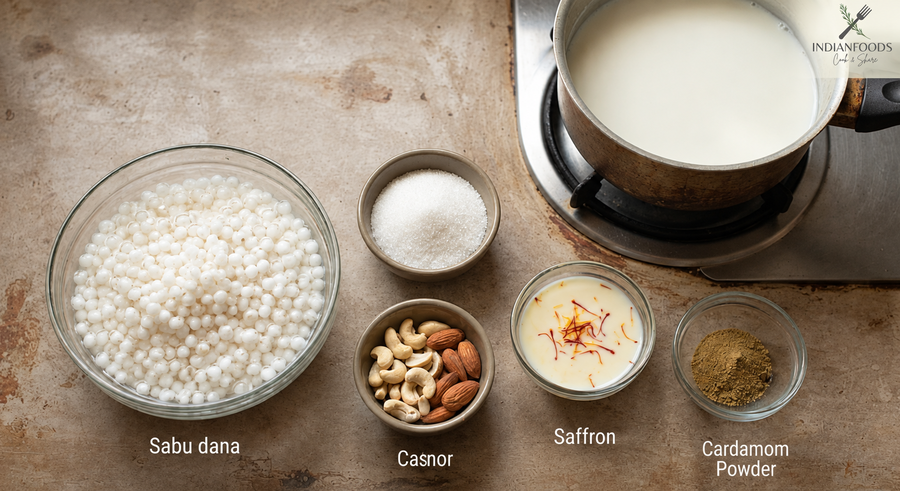
- Boil the Milk: Pour the full-fat milk into a heavy-bottomed pan and bring it to a gentle boil. Stir occasionally to prevent the milk from sticking to the bottom.
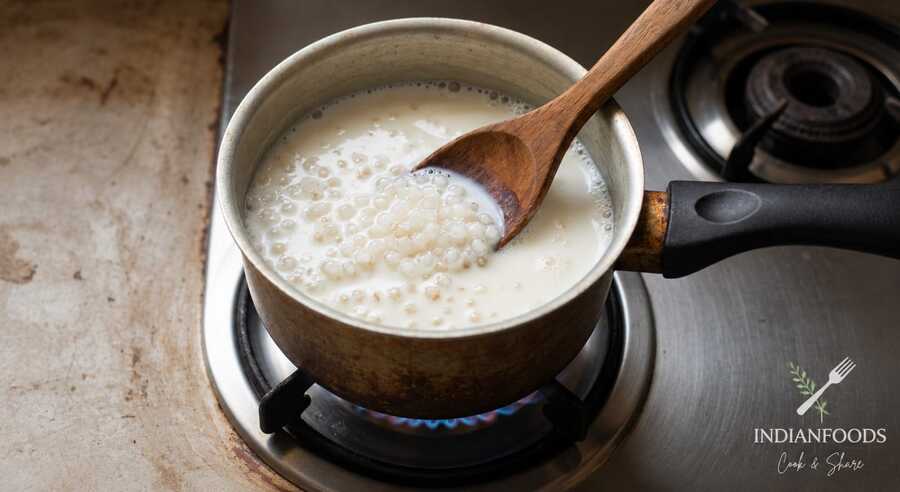
- Cook the Sabudana: Add the drained sabudana to the simmering milk and reduce the heat to low. Cook for 12–15 minutes, stirring gently until the pearls become soft, glossy, and translucent.
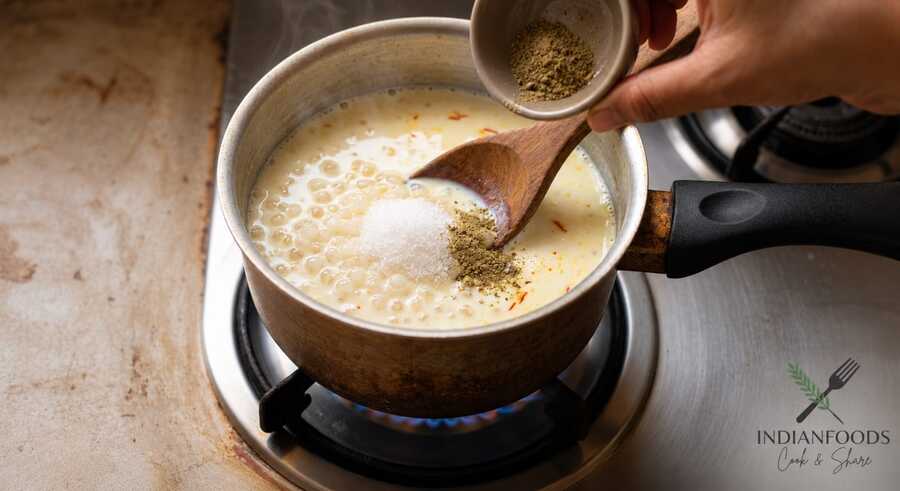
- Add Sugar and Flavouring: Once the sabudana is fully cooked, add sugar and cardamom powder. Stir well and simmer for another 3–4 minutes until the sugar dissolves completely.
- Add Nuts and Serve: Mix in chopped almonds, cashews, raisins, and saffron if desired. Turn off the heat and let the kheer rest briefly; serve warm or chilled.

Notes
| Problem | Cause |
|---|---|
| Gluey, sticky kheer | Surface starch left on the pearls, or too much sabudana |
| Pearls clump into lumps | Soaked pearls stuck together, or not stirred when added |
| Hard white centres | Under-soaked or under-cooked pearls |
| Pearls stay firm | Sugar added before the pearls were cooked |
| Too thick after cooling | Normal starch setting |
| Too thin | Milk not reduced enough |
| Curdled with jaggery | Jaggery added to boiling milk |
| Scorched at the bottom | Thin pan or not scraping |
Is Sabudana Kheer Allowed During Navratri Vrat?
Yes. Sabudana kheer is one of the most widely accepted dishes during Navratri and other vrat fasts because it skips grains, onion, and garlic entirely while still being filling and sweet enough to feel like a proper dessert. Most fasting traditions treat it as a falahari food — fruit-and-milk based.
Sabudana comes from tapioca root, not a cereal grain, which is exactly why it’s allowed in fasts that otherwise ban rice, wheat, and most lentils. The things to actually watch are your sweetener and any add-ins. Stick to plain sugar or jaggery — though check your family’s own rules first, since some households avoid jaggery too — and steer clear of asafoetida, excess table salt, or packaged flavour mixes that sneak in grain starches.
In practice, this plays out like this: many households make a big pot of sabudana kheer in the evening after the day’s fast and serve it alongside sabudana khichdi, kuttu puris, a bowl of fruit. All genuinely vrat-appropriate. None of it tastes like a compromise meal.
How do I Store and Reheat Sabudana Kheer?
Store sabudana kheer in an airtight container in the refrigerator for up to 2 days, and reheat it on the stovetop with a splash of milk to loosen it.
It thickens a lot once chilled, because the pearls keep soaking up milk even after the heat’s off. That’s normal, not spoilage, so don’t panic the morning after. When reheating, add milk a tablespoon at a time over low heat and stir until it’s back to the consistency you want. Microwaving works in a pinch too, but stir it halfway through — sabudana can turn rubbery in spots if it overheats unevenly.
Here’s a tip from festival cooking: if you’ve made a big Navratri batch, split it into smaller containers before refrigerating. Reheat only what you need instead of warming the whole pot over and over, which makes the texture grainy after a few rounds.
What are the Most Common Mistakes When Making Sabudana Kheer?
- Over-soaking the sabudana. Leave it in water for hours instead of 15-20 minutes and the pearls swell too much, turning mushy and sticky once cooked. You lose the individual bite entirely.
- Skipping the rinse before soaking. Sabudana carries surface starch. Rinse it off first or your kheer clumps and turns gluey.
- Adding sugar too early. Sugar in before the sabudana’s fully translucent slows the softening down. You end up with hard centres even after a long simmer.
- Cooking on high heat. Milk scorches fast on a high flame. You get a burnt undertone and a stubborn skin that won’t stir back in. Low and slow, every time.
- Not accounting for thickening on cooling. A kheer that looks perfectly pourable on the stove can go almost solid once chilled. Stop cooking a touch earlier than you think you should.
- Using low-fat milk for a festival batch. Thin milk just can’t give the kheer body. You’ll get a watery result no matter how long you simmer it — full-fat milk actually makes the difference here, not a minor one.
| Making sabudana kheer for this Navratri? Indian Foods has a full collection of tested vrat recipes, from sabudana khichdi to kuttu ki puri, so your fasting menu never feels repetitive. → Subscribe for weekly recipes at https://indianfoods.co.in |
How do I get the Pearly, Non-Sticky Texture Everyone Wants?
The pearly texture comes from controlling how much water the sabudana soaks up before it even touches the milk. Get the soaking step right and the cooking mostly takes care of itself.
Too much water, or too long a soak, makes the pearls swell unevenly and dump extra starch into the pan. That’s what gives you a clumpy, paste-like texture instead of separate glossy beads. The fix isn’t complicated: use only enough water to just submerge the sabudana, drain it properly before it goes into the milk, and don’t stir aggressively once it’s in the pan. Vigorous stirring breaks the pearls and releases more starch than you want.
What good sabudana kheer looks like: lift a spoonful and you should see distinct translucent beads sitting in creamy milk, not a uniform porridge. If yours turns out gluey despite following every step, the culprit is almost always over-soaking or too little milk relative to sabudana — which just concentrates the starch. Next time, cut the soak by five minutes and add an extra half cup of milk while cooking. That usually fixes it.
Popular Vrat Recipes
Frequently Asked Questions
Yes, you can substitute full-fat coconut milk or almond milk for dairy milk, though the kheer will have a lighter, less creamy body and a distinct coconut or nut flavour that changes the traditional taste profile.
This usually means the sabudana wasn’t cooked long enough to release its starch into the milk, or too much milk was used relative to the sabudana; simmer a few more minutes on low heat, stirring often, to thicken it naturally.
Yes, jaggery works well and gives the kheer a warm, caramel-like flavour, but check it doesn’t curdle the milk by adding it off the heat and stirring immediately after the kheer has cooled slightly.
For kheer, 15-20 minutes is usually enough since the pearls will continue softening in hot milk afterward; this is shorter than the soaking time used for sabudana khichdi, which needs firmer, separate pearls.
Yes, you can make it a few hours ahead and refrigerate it, but keep in mind it will thicken significantly as it sits, so warm it gently with a little extra milk just before serving.
Grated coconut, a pinch of nutmeg, or a few saffron strands soaked in warm milk are common additions that deepen the flavour without adding any non-fasting ingredients.