
Every Navratri, kuttu ki puri is the one thing my kitchen doesn’t skip. Nine days of Navratri vrat recipes, fasting food can get repetitive fast, but a hot, puffed puri fresh off the tawa still feels like a real meal, not a compromise. No wheat, no rice, not even a hint of a regular grain — and yet it holds its own on the plate. This guide walks through the method I actually use at home, the mistakes that trip people up most often, and what to serve alongside it so the whole meal works.
KEY TAKEAWAYS
- Kuttu (buckwheat) flour has no gluten, so the dough is fragile and needs boiled potato as a binder.
- Rolling between greased plastic sheets or parchment stops the puri from tearing or sticking to the rolling pin.
- The oil needs to be properly hot — drop in a small piece of dough and it should rise straight away — or the puris go soggy instead of puffing up.
- Kuttu ka atta recipe is eaten during Navratri, Ekadashi, and other fasting days when grains are off the table.
- Fresh dough fries best. Dough that sits around too long turns sticky and hard to shape.
- Serve vrat ki puri when the moment it’s fried, alongside vrat-friendly sides like sendha namak aloo sabzi, kaddu ki sabzi, or plain curd.
What Is Kuttu Ki Puri And Why Is It Eaten During Vrat?
Kuttu ki puri is a deep-fried flatbread made from buckwheat flour, eaten on fasting days like Navratri, Mahashivratri, and Ekadashi. The reason it’s allowed comes down to classification, not chemistry — buckwheat counts as a “fasting grain” in Indian religious dietary rules, even though botanically it’s a seed, not a cereal at all.
During Navratri, most households step away from regular grains, lentils, onion, and garlic for the whole nine days. That leaves a gap, and buckwheat fills it, along with amaranth (rajgira) and water chestnut flour (singhare ka atta). None of these count as grains under fasting rules, though they get cooked exactly like one. Kuttu ki puri caught on the way it did because it gives people fasting something that actually feels like food — hot, crisp, filling — rather than another bowl of fruit or a glass of milk.
Walk into most homes during Navratri and you’ll find the same thali repeating itself: kuttu ki puri, a simple potato sabzi tempered with cumin and sendha namak instead of regular salt, and a small bowl of curd on the side. Some families fry up kuttu ke pakore with the same flour instead, and they’re good, but puri wins out for most people. It travels well, it doesn’t get soggy in a tiffin the way pakore can, and it keeps you full through a long fasting day at work or during puja.
Recipe Card
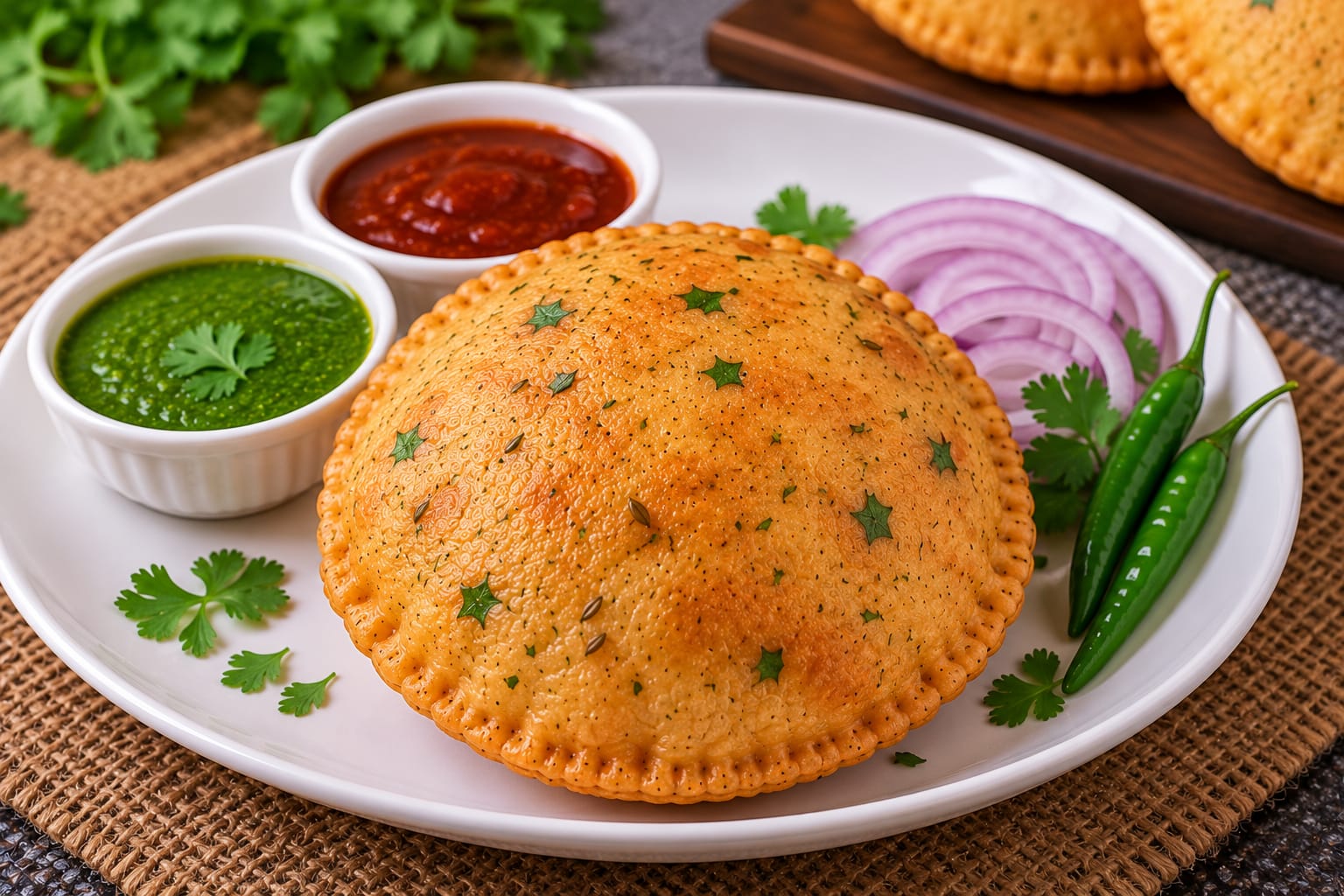
Kuttu Ki Puri Recipe
Ingredients
Kuttu Ki Puri Recipe
- 1 Cup Kuttu ka Atta Buckwheat flour
- 1 Medium Potato Boiled and mashed
- 1/4 tsp Ajwain
- 1-2 Medium Green Chili Finely chopped
- 2 tbsp Ghee For deep frying
- 1-2 tbsp Sendha Namak Rock salt
Instructions
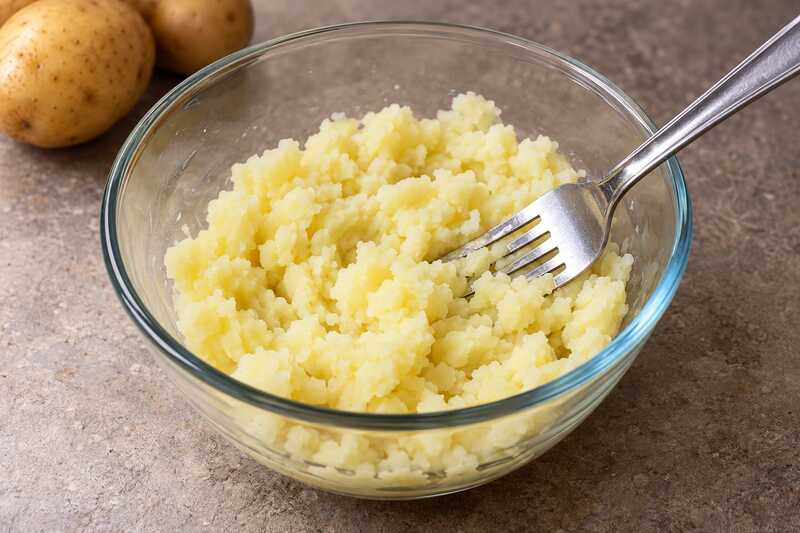
- Boil the potato until soft, peel it, and mash it smoothly.
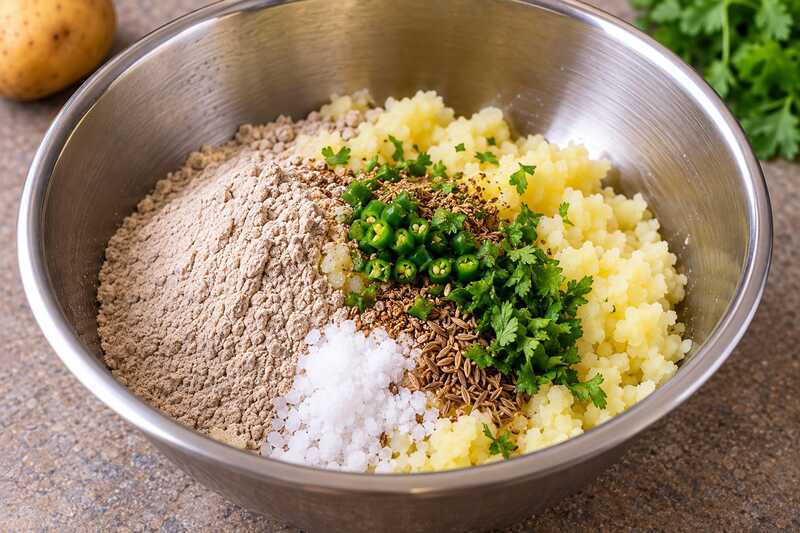
- Mix mashed potato, kuttu atta, sendha namak, and optional ajwain and green chili. Knead into a soft dough, adding very little water if needed. Rest for 10 minutes.
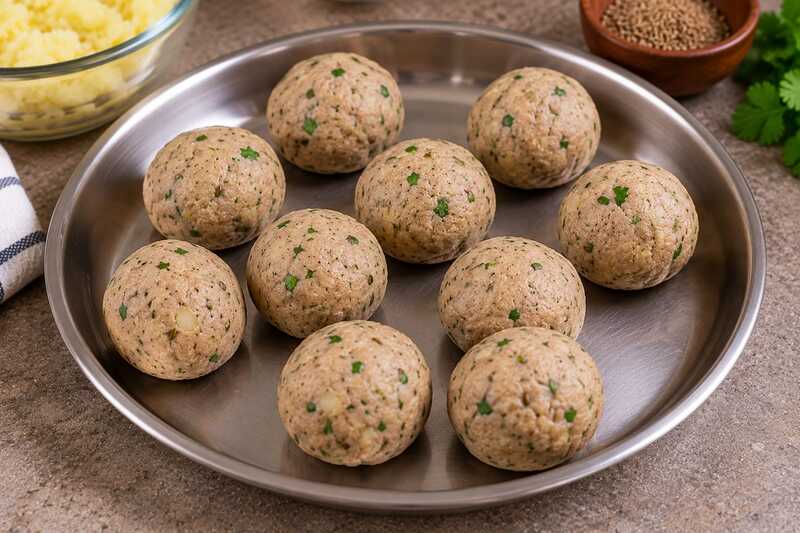
- Divide the dough into 8–10 small balls. Grease two plastic sheets or parchment paper and place a dough ball between them.
- Press or roll each ball into a thin, round puri of about 3 inches.
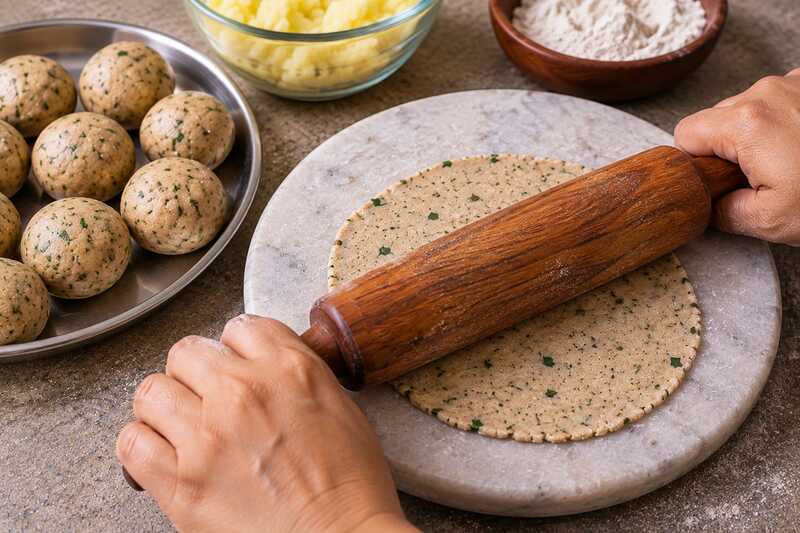
- Heat oil or ghee in a kadai until hot. Test with a small piece of dough—it should rise immediately.
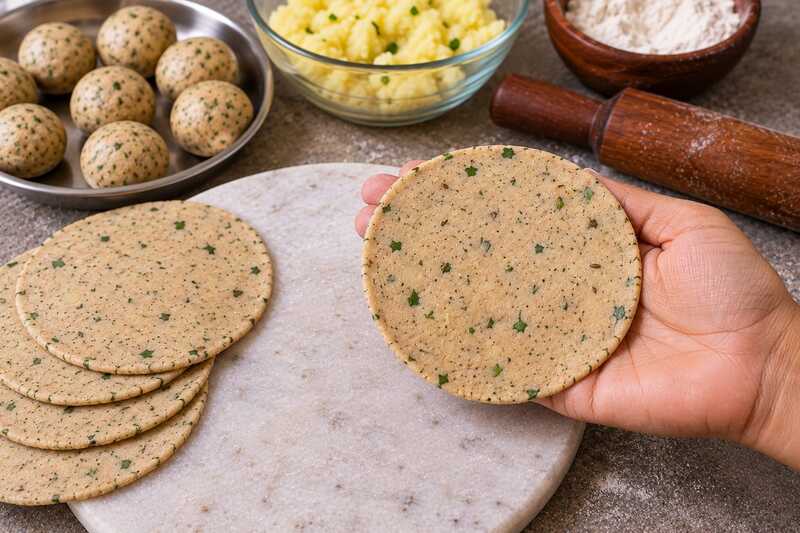
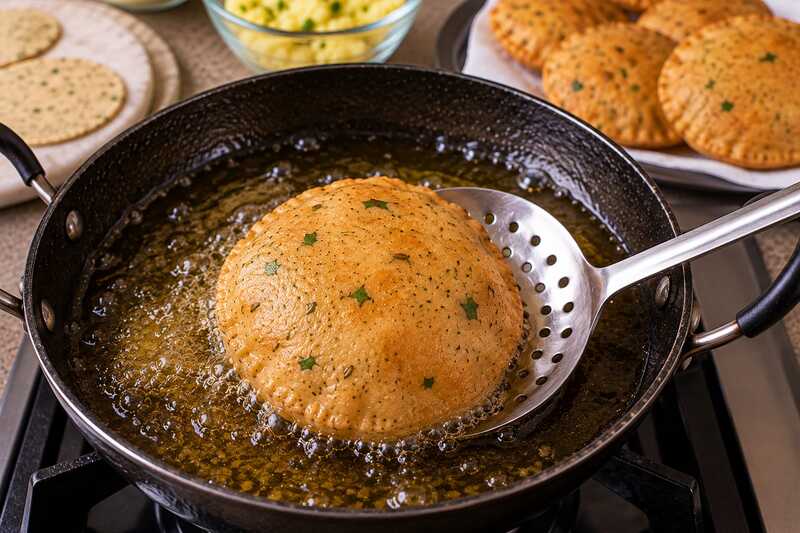
- Carefully slide the puri into the hot oil. Fry for about 30–40 seconds, gently pressing with a slotted spoon until it puffs and turns light golden. Flip and fry for another 20–30 seconds.
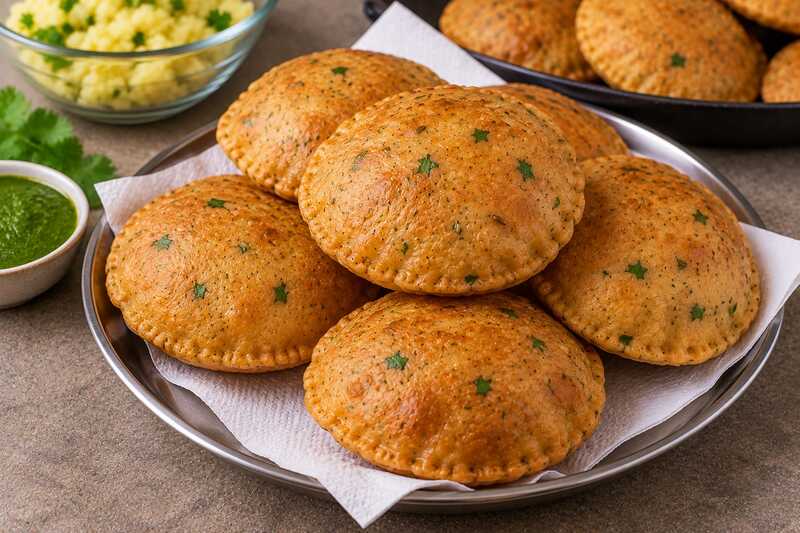
- Remove and drain on paper towels. Serve hot with aloo sabzi, kaddu sabzi, or plain curd.
What Sides Go Well With Kuttu ki Puri?
Pair it with sendha namak aloo sabzi, kaddu (pumpkin) sabzi, or plain curd. All three stick to Navratri fasting rules — no onion, no garlic, no regular salt.
A dry potato sabzi tempered with cumin seeds, green chilli, and rock salt is the classic partner, and honestly the easiest one, since you can have it simmering while the puris fry. Kaddu ki sabzi — pumpkin cooked with a touch of jaggery or sugar and a light tempering — brings a mild sweetness that a lot of families lean on during Navratri; it’s a nice change from potato every single day. Plain curd, or a light raita with cucumber and rock salt, cools the whole plate down, which matters because fried food sits heavier than usual on a fasting stomach.
A typical Navratri lunch at home looks like this: two or three hot puris, a small bowl of aloo sabzi, a spoon of curd, maybe some roasted or fried makhana on the side for crunch. Some households add a tangy tamarind or mint chutney made without garlic. Nice touch if you have the time, but not essential — plenty of good vrat meals skip the chutney entirely.
Common Mistakes When Making Buckwheat Flour Puri
- Using too much water in the dough. Kuttu flour doesn’t absorb moisture evenly, so pouring in water quickly makes the dough sticky and near impossible to roll. Add it a teaspoon at a time, and only if the potato isn’t giving you enough moisture already.
- Skipping the plastic sheet method. Roll this dough directly on a dry counter with a rolling pin and it cracks, because there’s no gluten holding it together. Greased plastic or parchment lets you flatten it without tearing it apart.
- Frying in oil that isn’t hot enough. Cool oil means the puri soaks up excess grease and lies there flat, greasy, sad. Test it first — a small piece of dough should rise and bubble the second it touches the oil.
- Rolling the puris too thick. A thick puri cooks unevenly and stays doughy in the middle even when the outside looks perfectly golden. Roll it thin, close to a regular wheat puri.
- Letting the dough sit too long before frying. Leave kuttu dough resting more than 20-30 minutes and it turns sticky, harder to shape. Mix it close to frying time. Don’t get ahead of yourself.
- Not draining the fried puris properly. Stack hot puris straight onto a plate and the trapped steam turns them soggy within minutes. Drain them briefly on paper towels first. Always.
Can you make kuttu ki puri without potato?
You can, but it’s trickier — potato is the easiest, most reliable binder for kuttu dough, and most substitutes ask for a bit more care to stop the dough falling apart.
Boiled sweet potato (shakarkandi) works in a similar way and gives a slightly sweet edge that plenty of people enjoy in their fasting meals. A small amount of arrowroot flour mixed with a little extra water — arrowroot is vrat-approved and commonly used as a thickener — can also bind the dough if potato just isn’t around, though the texture ends up a bit denser and less soft. Skip the binder entirely and kuttu dough crumbles the moment you touch a rolling pin to it. Buckwheat flour has nothing on its own to hold it together.
If you’re cooking for a bigger gathering and run short on regular potato, boil one extra sweet potato along with the rest and mash them together. The ratio doesn’t need to be precise — just watch the dough. If it feels soft and pliable rather than dry and cracked at the edges, you’ve got it right.
Fasting Food Recipes List
- Sabudana Khichdi Recipe for fasting days
- Singhare ka Atta Recipe
- Aloo Sabzi Recipe For Vrat
- kaddu ki sabzi recipe
Frequently Asked Questions
Yes, buckwheat flour itself is naturally gluten-free, but always check the packet if you have celiac disease or a gluten intolerance, since some brands process kuttu atta in facilities that also handle wheat.
Make it fresh and fry within 20-30 minutes. Kuttu dough turns sticky and harder to roll the longer it sits around.
Usually one of three things: the dough was rolled too thin, there wasn’t enough potato to bind and soften it, or the oil was too hot and crisped the outside before the inside had a chance to cook through.
Deep frying is what makes it puff up properly. Shallow fry it and you’ll end up with something flat and unevenly cooked — closer to a paratha than a puri.
A banana leaf, a sheet of parchment paper, or even a well-greased flat plate all work fine in place of plastic. What matters is a non-stick, greased surface that lets you flatten the dough without ripping it.
Buckwheat brings more fibre and protein to the table than a lot of refined flours, but this is still a deep-fried bread. Treat it as part of a balanced vrat meal, not a diet food.