
Singhare atta halwa is the dessert that shows up on most vrat recipes during Navratri, Ekadashi, and other fasting days, and it’s earned that spot honestly. One pan, a handful of pantry staples, and that comforting, slightly nutty flavour that nobody in my house has ever complained about. Here’s how to get it right the first time, without wasting a good batch of ghee figuring it out.
What is Singhare ka Atta recipe and Why is it Used for Fasting?
Singhare ka atta is flour made from dried water chestnuts (singhara), and it’s used for Navratri fasting desserts because it comes from a fruit, not a grain. During Navratri and other vrat days, most Hindus stay away from regular wheat, rice, and lentil flours, but continue eating certain fruits, root vegetables, and specific flours considered phalahari, meaning fruit-based. Water chestnut, buckwheat (kuttu), and amaranth (rajgira) flours all fall under this permitted list.
The flour itself is pale grey-white, a bit starchy, and has a mild, faintly sweet taste even before you cook with it. Unlike wheat flour, it has no gluten, so it behaves nothing like dough. Mix it with liquid and it thickens fast, almost like a starch slurry rather than something you’d knead. That’s exactly why it works so well for halwa. It cooks quickly and sets into a smooth, pudding-like texture the moment ghee, liquid, and sweetener come together.
If you’re buying it for the first time, look for a fine, even powder with no lumps and no stale smell — a musty note usually means it’s been sitting on a shelf too long. Store it in an airtight container once you’re home. It pulls in moisture easily, especially in humid weather, and a damp bag of singhare atta will ruin your halwa before you’ve even started roasting it.
Recipe Card
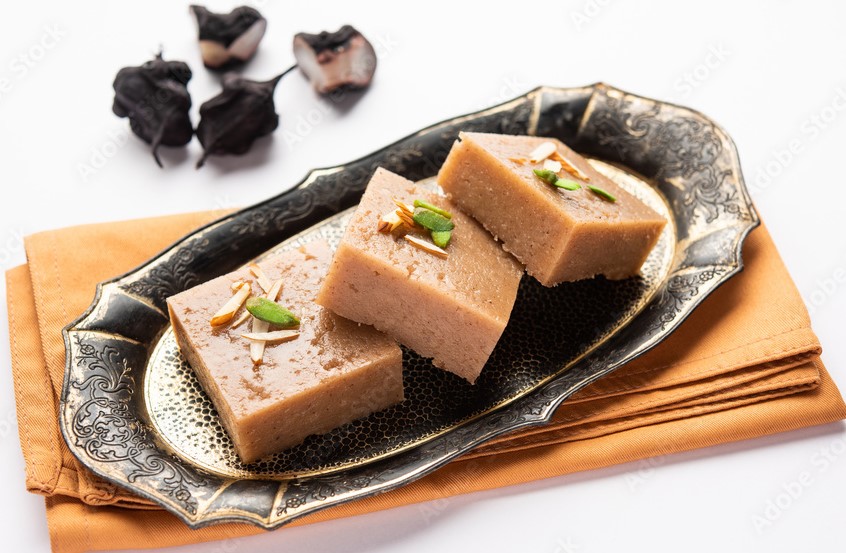
Singhare Atta Halwa Recipe
Ingredients
Singhare Atta Halwa Recipe
- 1-2 cup Singhare Ka Atta Water chestnut flour
- 2-3 cup Ghee For roasting
- 3 cup Water or Milk Hot
- 3/4-1 cup Sugar or Jaggery Adjust to taste
- 1/2 tsp Cardamom Powder For flavor
- 2 tbsp Almonds Chopped
- 2 tbsp Cashews Chopped
- 1 tbsp Raisins Optional
- 4-5 strands Saffron Optional
Instructions
- Heat ghee in a heavy-bottomed pan over low-medium heat. Add singhare ka atta and roast for 6–8 minutes, stirring continuously until lightly golden and fragrant.
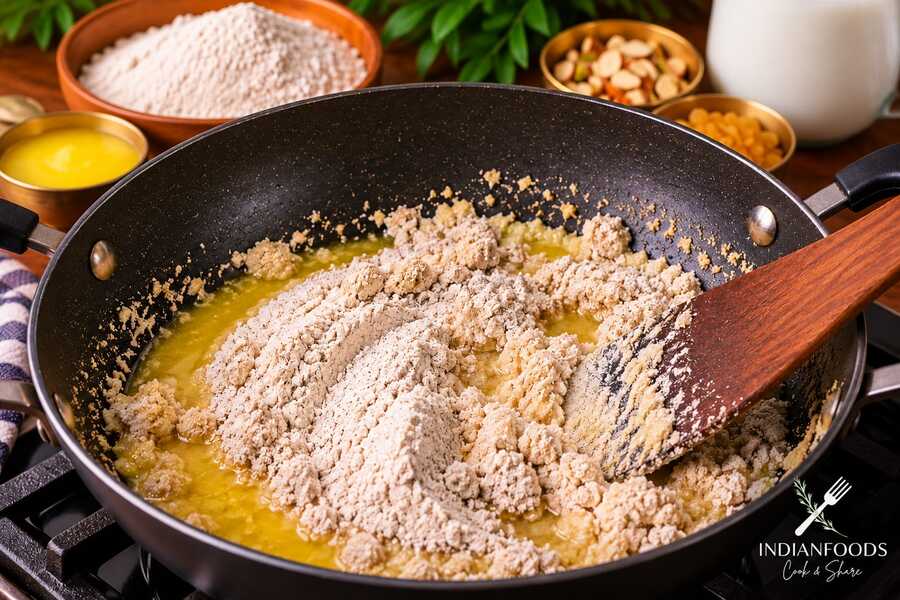
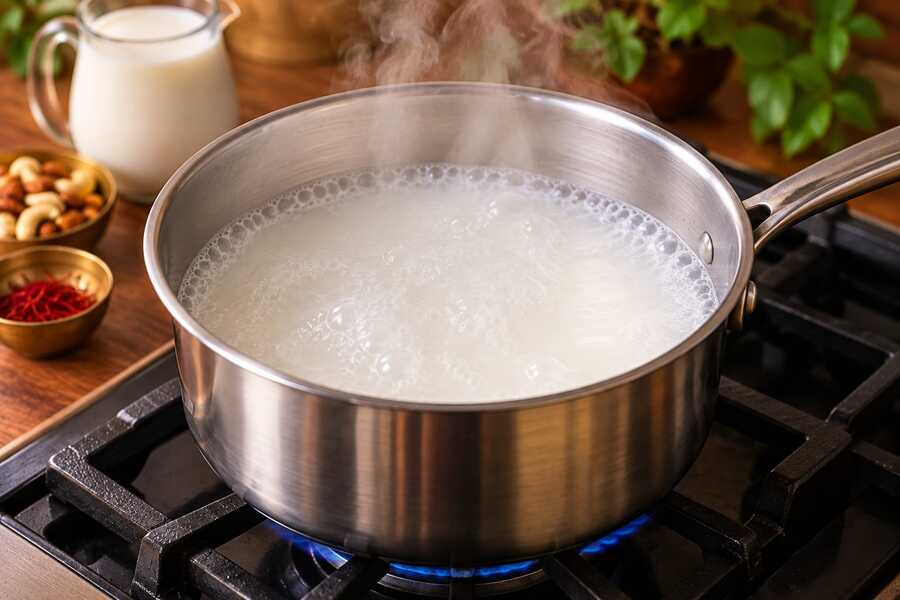
- Meanwhile, heat water or milk in a separate pan until hot.
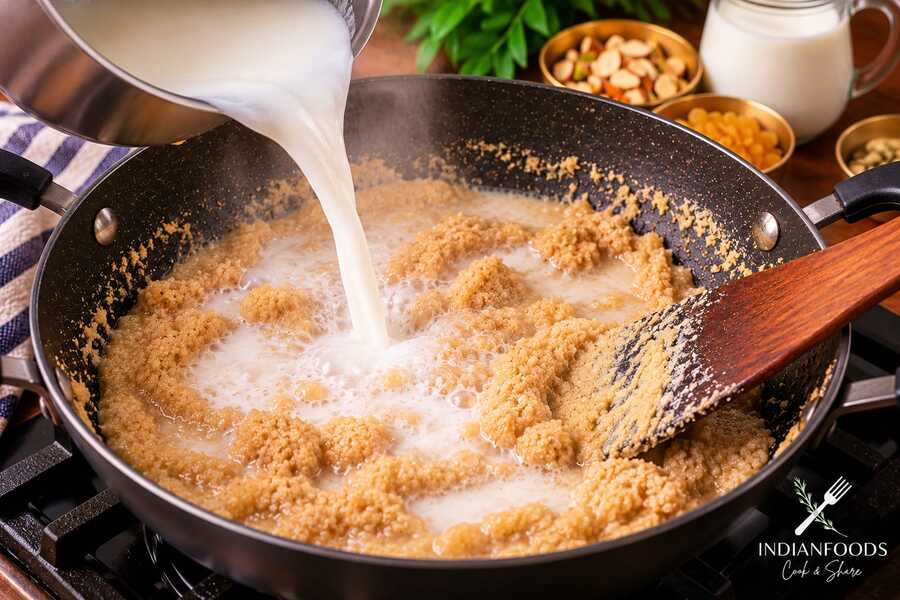
- Slowly pour the hot liquid into the roasted flour while whisking continuously to prevent lumps.
- Keep stirring until the mixture becomes smooth and starts to thicken.
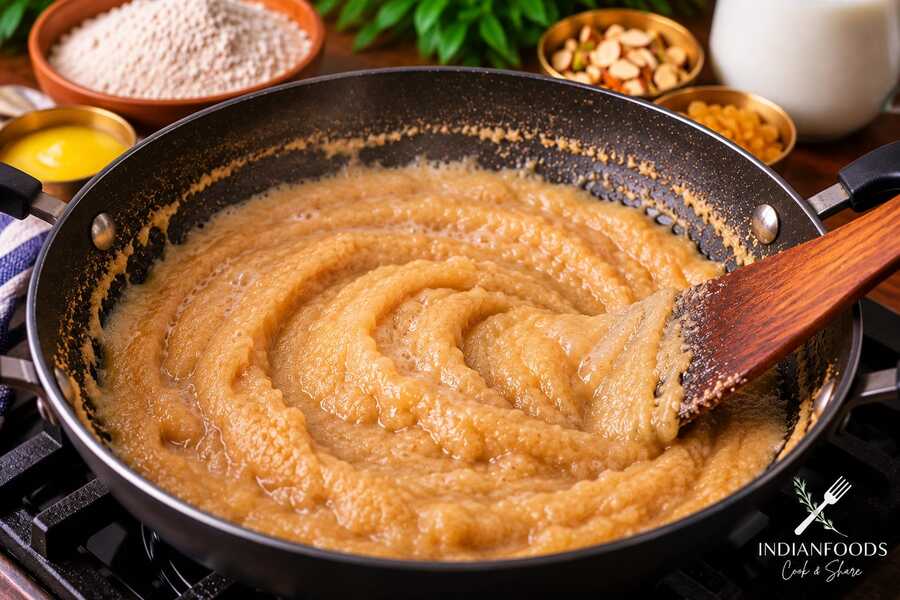
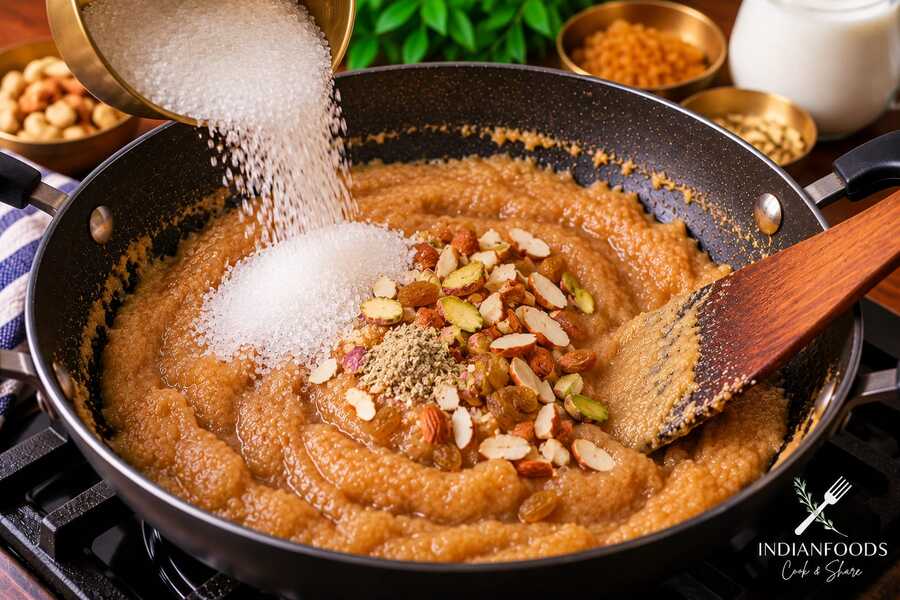
- Add cardamom powder and half of the chopped almonds, cashews, and raisins. Cook for 3–4 minutes, stirring until glossy and the halwa starts leaving the sides of the pan.
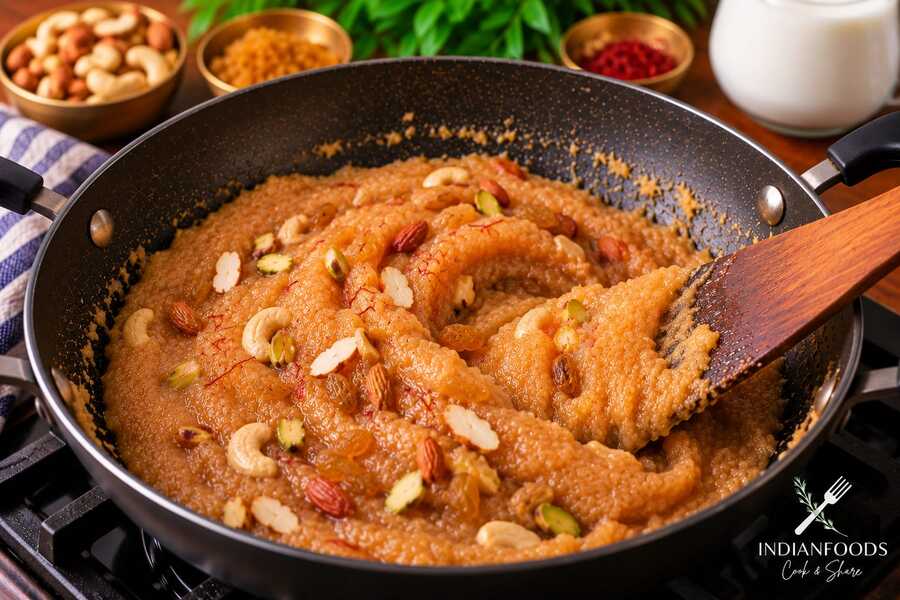
- Turn off the heat, garnish with the remaining nuts and raisins, and serve warm.
Notes
What’s the Right Ratio of Flour, Liquid, and Sweetener?
A reliable starting ratio is 1 cup singhare atta to 3 cups liquid and 3/4 to 1 cup sweetener, which gives a soft, spoonable halwa rather than a stiff one. This flour thickens fast and keeps firming up even after it’s off the heat, so it’s easy to overshoot and end up with something closer to a brick than a halwa if you go too light on the liquid.| Ingredient | Light halwa (looser texture) | Classic halwa (medium-set) | Rich halwa (dense, mithai-style) |
|---|---|---|---|
| Singhare atta | 1 cup | 1 cup | 1 cup |
| Liquid (water/milk) | 3.5 cups | 3 cups | 2.5 cups |
| Ghee | 1/2 cup | 2/3 cup | 3/4 cup |
| Sweetener | 3/4 cup | 3/4-1 cup | 1 cup |
Making halwa for your next vrat and want it to turn out right the first time? Indian Foods has a full library of tested fasting-day recipes — from kuttu ke puri recipe to sabudana khichdi recipe — with step-by-step photos so you know exactly what each stage should look like. Come cook along with us. → Subscribe for weekly recipes at https://indianfoods.co.in
How do You Make a Healthier Version of This Vrat Halwa?
To make a lighter vrat halwa, ease off the ghee slightly, use jaggery instead of refined sugar, and swap part of the milk for water. This dish is already free of maida and refined grains, so the two real levers here are fat and sweetener.
Cut the ghee too aggressively and the texture suffers — the halwa turns gummy and sticks stubbornly to the pan. Reduce it gradually and taste as you go rather than halving it in one shot. Some home cooks swap in date syrup or crushed dates for part of the sweetener, which gives a more natural sweetness, though it does darken the colour and change the flavour a bit. A spoon of roasted nuts and seeds, pumpkin seeds if your fasting rules allow them, adds texture and makes the halwa feel more filling without piling on more sugar. Honestly, though, the simplest fix is portion size. Serve it warm in a small katori instead of a full bowl, and you get all the satisfaction without overdoing it on a day you’re already eating light.
What are The Most Common Mistakes When Making Singhare Atta Halwa?
- Roasting the flour on high heat. Singhare atta has no gluten structure, so it scorches fast on a high flame. Roast on low to medium-low, and stir the entire time.
- Adding cold liquid to the roasted flour. Cold water or milk seizes the mixture into lumps almost instantly. Heat your liquid before it goes anywhere near the pan.
- Not stirring while adding liquid. Pour it in slowly while whisking, not all at once with stirring after the fact. This one mistake causes most of the lumpy halwa complaints I hear.
- Using too little ghee. Ghee isn’t just there for taste. It helps the flour roast evenly and gives the finished halwa its shine. Skimp on it and you’ll get something dull and pasty instead.
- Adding jaggery over too high a flame. Jaggery turns grainy or bitter fast if the pan’s too hot. Lower the heat before you stir it in.
- Forgetting how much it thickens as it cools. The halwa firms up a lot once it’s off the flame, so it should still look a bit looser than you actually want when you switch off the gas.
How Do You Store and Reheat Leftover Singhare Atta Halwa?
Store leftover singhare atta halwa in an airtight container in the fridge for up to 2 days, and reheat it gently on the stovetop with a splash of milk or water to loosen it back up. This halwa firms up a lot as it cools, so by the next day it can look almost fudgy and dense. That’s normal. It hasn’t gone bad on you.
To reheat, put it in a small pan over low heat, add a tablespoon or two of warm milk or water, and stir gently until it loosens back to something spoonable. Skip long microwave stretches — the halwa dries out unevenly that way. Short 20-second bursts with a stir in between work better if you’re in a hurry. And don’t leave it sitting out at room temperature for more than a couple of hours, especially the milk-based version, since dairy sweets turn in warm Indian kitchens faster than people expect. If you’ve set the halwa in a tray and cut it into barfi-style pieces, those hold their shape better in the fridge and travel well as a next-day vrat snack.
Vrat Recipes
- Sabudana Khichdi Recipe
- Kuttu Ki Puri Recipe
- Sabudana Vada Recipe
Frequently Asked Questions
You can use a neutral vegetable oil instead, but expect the flavour and the glossy finish to be noticeably different. Ghee isn’t optional here in any real sense — it’s central to how this halwa tastes.
It works for most Navratri and Ekadashi-style fasts since it’s grain-free, but rules aren’t the same everywhere. Check what your own family or tradition allows before you decide on sugar, milk, or which nuts go in.
Nine times out of ten, it’s cold liquid hitting hot roasted flour, or the liquid going in too fast without constant whisking. Add it hot, add it slowly, and keep stirring the whole time.
Yes, and a lot of people do — it makes the halwa richer and a bit sweeter on its own. Just cut back slightly on the added sweetener, since the milk brings its own sweetness to the party.
Roasting the flour through to a finished halwa runs about 15 to 20 minutes on the stovetop. Not a long recipe by any measure.
Some home cooks fold in mashed banana or grated apple near the end for extra natural sweetness and a different texture. It does shift the traditional flavour, and it shortens how long the halwa keeps, so eat it sooner rather than later if you go this route.