
Sabudana khichdi looks simple. It isn’t. Even cooks who’ve been in the kitchen for twenty years still end up with a sticky lump instead of a fluffy, separate-grained khichdi, and it almost always comes back to one thing: how the sabudana was soaked and handled before it ever touched the pan. I’ve ruined this dish more times than I’d like to admit, usually by getting impatient with the soaking step. This recipe walks through every stage — soaking ratios, tempering, the lot — so you don’t make my mistakes.
What is Sabudana Khichdi Made of ?
Sabudana khichdi is built from soaked tapioca pearls, roasted peanuts, boiled potatoes, and a quick tempering of cumin seeds, curry leaves, and green chilies in ghee or oil. Sabudana comes from the starch of the cassava root, dried into small white pearls that look a lot like sago because, functionally, that’s what it is.
The ingredient list is short. Sabudana, raw peanuts, one or two medium potatoes, green chilies, curry leaves, cumin seeds, a pinch of sugar, rock salt, ghee, plus fresh coriander and lemon juice to finish. Some families add grated coconut for richness. Others drop the potato entirely and let the peanuts carry the bulk on their own — my grandmother’s version had no potato at all, and I still think it’s the better dish, though I’ll admit that’s a minority opinion.
Here’s the part people miss: you’re not cooking sabudana from scratch the way you’d cook rice. The pearls soften almost entirely during soaking. The stovetop stage is really just warming everything through and letting the flavours knit together. Try to “cook” unsoaked sabudana straight in the pan and it stays hard at the centre no matter how long you stir — you can’t fix a soaking problem with heat. The real cooking happens before the flame goes on.
How do I Soak Sabudana Correctly?
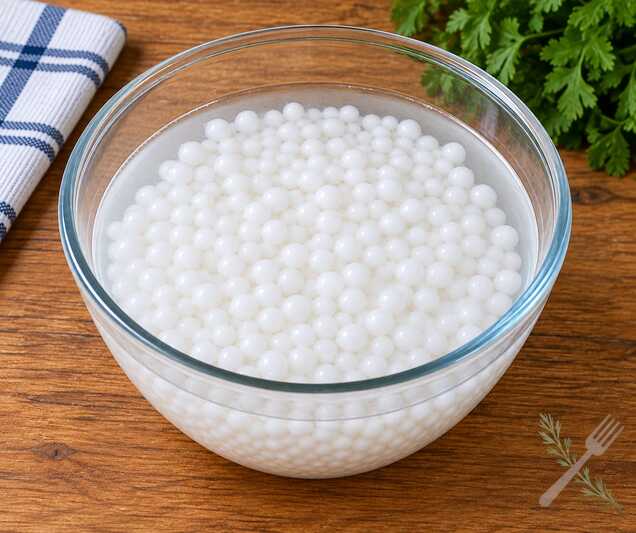
Rinse the sabudana two or three times until the water runs clear. Then soak it in water that just covers the pearls, for 4 to 6 hours or overnight. That’s the whole method. Too much water is the single biggest reason khichdi turns mushy, and it’s the mistake I see most often from first-timers.
Measure your sabudana into a bowl and rinse it under running water, rubbing the pearls gently between your fingers to knock off excess starch. Skip this and you’ll get clumping later, guaranteed. Drain well, then add fresh water so it sits about half a centimetre above the pearls. No more than that. Cover it and let it sit at room temperature.
Thick sabudana — the kind sold specifically for khichdi, not the finer grade used in kheer — usually needs 4-6 hours in warm weather, closer to 6-8 hours when it’s cool, since the pearls absorb water more slowly in winter. Check by pressing one between your thumb and finger. It should flatten easily, no hard white core left. Still chalky? Sprinkle a tablespoon or two of water over the top, mix gently, and give it another hour. Don’t dump in a big splash of water to speed things up. That’s exactly the shortcut that leads to a soggy pan later.
Recipe Card
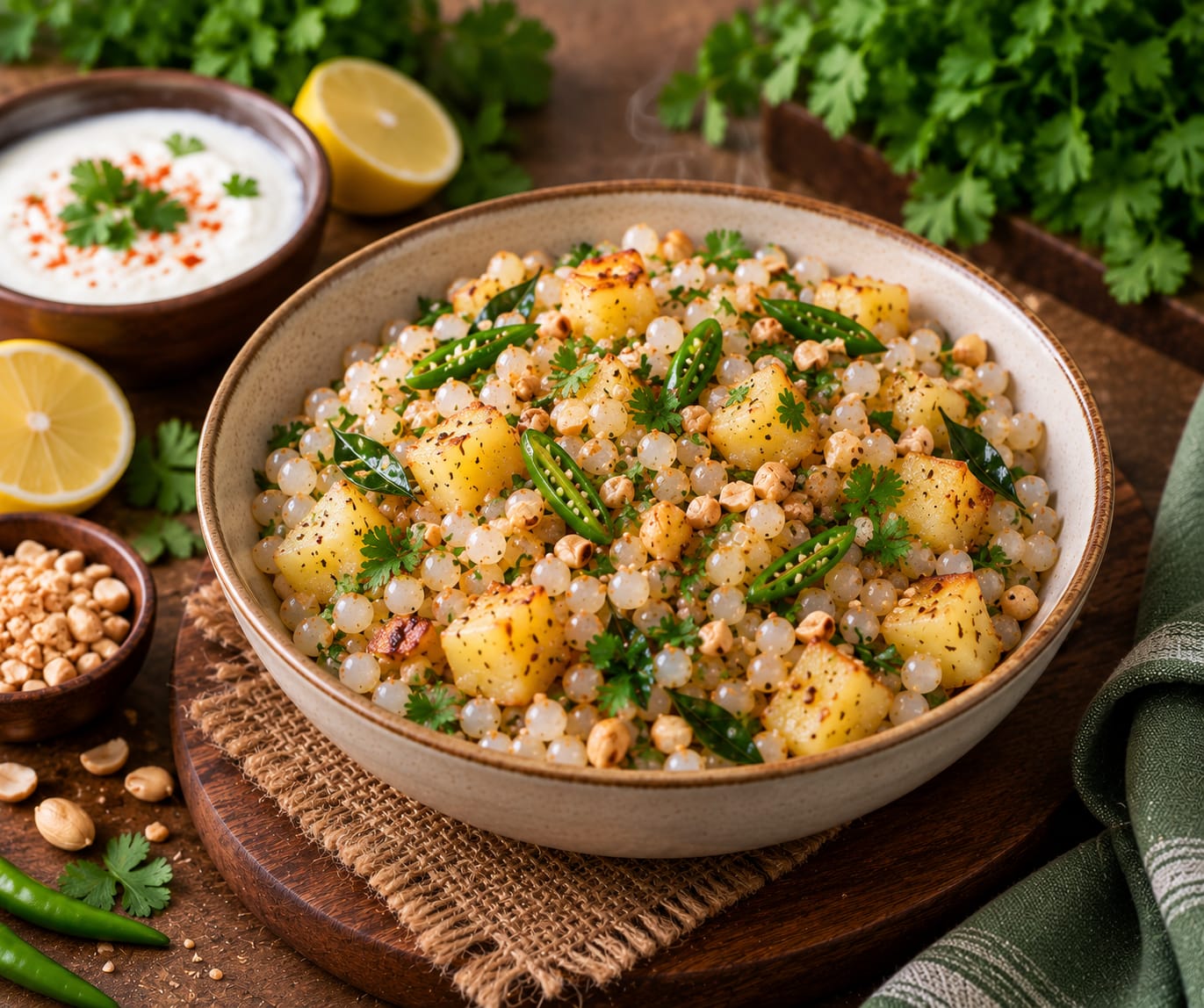
Sabudana Khichdi Recipe
Ingredients
For Sabudana Khichdi
- 1 cup Sabudana rinsed and soaked for 4-6 hours
- 1/2 cup Peanuts Roasted and coarsely crushed
- 2 medium Potatoes Boiled, peeled and cubed
- 2-3 tbsp Ghee Oil can be used
- 1 tbsp Lemon Juice Freshly squeezed
- 2 tbsp Fresh Coriander Leaves Chopped
- 1 tsp Cumin seeds
- 2-3 Green Chillies
- 8-10 Curry Leaves
- 1/2 tsp Sugar
- 2 tsp Sendha Namak For tast
Instructions
- Rinse sabudana 2–3 times until the water runs mostly clear. Drain well, then add enough water to just cover the pearls. Soak for 4–6 hours, or until soft and easily pressed between your fingers.
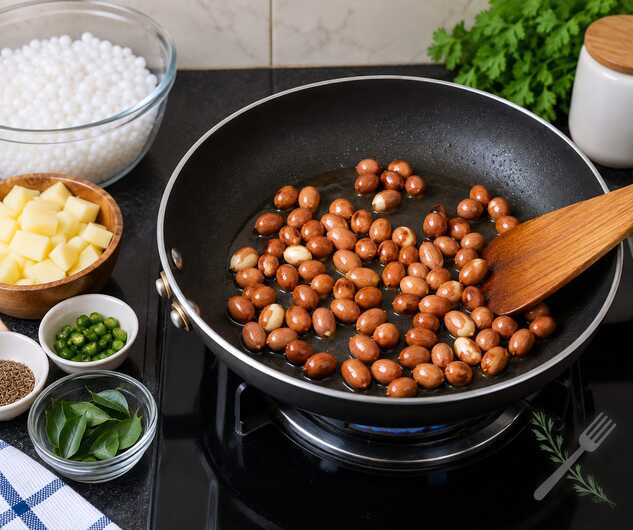
- Roast and Crush the Peanuts. Dry-roast the peanuts in a pan over medium heat until fragrant. Let them cool and crush them coarsely. Keep some texture; don't make a fine powder.
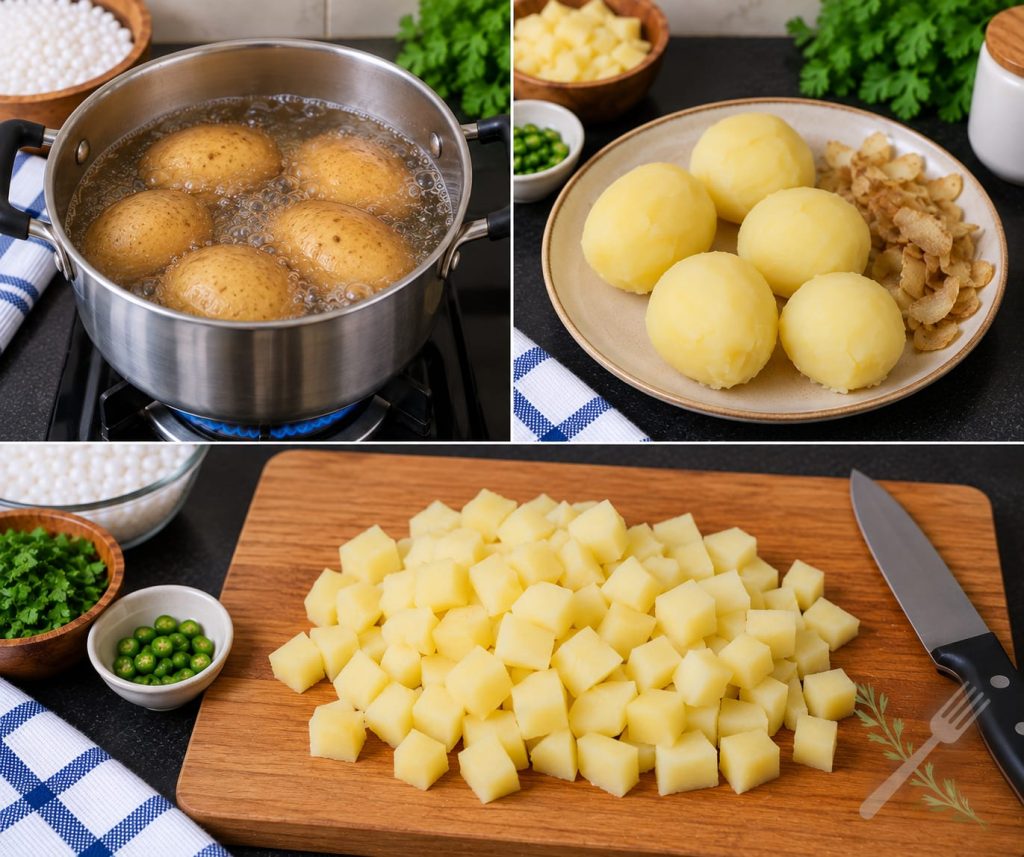
- Boil the potatoes until tender. Peel them and cut into small cubes.
- Heat ghee in a heavy-bottomed kadai over medium heat. Add cumin seeds and let them sizzle. Add curry leaves and slit green chilies.
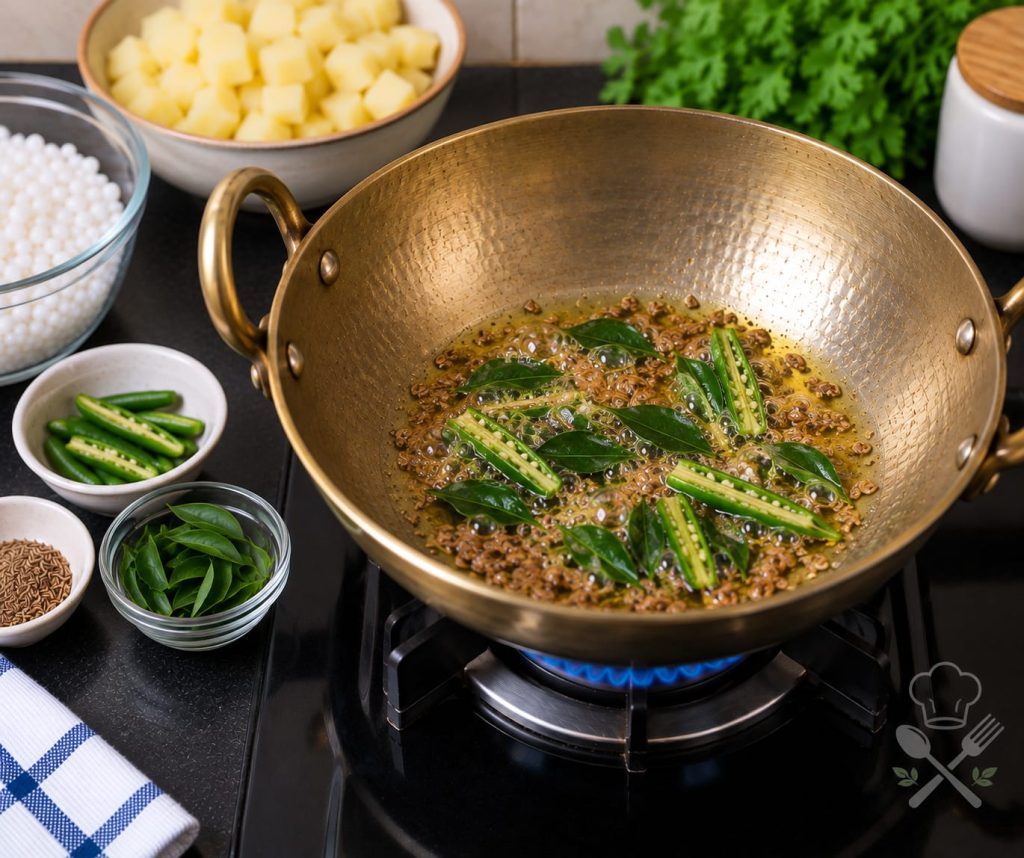
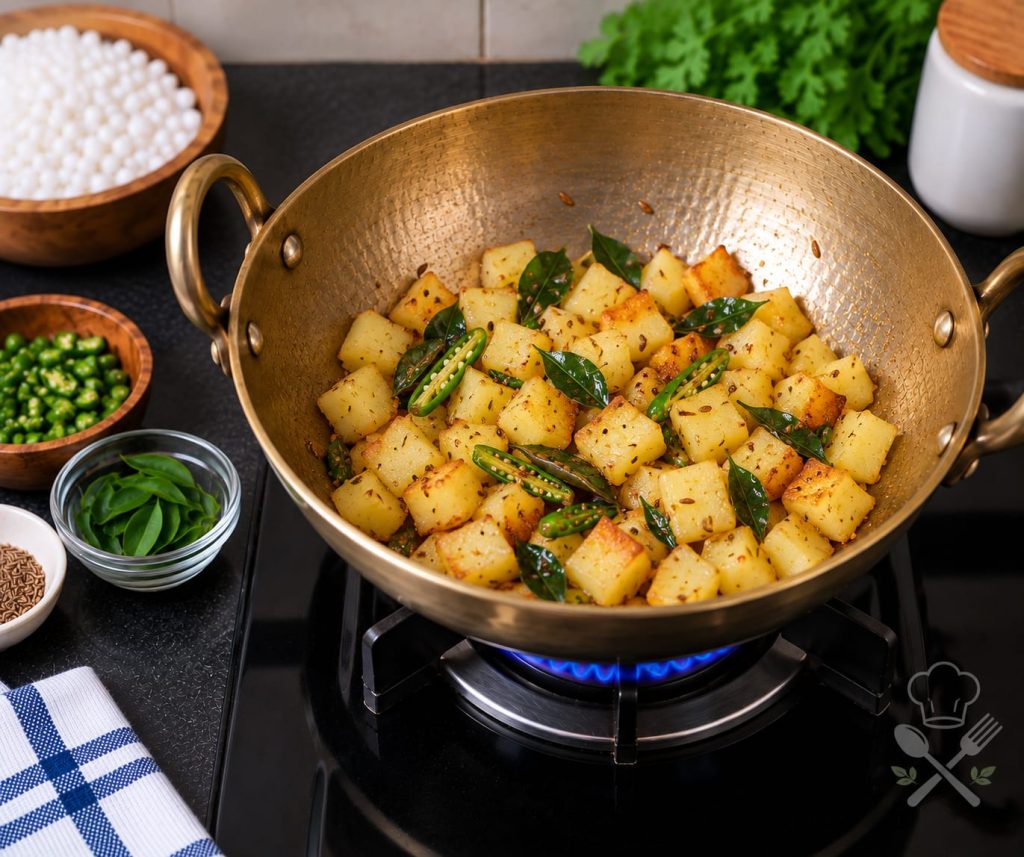
- Add the cubed potatoes and sauté for 2–3 minutes until they are lightly golden around the edges.
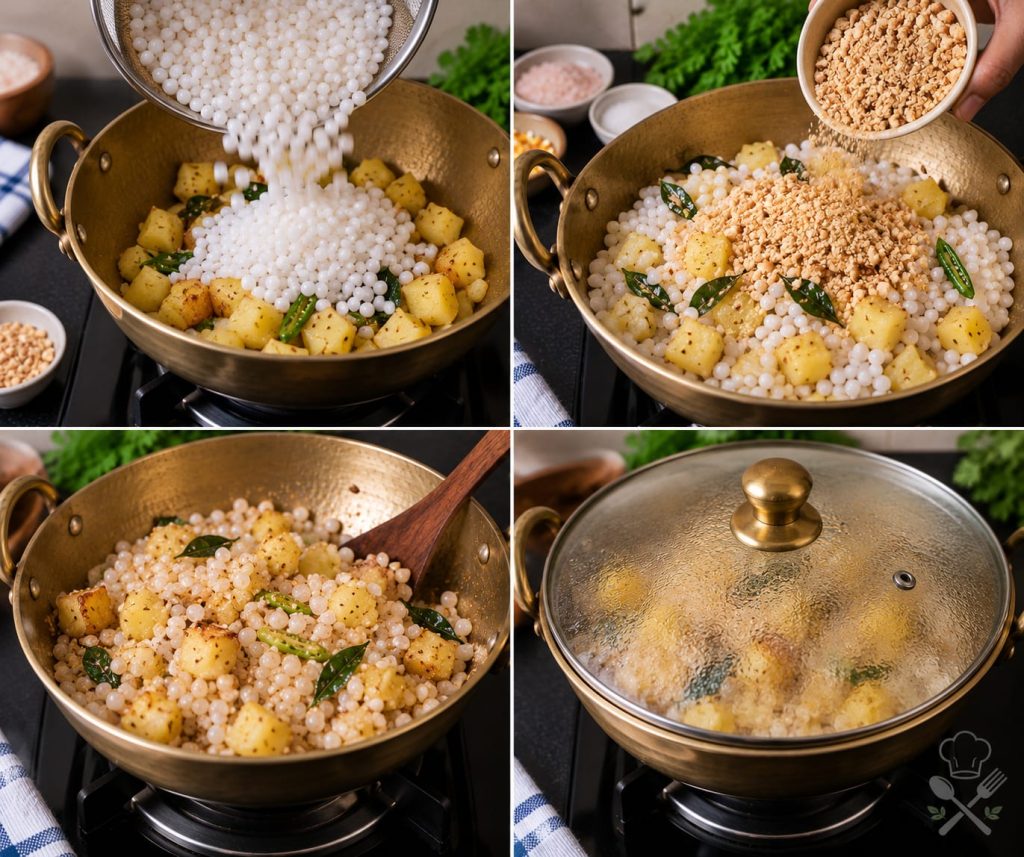
- Reduce the heat to low. Add the soaked and well-drained sabudana, crushed peanuts, sendha namak, and sugar. Gently fold everything together, cover, and cook for 4–5 minutes until the sabudana becomes glossy and translucent.
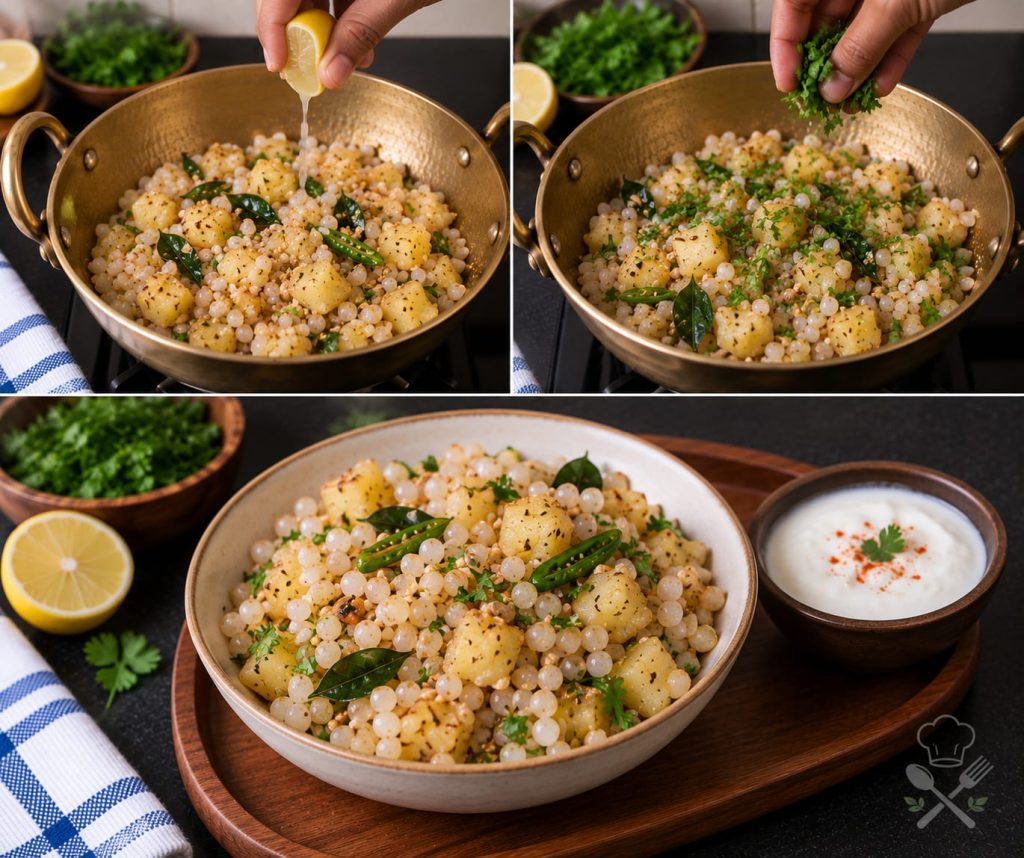
- Turn off the heat and gently mix in lemon juice and chopped coriander. Let the khichdi rest for 2–3 minutes, then serve hot with yogurt.
Notes
Sabudana Khichdi Timeline at a Glance
| Stage | Time needed | What to check for |
|---|---|---|
| Rinsing sabudana | 2-3 minutes | Water runs clear, no white starch cloudiness |
| Soaking | 4-6 hours (warm weather) or 6-8 hours (cooler weather) | Pearl flattens easily, no hard white core |
| Roasting peanuts | 4-5 minutes | Skins crack, aroma turns nutty |
| Boiling potatoes | 12-15 minutes | Fork slides in easily |
| Tempering and sautéing | 3-4 minutes | Cumin sizzles, potatoes lightly golden |
| Steaming sabudana with peanuts | 4-5 minutes, covered | Pearls turn glossy and translucent |
| Resting before serving | 2-3 minutes | Steam escapes, grains separate slightly |
Common Mistakes to Avoid When Making Sabudana Khichdi.
- Adding too much water while soaking. Sabudana only needs enough water to just cover it. Any excess turns the pearls waterlogged and gluey once cooked.
- Skipping the rinse before soaking. Skip the wash and the surface starch clumps the pearls together into a sticky mass before they even reach the pan.
- Using raw, unroasted peanuts. Raw peanuts stay chewy and taste of nothing much. Roasting is what gives the khichdi its crunch and nutty depth.
- Stirring too much on the stove. Vigorous stirring breaks the softened pearls and releases starch. It’s the fastest route from fluffy to sticky.
- Cooking on high heat. High heat scorches the bottom layer before the sabudana warms through evenly. Keep the flame low to medium, full stop.
- Forgetting the lemon juice at the end. Without that acidity, the dish sits heavy and one-note on the palate. Ghee and peanuts need something to cut them.
Is Sabudana Khichdi Good For Fasting (vrat) Days?
Yes — it’s one of the most common vrat foods in India, because sabudana, potatoes, and peanuts are all considered acceptable during most Hindu fasting traditions, including Navratri and Ekadashi, both of which typically rule out grains and lentils.
The dish sticks to fasting-kitchen rules on every count: regular table salt gets swapped for sendha namak, and there’s no onion, garlic, or grain anywhere near it. Sabudana is starch-based and reasonably filling on its own, and paired with peanuts for a bit of protein, it holds people through a long day of fasting better than most vrat dishes manage.
Cooking for a household observing Navratri? Check every add-in against the rules, because it’s easy to slip up. A stray pinch of regular salt, or a store-bought chutney with garlic hiding in the ingredients list, breaks the fast without anyone noticing until it’s too late. Keep a dedicated jar of rock salt and fasting-approved spices set aside during festival weeks — it saves arguments later.
Frequently Asked Questions
Yes, though peanuts do most of the heavy lifting on texture and richness. If you’re skipping them for an allergy, add a little extra ghee and some grated coconut to make up for the lost crunch and body.
The pearls weren’t soaked long enough. Sprinkle a little water over the mixture, cover, and steam on low for a few extra minutes rather than tossing in more raw sabudana — that just adds a second batch of undercooked pearls to the mix.
Best made fresh — the pearls turn gummy on reheating. You can soak the sabudana up to a day ahead and keep it refrigerated, then cook it fresh right before serving.
Khichdi is savoury, tempered, built around peanuts and potatoes. Kheer is a sweet pudding made by simmering sabudana in milk with sugar and cardamom. Same pearls, completely different dishes.
Yes. Sabudana is just the Hindi word for the pearls processed from tapioca (cassava) starch, and outside India it’s usually sold as “sago” or “tapioca pearls.”
Yes, a neutral oil works fine for a vegan version. Ghee is traditional though, and it adds a richness most home cooks prefer, especially when this dish is being made for a festival.