
Paneer butter masala, also called paneer makhani, is the dish most home cooks reach for when they want restaurant flavour with out leaving the house. It’s rich, mildly spiced, and endlessly comforting with butter naan or steamed rice. I’ve made this more times than I can count, tested it in different pans on different stoves, and this guide walks through the exact technique — from the tomato base to the final swirl of cream — so your curry comes out tasting like the one from your favourite dhaba, not a pale imitation of it.
KEY TAKEAWAYS
- Restaurant-style paneer butter masala relies on a smooth, blended tomato-cashew base, not chopped tomato chunks.
- Soaking or lightly frying paneer before adding it keeps the cubes soft instead of rubbery.
- A small pinch of sugar balances tomato acidity without making the curry taste sweet.
- Kasuri methi (dried fenugreek leaves), crushed between your palms, is what gives the gravy its signature aroma.
- Butter goes in twice — once to build the base and once at the end for shine and flavour.
- The dish is naturally vegetarian and easy to make ahead; the gravy actually tastes better the next day.
What is the Difference Between Paneer Butter Masala and Paneer Makhani?
There isn’t one, really. Paneer butter masala and paneer makhani are the same dish known by two names. Both refer to paneer simmered in a buttery, tomato-cashew gravy finished with cream. “Makhani” comes from makhan, the Hindi word for butter, while “butter masala” describes the same buttery spice mix in plain English. Restaurant menus use the two names interchangeably half the time, and some cooks will tell you makhani leans a shade sweeter while butter masala is more tomato-forward. That’s not a rule anyone follows consistently. It comes down to whoever’s cooking that day.
In practice, order paneer makhani at one restaurant and paneer butter masala at another and you’ll get a near-identical plate: soft paneer sitting in an orange-red, velvety gravy. The base is also close cousins with butter chicken’s sauce — same technique, just vegetarian, with paneer standing in for the chicken. So if a recipe title uses either name, expect the same core method: tomatoes, cashews, butter, cream, and warm whole spices. The differences you’ll spot between recipes are usually just how much sugar, cream, or chilli each cook adds, and that’s mostly personal taste.
What Ingredients do I Need for Restaurant-Style Paneer Butter Masala?
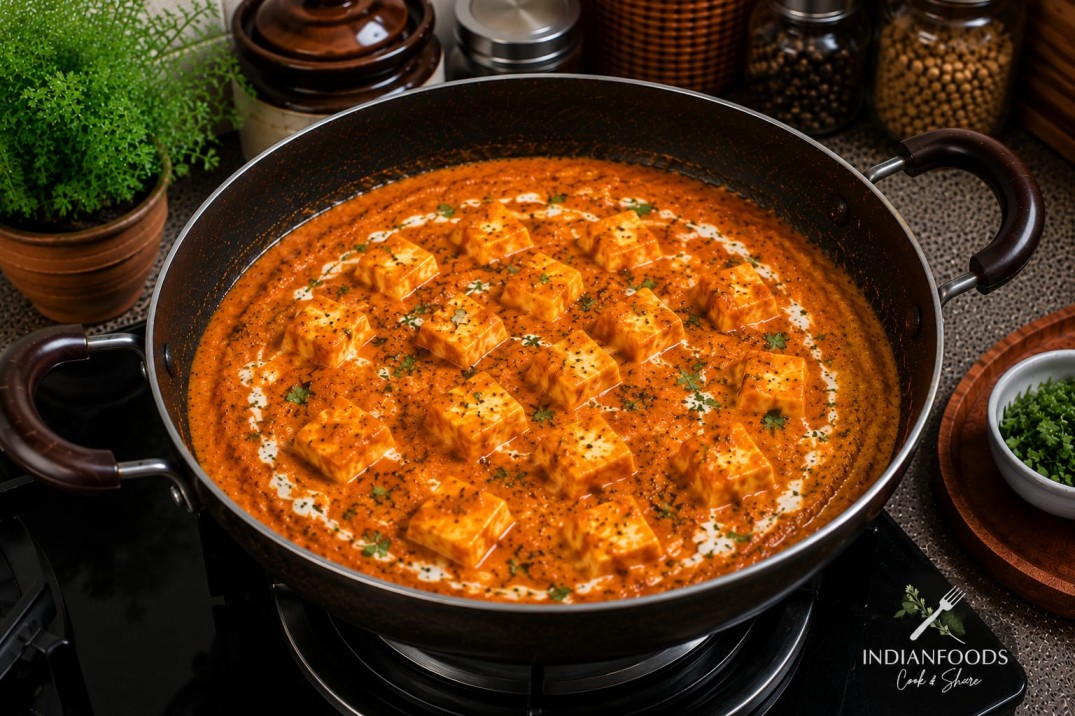
Paneer Butter Masala Recipe
Ingredients
Paneer butter masala recipe
- 250-300 gram Paneer fresh, soft; cubed
- 4-5 medium Tomatoes ripe and red; chopped
- 10-12 Cashews raw
- 3-4 tbsp Butter divided
- 2-3 tbsp Fresh cream full-fat
- 1 small stick Cinnamon whole
- 2-3 Cloves whole
- 1-2 Green cardamon whole
- 1 tbsp Ginger-garlic paste
- 1 tbsp Kashmiri red chilli powder
- 1 tsp Garam masala
- 1 tsp Kasuri methi crushed
- 1 pinch Sugar
Instructions
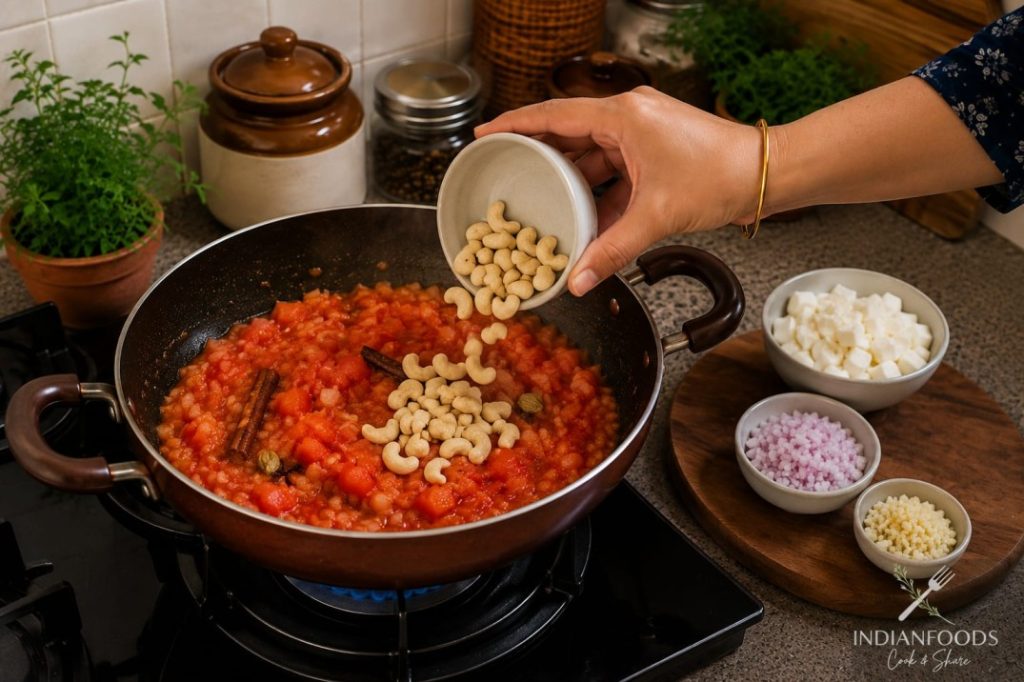
- Build the base. Heat butter , sizzle cinnamon, c loves, and cardamom for 30 seconds.Add ginger-garlic paste, then chopped tomatoes and cashews with a splash of water. Cover and cook on low-medium heat for 12-15 minutes until soft and jammy.
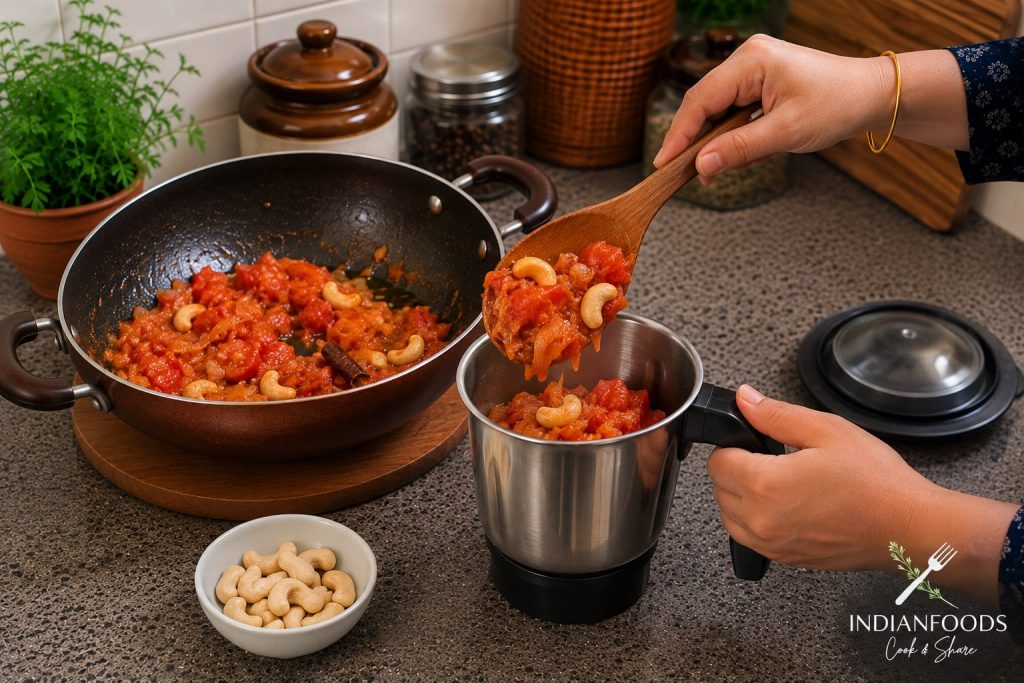
- Blend it smooth. Cool-slightly, then blend into a completely smooth, seedless paste – 1-2 minutes in a good blender.Strain through a sieve for an extra-silky finish.
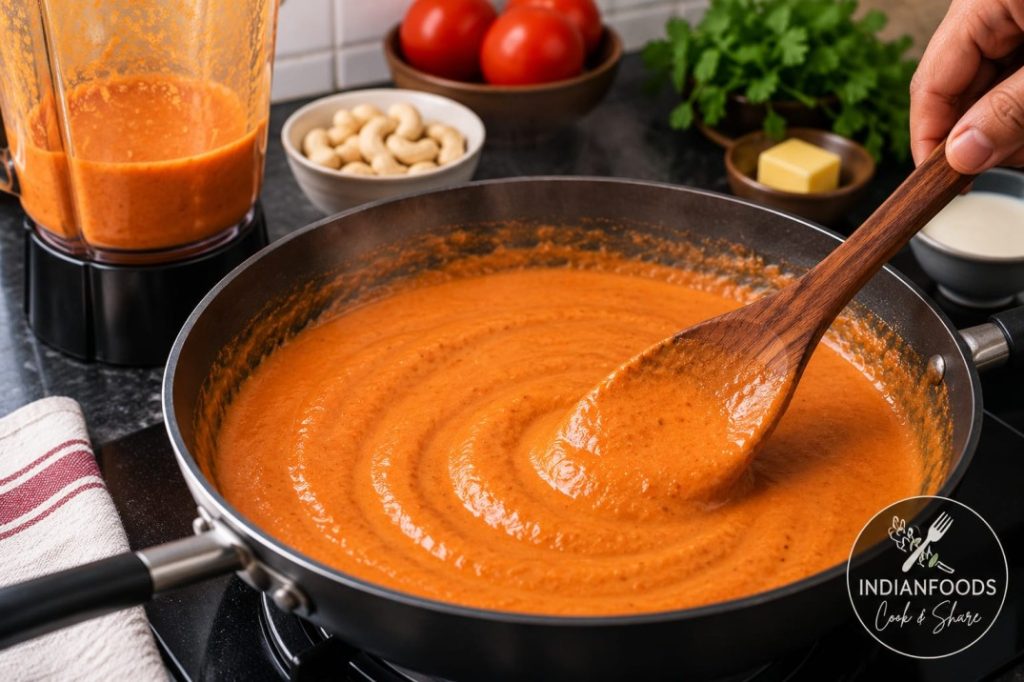
- Cook the gravy. Return the puree to the pan and simmer on low heat for 8-10 minutes, stirring often, until the raw tomato smell mellows and the gravy thickens and releases butter at the edges.
- Add the paneer. Slide in raw or lightly pan -warmed paneer cubes and simmer gently for 4-5 minutes – no longer , or they turn rubbery.
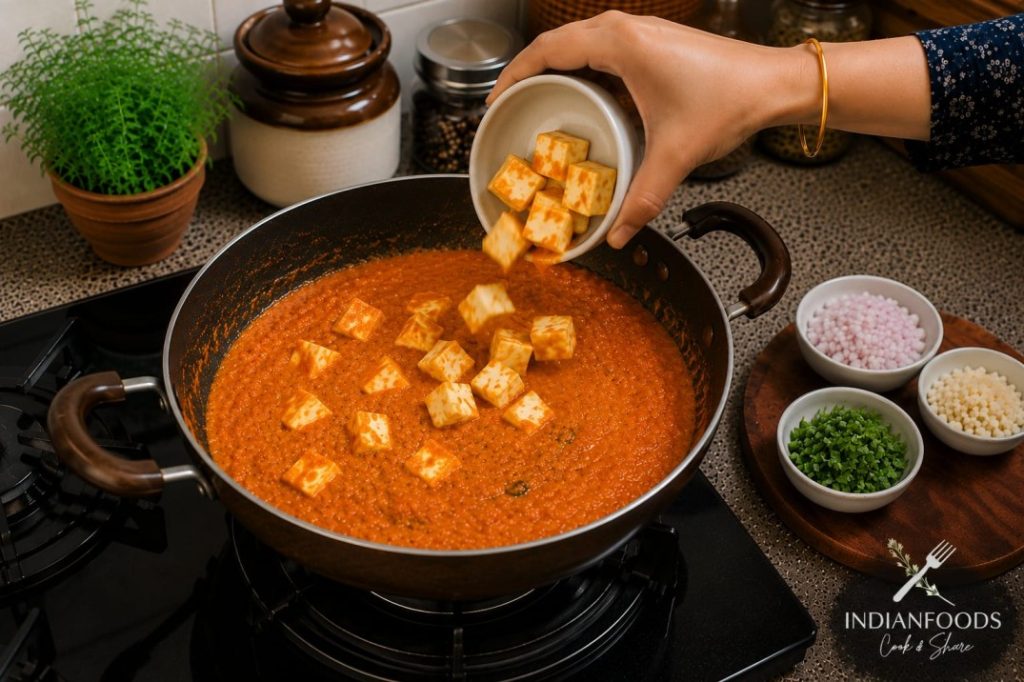
- Finish with cream. Turn the heat down, stir in cream gently(don't let it boil), crush in kasuri methi, and a final knob of butter for shine.
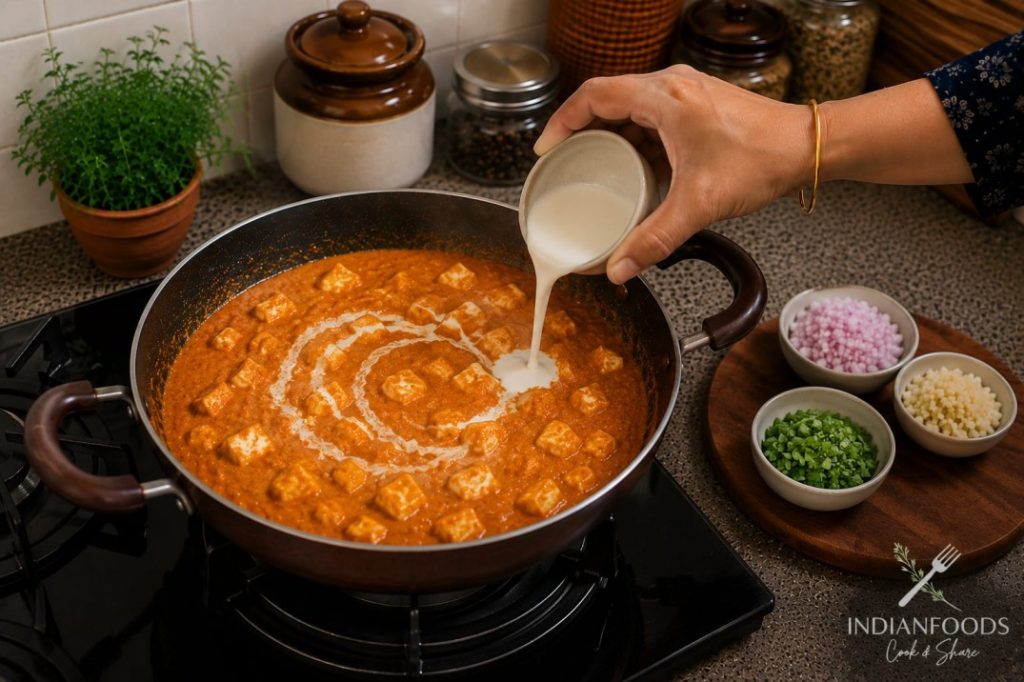
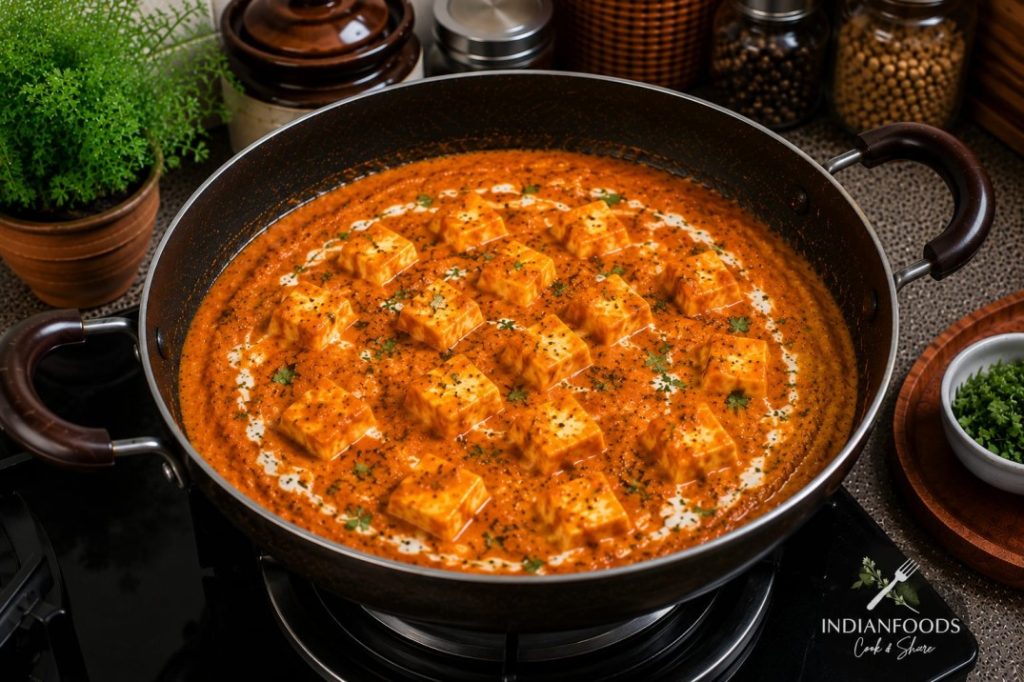
- Turn off the heat and let the paneer butter masala rest for 5 minutes so yhe flavours settle.Give it a gentle stir,then transfer it to a serving bowl.Garnish with a small swirl of cream, a little butter,and crushed kasuri methi if desired.
Notes
Paneer Butter Masala At a Glance
| Stage | What happens | Approx. time |
|---|---|---|
| Prep | Chop tomatoes, soak cashews, cube paneer | 10 min |
| Sauté base | Whole spices, ginger-garlic, tomatoes + cashews cooked down | 15 min |
| Blend | Cool slightly, blend smooth, strain if desired | 5 min |
| Cook gravy | Simmer puree with spices until raw smell disappears | 10 min |
| Add paneer | Simmer paneer in gravy, add kasuri methi, cream, butter | 5 min |
| Rest | Turn off heat, let flavours settle before serving | 5 min |
Common Mistakes to Avoid When Making Paneer Butter Masala
- Using unripe or watery tomatoes. Pale, firm tomatoes don’t have the natural sweetness or colour a good base needs. Pick ones that are fully red and slightly soft.
- Skipping the blending or straining step. A grainy, chunky gravy is the biggest giveaway of a home version versus a restaurant one. Smoothness isn’t optional here.
- Boiling the gravy hard after adding cream. Do this and the cream splits, leaving the curry looking curdled instead of glossy.
- Adding kasuri methi whole, without crushing it. Rub the dried leaves between your palms before they go in — that’s what releases the aroma. Whole leaves just sit there doing nothing.
- Overcooking the paneer. Simmer it too long, or reheat leftovers on high heat, and it turns tough and chewy instead of soft.
What Should I Serve With Paneer Butter Masala?
Butter naan, tandoori roti, puri, jeera rice, or plain steamed basmati rice are the classic pairings. The gravy is rich and a little sweet, so it does best paired with something simple that can soak it up rather than another heavily spiced dish competing alongside it. Butter naan is the most popular restaurant pairing — the mild dough and buttery layers complement the creamy curry instead of fighting it. At home, plain tawa roti or phulka does the job just as well for an everyday meal, and honestly, that’s what I make it with most nights.
For rice, puri, jeera rice (cumin rice) is a common choice because its earthiness cuts through the richness of the gravy. Plain steamed rice works as a lighter option if you’re already serving naan or another bread. A simple onion-cucumber salad, or just a wedge of lemon on the side, helps balance the plate, since the curry itself doesn’t need any extra sourness. Planning a bigger spread? Pair it with a dry sabzi like bhindi or aloo gobi, so the meal has both a gravy dish and something drier for contrast.
Frequently Asked Questions ?
Yes — plenty of home cooks make a satvik version using only ginger, tomatoes, cashews, and spices, skipping onion and garlic entirely. It still comes out rich and full-flavoured, since the tomato-cashew base is doing most of the heavy lifting anyway.
Usually the tomatoes weren’t cooked down long enough, or they were on the sourer side to begin with. Add a small pinch of sugar and simmer a few more minutes to mellow it out.
The gravy freezes well for up to a month, but freeze it without the paneer. Add fresh or freshly softened paneer after you’ve thawed and reheated the gravy gently.
Firm tofu, cut into cubes and lightly pan-warmed, works well as a substitute, and cashew cream or coconut cream can stand in for the dairy cream. The technique for the base gravy doesn’t change at all.
Usually it’s the ratio of butter and cream to tomato, or a milder red chilli powder. Kashmiri red chilli powder, prized for colour more than heat, gets you closer to that deep red-orange restaurant shade.
About 2 days in an airtight container. Reheat it gently on low heat, and add a splash of water or milk if the gravy has thickened up too much.