
Coconut ladoo, or nariyal ladoo, is the sweet that shows up at every Diwali thali, every Ganesh Chaturthi prasad plate, and every “guests are arriving in an hour” panic. The condensed milk version is what most Indian kitchens actually make. It’s fast. It’s forgiving. And it comes out right almost every time, even for someone who’s never made an Indian sweet before. Here’s how to get it right on your first attempt.
KEY TAKEAWAYS
- Condensed milk coconut ladoo is the fastest method — under 20 minutes, two main ingredients, done.
- Desiccated coconut gives cleaner, more even ladoos than fresh coconut, which carries extra moisture you’ll have to cook off.
- Roll the mixture while it’s still warm. It firms up and cracks once fully cooled, and there’s no going back at that point.
- Cardamom powder is the traditional flavouring, though saffron, rose, or kesar-pista variations show up in a lot of kitchens too.
- Roasting the coconut briefly before adding condensed milk removes raw moisture and stops the ladoos going soggy.
- Stored properly, coconut ladoo keeps about a week at room temperature, longer in the fridge.
What is Coconut Ladoo Made of?
Coconut ladoo comes together from desiccated or freshly grated coconut, condensed milk (or sugar and milk), ghee, and cardamom powder. Some cooks use khoya (mawa) or a homemade sugar syrup instead of condensed milk. But condensed milk has taken over as the default home method, mostly because it removes the guesswork around syrup consistency — no one wants to be checking for a “single thread” while dinner guests are on their way up the stairs.
The ratio is simple. For every cup of desiccated coconut, use roughly half to two-thirds of a tin of sweetened condensed milk, a teaspoon of ghee, and a pinch of ground cardamom. Condensed milk does two jobs at once here — it sweetens and it binds — so you don’t need extra sugar or any additional liquid floating around.
In practice, this looks like: heat a heavy-bottomed pan, add ghee, toss in the coconut, stir for a couple of minutes just to warm it through, then pour in the condensed milk and cook on low heat until the mixture pulls away from the sides of the pan. That’s the whole method. No thread-consistency syrup, no thermometer, no khoya to prepare a day ahead.
How do I Make Coconut Ladoo With Condensed Milk?
The method, stripped down: roast the coconut lightly, mix in condensed milk, cook until thick, cool slightly, roll into balls. Start here if you’ve never made an Indian sweet before — fewer steps, less that can go wrong.
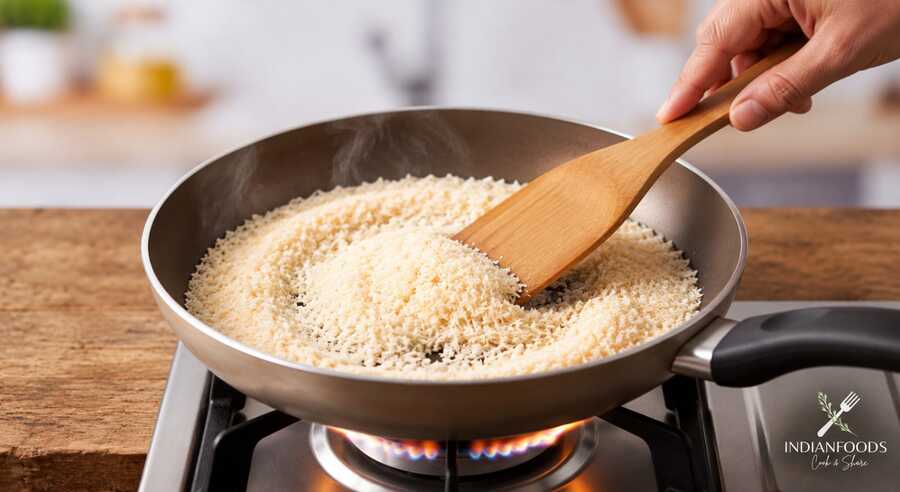
Measure 2 cups of desiccated coconut and set aside 2–3 tablespoons for rolling at the end. Heat 1 teaspoon of ghee in a heavy, non-stick or well-seasoned kadai on low-medium heat. Add the coconut and stir continuously for 2–3 minutes. You’re not browning it — just warming it through and taking off any raw smell.
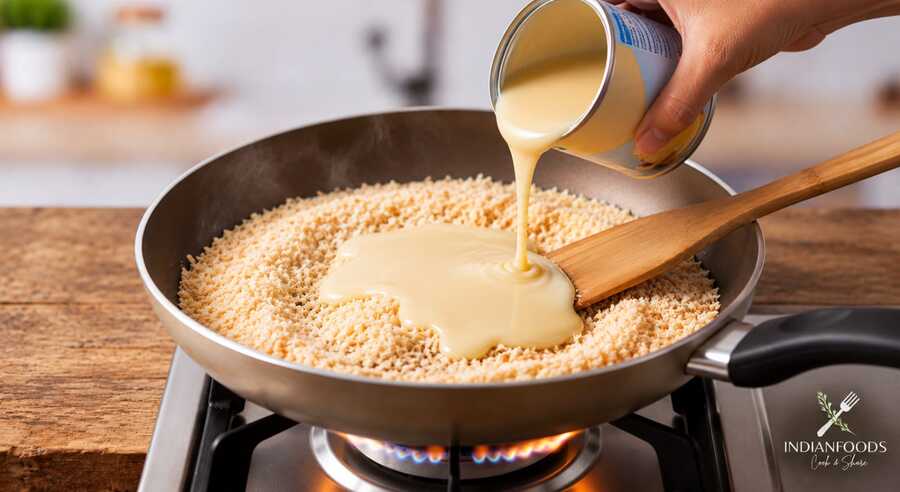
Drop the heat further and pour in about 200ml (roughly two-thirds of a standard 400g tin) of sweetened condensed milk. Keep stirring. The mixture looks loose at first, then thickens gradually, usually within 5–7 minutes. Add a pinch of cardamom near the end, not at the start — it loses fragrance if it cooks too long.
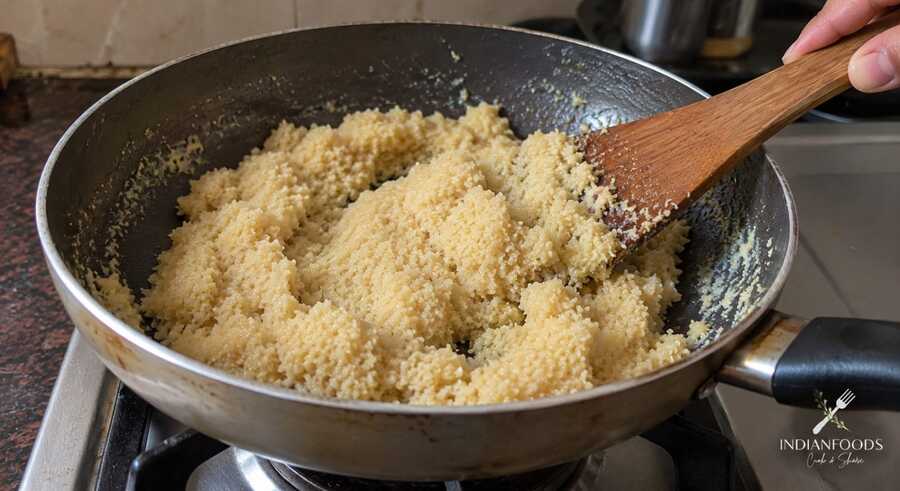
You’ll know it’s ready when the mixture pulls away from the sides of the pan and holds its shape under a spoon. Turn off the heat, let it sit for 3–4 minutes — enough to handle, not enough to fully cool — grease your palms with a little ghee, and roll into small balls. Roll each one in the reserved desiccated coconut. That last step is what gives you the neat, shop-style finish instead of a slightly sad homemade look.
Should I use fresh Coconut or Desiccated Coconut?
Desiccated coconut is the safer bet for beginners. It’s dry and consistent and won’t throw extra moisture into your mixture. Fresh grated coconut gives a richer, more fragrant ladoo, but it needs more careful cooking to drive off its natural water content first.
Using fresh coconut? Budget a few extra minutes of cooking compared to the desiccated version. The water has to evaporate before the mixture will firm up at all. Skip this extra cooking, and you’ll end up with soft ladoos that refuse to hold their shape — this is the single most common complaint I hear from people trying fresh coconut for the first time.
A good middle ground: mix fresh and desiccated coconut in equal parts. You get the flavour of fresh coconut with the structural backbone of the dried stuff. If your fresh coconut is particularly wet — common if you’re buying it in humid coastal towns — roast it alone in a dry pan for 2–3 minutes before the condensed milk goes in, just to pre-dry it.
Using frozen grated Coconut
Frozen grated coconut works fine as a stand-in for fresh. Thaw it fully and pat it dry with a kitchen towel before cooking. Thawed coconut holds a surprising amount of water, and that needs accounting for or your cook time will run long.
Using Coconut Flour or Coconut Powder
Skip these. They’re processed too differently and won’t give you the right texture, no matter how you adjust the liquid. Stick to desiccated or fresh grated coconut.
Recipe Card
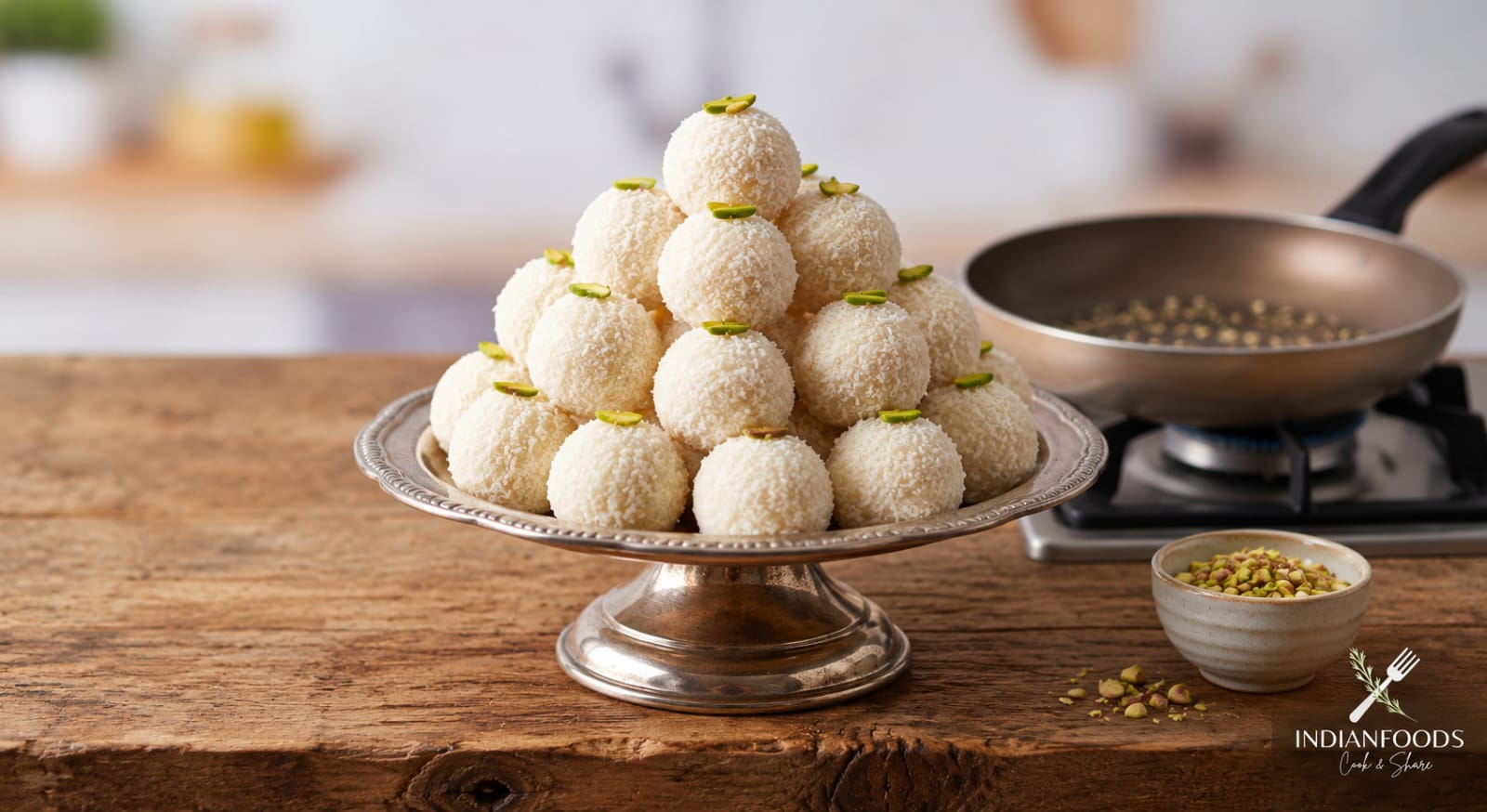
Coconut Ladoo Recipe
Ingredients
Coconut Ladoo Recipe
- 2 cups Desiccated coconut For the ladoo mixture
- 200 ml Sweetened condensed milk For sweetness and binding
- 1 tsp Ghee For roasting and greasing hands
- 1/4 tsp Cardamon powder For flavour
- 3 tbsp Desiccated coconut For coating the ladoos
Instructions
- Roast the Coconut – Heat 1 teaspoon of ghee in a heavy-bottomed pan over low-medium heat. Add 2 cups of desiccated coconut and roast for 2–3 minutes, stirring continuously without browning it.
- Add Condensed Milk – Lower the heat and add 200 ml of sweetened condensed milk to the roasted coconut. Mix well until the coconut is evenly coated and the mixture starts to thicken.
- Cook Until Thick – Cook the mixture for 5–7 minutes on low heat, stirring continuously to prevent sticking. Add a pinch of cardamom powder and cook until the mixture pulls away from the sides of the pan.
- Shape the Ladoos – Turn off the heat and let the mixture cool slightly for 3–4 minutes. Grease your palms with a little ghee and roll the warm mixture into small, smooth balls.
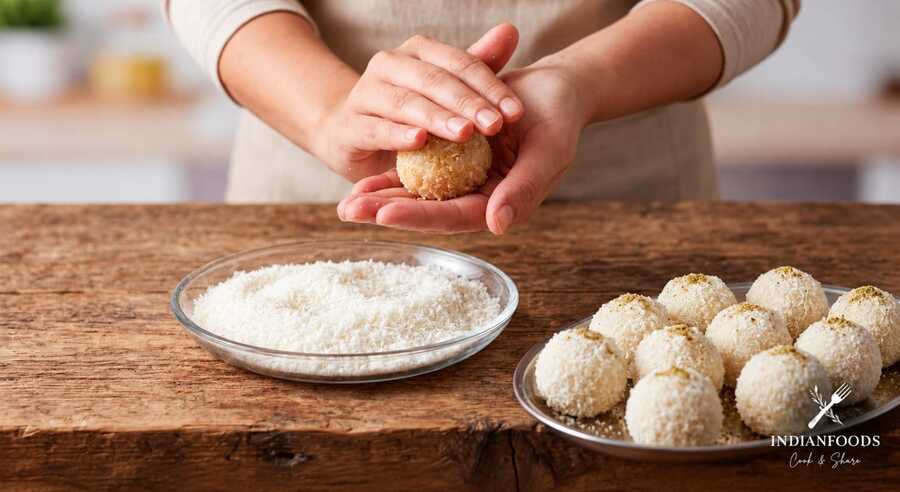
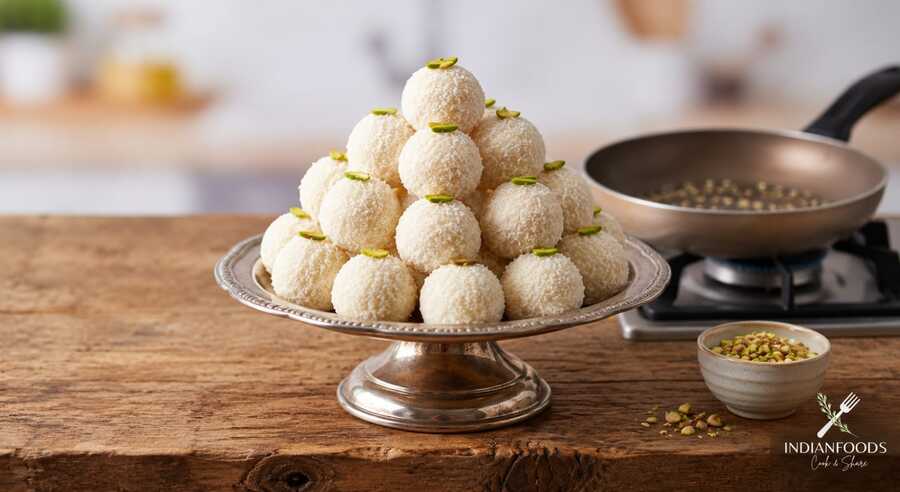
- Coat and Serve – Roll each ladoo in the reserved desiccated coconut for a beautiful finish. Allow them to cool completely, then serve your homemade coconut ladoos or store them in an airtight container.
Notes
What’s the difference between condensed milk ladoo and khoya ladoo?
Condensed milk ladoo is quicker and more forgiving; khoya ladoo has a deeper, more traditional milky flavour but takes longer. Khoya (also called mawa) is milk solids reduced from full-fat milk — either homemade, which is a slow hour-plus process, or store-bought.| Feature | Condensed Milk Ladoo | Khoya Ladoo |
|---|---|---|
| Prep time | 15–20 minutes | 30–40 minutes (with ready khoya) |
| Extra ingredients needed | None beyond coconut and ghee | Sugar, khoya, milk |
| Shelf life at room temperature | About a week | 3–4 days |
| Texture | Soft, slightly chewy | Denser, richer, more traditional |
| Best for | Beginners, quick festive prep | Special occasions, richer sweets |
| Sweetness control | Fixed by the condensed milk | Fully adjustable |
How do I get the right texture — not too soft or too dry?
Right texture comes from cooking until the mixture just pulls away from the pan sides, then rolling it immediately while still warm. Undercooking and overcooking are both easy mistakes, and they cause different problems.
Undercook it, and the mixture stays too wet to roll — it sticks to your palms and won’t hold a ball shape at all. Fix: back on low heat for another 2–3 minutes, stirring constantly, then test again.
Overcook it, and the mixture turns dry, grainy, and crumbly. The ladoos crack instead of forming smooth balls. There’s no great fix once this happens — a spoonful of warm milk or condensed milk stirred back in and gently reheated will loosen it, but it won’t be perfect. Salvageable, not ideal.
The real skill is timing that “off-heat” moment. Take a small spoonful and roll it between two fingers. If it holds shape without sticking too much, you’re there. Turn off the heat slightly before you think it’s fully done — residual heat in the pan keeps thickening the mixture for another minute or two, and that’s usually enough to tip it from perfect to overdone.
Common Mistakes to Avoid
- Rolling the ladoos after they’ve cooled completely. Once cool, the sugars set and the mixture turns crumbly and hard to shape. Roll within a few minutes of taking the pan off the heat, while it’s still warm and pliable.
- Skipping the initial coconut roasting step. Add condensed milk straight to raw coconut without warming it first, and you’ll get a raw, slightly chalky taste in the final ladoo. A quick 2-minute roast in ghee fixes this completely.
- Using low-fat or unsweetened condensed milk by mistake. Different sugar and fat content entirely — your ladoos will be under-sweet and won’t bind properly. Check the label. It should say “sweetened condensed milk,” full stop.
- Cooking on high heat to save time. This just catches and browns the bottom unevenly before the rest is cooked through. Medium-low with constant stirring isn’t optional here.
- Not greasing your palms before rolling. The mixture is sticky. Dry hands make the whole rolling process a frustrating mess. A light coating of ghee and it’s smooth sailing.
How do I store Coconut Ladoo and how long does it last?
Coconut ladoo keeps about a week at room temperature in an airtight container, longer in the fridge — up to two to three weeks. Condensed milk’s high sugar content acts as a natural preservative, which is a big part of why this sweet travels and stores so well compared to, say, a milk-based barfi.
Let the ladoos cool completely before sealing them up. Trapping warm ladoos in a box with condensation building up inside just speeds up spoilage. Store them in a single layer, or separate layers with baking paper if you’re stacking, since they’ll stick together otherwise.
Refrigerated ladoos should come back to room temperature before serving. Cold ghee tastes slightly waxy and dulls the coconut flavour — you lose most of what makes this sweet good in the first place. For gifting or festival boxes, coconut ladoo travels better than most Indian sweets since there’s no syrup base to leak all over the box.
| Making coconut ladoo for the first time this festival season? Indian Foods has step-by-step, tested versions of this recipe along with dozens of other quick Diwali and Ganesh Chaturthi sweets, each with clear timing and troubleshooting notes so nothing goes wrong on the day it matters most. → Subscribe for weekly recipes at https://indianfoods.co.in |
Can I make Coconut Ladoo Vegan?
Yes. Swap the condensed milk for a coconut milk-based condensed milk or a jaggery-coconut milk reduction, and use a neutral oil or vegan butter instead of ghee. The method barely changes.
For a simple vegan version, simmer full-fat coconut milk with jaggery or sugar on low heat until it reduces to something resembling condensed milk — this takes about 15–20 minutes and needs frequent stirring so it doesn’t scorch at the bottom. Once reduced, follow the same steps: add the desiccated coconut, cook until it thickens further and pulls away from the pan, roll into balls.
The texture won’t be quite as glossy as the dairy version, and the flavour leans toward jaggery’s earthy sweetness rather than milky sweetness. Some cooks stir in a tablespoon of cashew or almond paste to bring some richness back. This version also firms up faster once off the heat, so roll it a little sooner than you would the traditional recipe — don’t wait around admiring your work.
More Recipe You May like
Frequently Asked Questions
Yes — use sugar and milk (or khoya) cooked down with coconut instead. Takes longer, needs more attention to avoid a grainy finish, but gives a more traditional flavour.
Usually overcooking, or storing them in a container that isn’t fully airtight — both dry them out. Cook only until the mixture just leaves the pan sides, and seal them properly.
You can, but cut back on or skip extra sweetener since shredded coconut often comes pre-sweetened. Texture will also be a bit chewier than fine desiccated coconut.
With 2 cups of desiccated coconut and about 200ml condensed milk, expect 15–18 medium-sized ladoos, depending on how big you roll them.
Yes — finely chopped cashews, pistachios, or almonds mixed in during the last minute of cooking add crunch and richness. Go easy on the quantity so the ladoos still hold together.
Yes, made with coconut, condensed milk, ghee, and cardamom, there’s no gluten in the mix. Worth double-checking your condensed milk brand’s label if you’re cooking for someone with a gluten sensitivity — cross-contamination during manufacturing can occasionally happen.